Manufacturing QMS Software Development Services
A Proven Engineering Partner for Manufacturing Quality Systems
15+
years of manufacturing software experience

25 Reviews on Clutch
100+
successfully completed projects in manufacturing
ISO
ISO 9001 and ISO/IEC 27001-certified management systems
Manufacturing Quality Challenges We Solve
Quality problems become harder to contain when inspections, production records, and corrective actions are handled separately. We address the gaps that slow down detection, investigation, and resolution.
-
High scrap rates
Spot process variation before defects spread across a batch. Use inspection results and equipment measurements to flag out-of-range values and help quality teams investigate the source of scrap.
-
Paper-heavy workflows
Replace handwritten inspection sheets and spreadsheet follow-ups with guided digital forms. Capture readings, photos, and sign-offs where checks take place, without re-entering results later.
-
Siloed quality data
Bring quality records from incoming materials, production, and lab testing into a consistent view. Compare findings without chasing reports across separate systems or relying on manual transfers.
-
Delayed root-cause analysis
Give investigators measurements, deviation histories, and affected production details linked to each issue. Review the evidence sooner and document findings before defining corrective actions.
-
Limited batch traceability
Trace affected batches through receiving, production, inspection, and shipment with linked lot and serial records. Identify the scope of a defect without piecing together separate logs.
-
High compliance exposure
Keep procedures, approvals, and change histories easy to verify. Spot outdated instructions or missing evidence before an audit, and give reviewers a reliable account of how quality decisions were made.
Our QMS Software Engineering Services
-
QMS consulting and architecture
Define quality procedures, record ownership, and system boundaries before development starts. We design QMS architectures aligned with ISA-95, including data exchange between plant operations and enterprise systems. -
Custom QMS software development
Develop a QMS around your inspection plans, nonconformance handling, CAPA procedures, and approval roles. Our experts implement the application, business rules, and quality record management. -
Shop-floor quality application development
Put inspection tasks on tablets or industrial handhelds used on the line. Operators enter measurements, log defects, and attach evidence through interfaces suited to plant-floor conditions. -
Legacy QMS modernization
Update legacy QMS interfaces, replace unsupported components, and improve access to historical quality records. Our team plans migration and phased releases around existing operations. -
Quality analytics and compliance
Use statistical process control (SPC) charts to monitor variation and identify trends. Prepare traceable records and supporting evidence for relevant ISO audits and FDA inspections.
Plan your QMS development project. Tell us which quality processes or systems need attention, and we'll help identify a practical starting point.
Core Modules of a Manufacturing QMS Platform
Quality teams need to know what was inspected, what failed, and how they handled each issue. These modules cover routine production checks, quality investigations, and the records associated with individual products and batches.
-
In-line quality control
- In-process inspections
- First article inspection (FAI)
- Electronic checklists
- Poka-Yoke error prevention
-
Nonconformance and CAPA
- Nonconformance reports (NCRs)
- ERP/MES material and batch holds
- 8D, 5 Whys, Ishikawa diagrams
- Corrective and preventive actions (CAPA)
-
Statistical process control (SPC)
- Real-time control charts
- Machine and instrument data
- Cp/Cpk calculations
- Out-of-control alerts
-
Supplier quality management (SQM)
- Incoming material inspections
- AQL sampling plans
- Certificate of analysis (CoA) checks
- Supplier complaints and SCARs
-
Batch traceability and electronic batch records
- End-to-end product genealogy
- Material lots and production batches
- Equipment parameters and operator logs
- Electronic batch records (eBRs)
-
Document control and digital SOPs
- SOP and drawing revision control
- Obsolete-document restrictions
- Electronic signatures (21 CFR Part 11)
- Controlled document access
-
Audit management
- Internal and supplier audits
- Second-party audit planning
- Audit checklists and findings
- CAPA follow-up tracking
-
Calibration and gauge management
- Measuring instrument registers
- Calibration and verification schedules
- Expired-gauge restrictions
- Measurement system analysis (MSA), Gage R&R
-
Training and competency management
- Employee qualification matrices
- SOP revision training
- Operator certification checks
- MES-linked operation clearance
From Shop-Floor Measurements to Enterprise Quality Records
A quality decision may depend on measurements from production equipment, the latest engineering revision, and material records held in ERP. We establish how this information reaches the QMS and which systems remain responsible for individual transactions.
-
ERP systems
Exchange material quality statuses, lot dispositions, and supplier information with SAP, Oracle, and Microsoft Dynamics 365 systems. Integrations use supported interfaces, including SAP IDocs and BAPIs, REST APIs, or existing middleware, depending on the platform. -
MES platforms
Coordinate quality checks with active production operations in Siemens Opcenter, Rockwell FactoryTalk, and other supported MES platforms. Apply inspection holds, verify operator qualifications, and restrict further processing when critical defects are detected, according to configured production rules. -
SCADA, PLCs, and IIoT devices
Collect temperature profiles, cycle counts, and process measurements from Siemens, Rockwell, Beckhoff, and other industrial equipment. OPC UA, MQTT, and Modbus connections, with gateways where needed, provide data for quality monitoring and SPC. -
Inspection hardware and measuring tools
Transfer measurements from coordinate measuring machines (CMMs), optical inspection equipment, digital calipers, and industrial scales. Depending on device capabilities, integrations use RS-232, Modbus, or supported network interfaces to capture results. -
PLM and CAD systems
Keep inspection criteria aligned with engineering changes. Retrieve approved drawings, 3D models, geometric dimensioning and tolerancing (GD&T) specifications, and engineering change orders (ECOs) to identify inspection plans requiring revision. -
Laboratory systems (LIMS)
Exchange laboratory test results, approved specifications, and relevant certificates of analysis (CoAs) with the QMS. Flag out-of-specification (OOS) results for investigation and make approved laboratory results available for batch-release decisions.
AI and Advanced Analytics for Manufacturing Quality
Predictive models and computer vision draw on equipment measurements, inspection images, and historical quality cases. Their findings give engineers additional evidence to investigate and verify.
-
Predictive defect prevention
Analyze equipment readings and process trends to flag conditions associated with defects, giving quality teams earlier signals to investigate.
-
Automated visual inspection
Use edge-based computer vision to inspect parts on the line, identify visible defects and route uncertain results for review. -
Intelligent root-cause analysis
Search past nonconformance and CAPA records for similar defects and likely contributing factors to support engineers' root-cause investigations.
Our Manufacturing QMS Engineering Process
We begin with the quality procedures and production conditions at your facilities, then move through system design, implementation, testing, and phased deployment.
-
STEP 1
Discover your quality workflows
- Examine inspection procedures, employee responsibilities, and the handling of nonconforming materials.
- Review existing quality records, production systems, and equipment involved in data collection.
- Identify recurring problems and agree on project priorities, initial scope, and success criteria.
-
STEP 2
Define system requirements and compliance
- Document functional requirements, approval responsibilities, and quality record retention rules.
- Identify applicable industry standards and regulatory obligations with your quality and compliance teams.
- Establish acceptance criteria and a risk-based testing and validation approach.
-
STEP 3
Design IT/OT architecture
- Define application components, data ownership, and connections between enterprise and industrial systems.
- Plan data collection, synchronization, and recovery behavior for the selected equipment and network conditions.
- Specify access permissions, information security controls, and technical deployment requirements.
-
STEP 4
Develop and test the software
- Implement the agreed functionality in stages, with regular reviews by manufacturing and quality stakeholders.
- Test integrations, representative migrated records, and application behavior on supported devices under realistic production conditions.
- Verify approval controls, record histories, and required validation evidence before release.
-
STEP 5
Deploy, verify, and scale
- Introduce the QMS in a selected production area or facility and verify its operation under working conditions.
- Coordinate final data cutover, employee training, and phased rollout while maintaining agreed quality procedures.
- Monitor system performance, resolve post-launch issues, and plan further deployment or improvements.
Why Partner With Us for Manufacturing QMS Development?
Proven manufacturing software experience
Our teams have developed manufacturing software covering processes from receiving and laboratory testing through production and shipping, including work with industrial equipment and enterprise platforms.
Compliance and audit readiness by design
We account for applicable ISO 9001, IATF 16949, ISO 13485, and FDA 21 CFR Part 11 requirements when defining access controls, electronic approvals, and audit histories. Regulated projects also include an agreed approach to software validation or assurance documentation.
Architecture built around plant realities
Our engineers account for shared workstations, shift changes, network restrictions, and the hardware already installed at production sites. These conditions inform application design and testing from the outset.
Practical AI and advanced analytics capabilities
Our AI and data engineering teams evaluate computer vision and predictive models using representative production data. We assess detection accuracy, define conditions requiring human review, and test model behavior before operational deployment.
Quality Management and Automation Systems We've Delivered
Our portfolio includes a manufacturing quality platform and industrial systems for equipment testing, monitoring, and reliability planning.
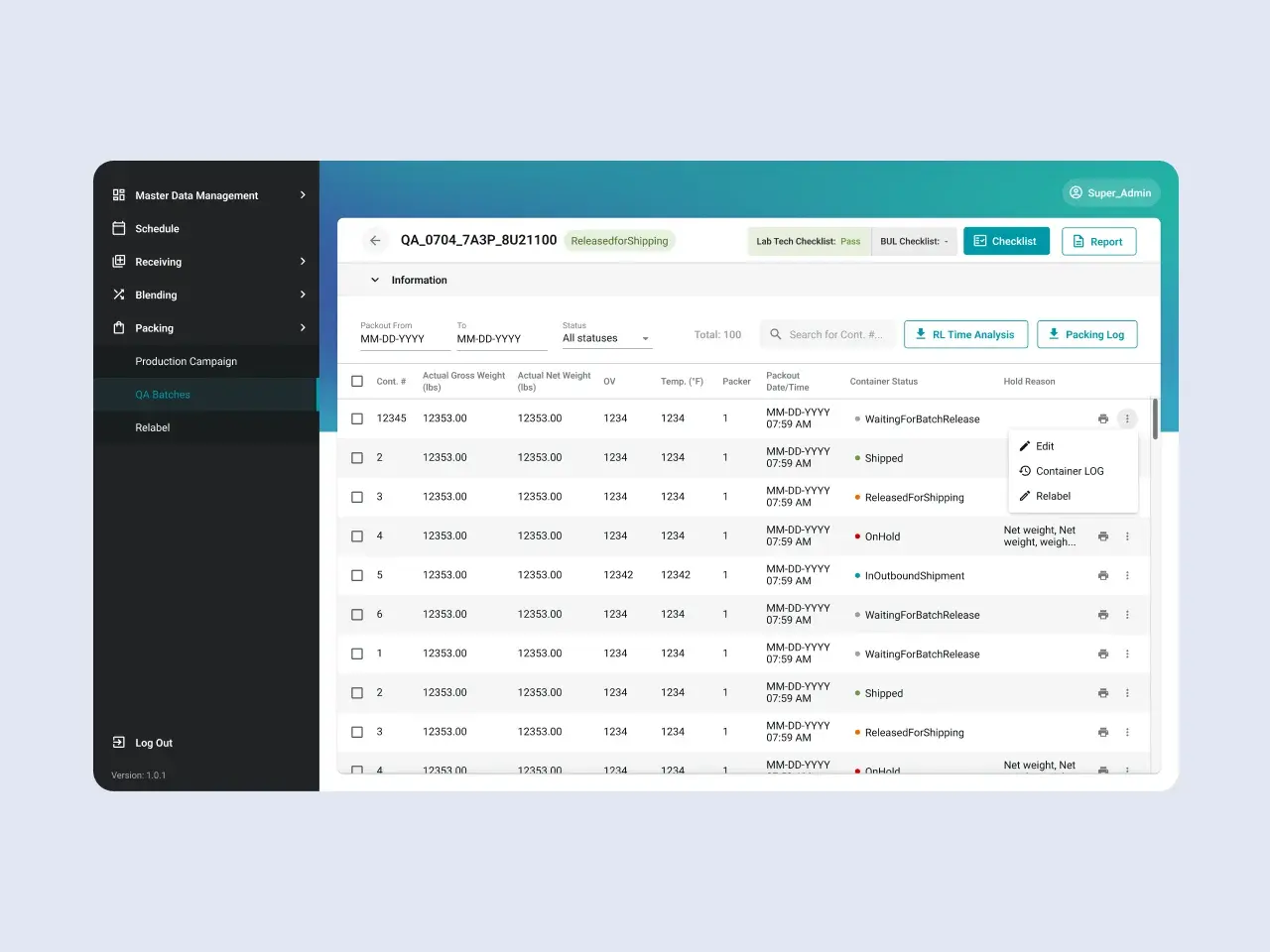
Quality Management System for a Global Manufacturer
- Solution category
- QMS
- Country
- USA
- Industry
- Manufacturing
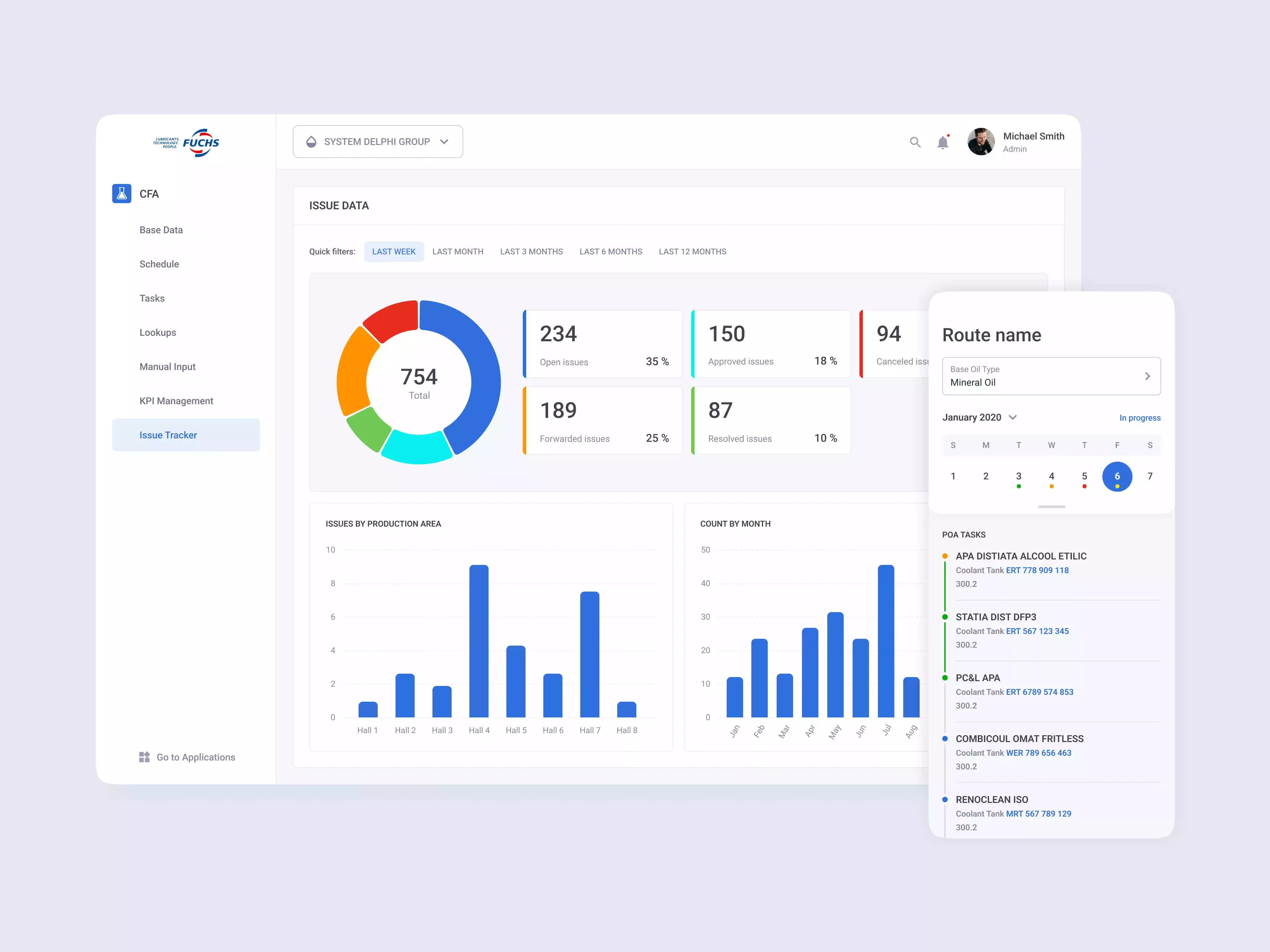
FUCHS: Industrial Testing and Equipment Data Management
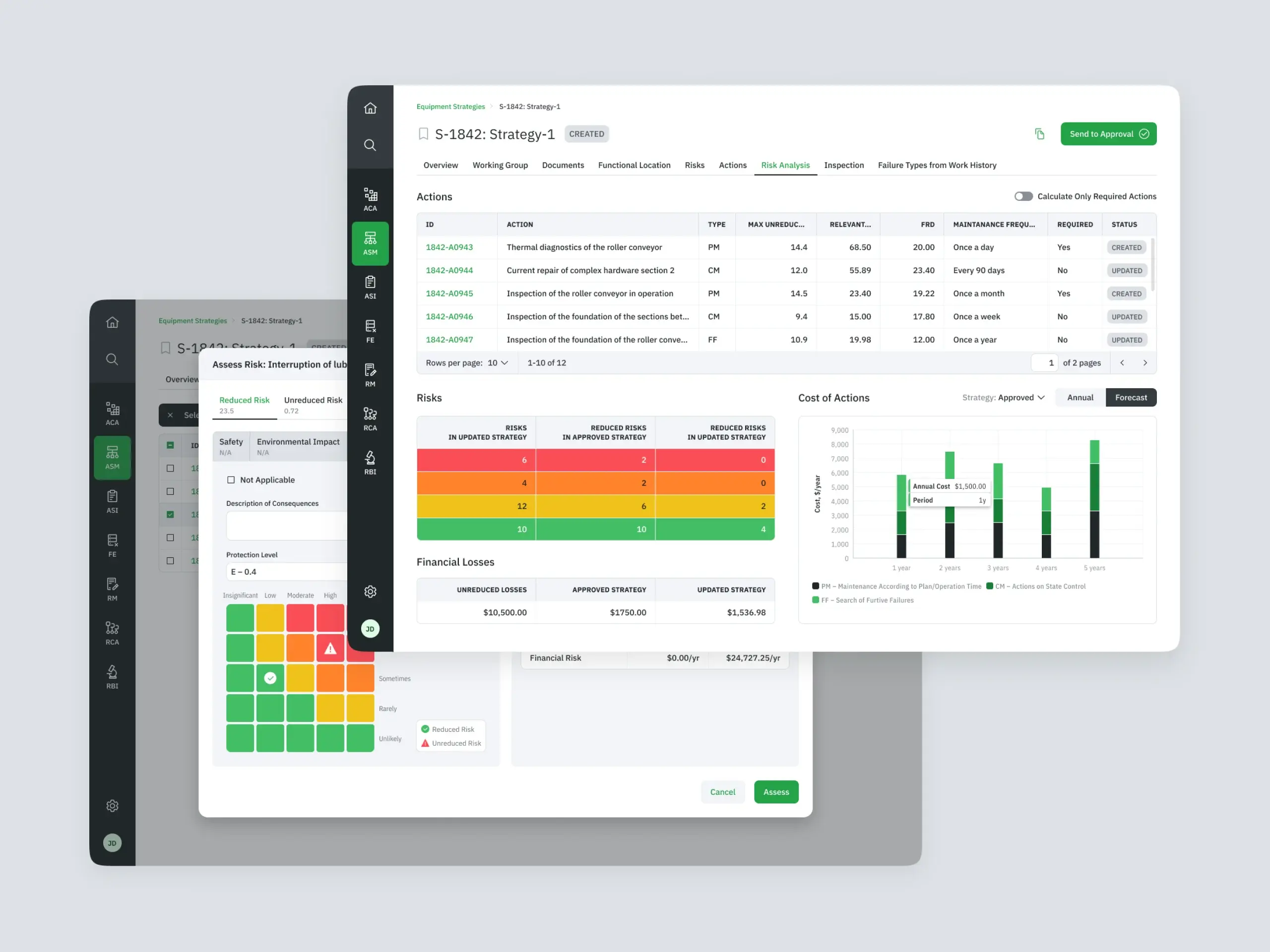
Risk-based Maintenance Platform for an Iron Mining Company
What Our Clients Say
Read client feedback on Emerline's software development projects and ongoing collaborations.
-
We highly recommend Emerline as a technology partner
The Emerline team involved in the completion of our projects demonstrated a high level of responsiveness and support by solving issues and answering questions ASAP. They were diligent and proactively addressed the challenges that arose during the development process. Our cooperation ran smoothly and professionally, and Emerline quickly provided direct and correct advice when necessary. We highly recommend Emerline as a technology partner for large and complicated development projects that also delivers continuous cooperation with the provider on new projects.
-
Emerline is an important part of our strategic team!
Emerline has been our technology partner since late 2012. In the early years I thought that would be a short-term gap fill until I could afford to hire my own technical team in the US. But they have consistently met the demands of our growing company and helped us build what we believe is the industry's best solution option. Emerline provides high quality work, so much so that our platform's reliability and accuracy has been mentioned by our largest customer's internal vendor survey repeatedly. The individuals we work with aren't just contractors, they are an important part of our strategic Team and we enjoy working with them every day!
-
We recommend Emerline as a reliable and skilled tech partner
Collaboration with Emerline was one of our best decisions! Their team quickly understood both the technical requirements and the industry-specific challenges we were trying to solve. We needed a secure, flexible platform that could support data-driven formulation across different industries, and Emerline delivered exactly that. Their team approached the task with professionalism, understood our goals, and built a solution that met both technical and user-facing needs.The result is a working platform that reduces manual work, speeds up R&D, and supports faster, smarter formulation processes across various industries. From day one, communication was smooth, timelines were clear, and we felt fully supported throughout the project. We highly recommend Emerline as a tech partner for your future initiatives.
-
Emerline has been the best development partner we’ve ever worked with!
Emerline has been the best development partner we’ve ever worked with. The team is very responsive and the quality is very high. They are always willing to do whatever is necessary to support development and customer support efforts. I would recommend them to anyone.
-
We recommend Emerline as a trusted technology partner
We can confidently say that Emerline fully met our expectations, starting with providing high-quality advice on technologies that would improve our solution and continuing with their fast, high-quality implementation. Emerline has strong communication processes in place that kept us apprised of the project's stage and allowed us to discuss any issues on the go. The team was professional and promptly made adjustments when asked. We recommend Emerline as a trusted technology partner for developing telemedicine solutions and would choose to work with Emerline again regarding new projects.
-
They proved themselves reliable technology partners
Throughout our cooperation with Emerline, they proved themselves reliable technology partners. That’s why we trusted them with our new project — website migration to AEM and revamping our brand’s product catalog that we use across multiple websites — without any hesitation. The team always stayed in touch, providing regular feedback and progress updates. The cooperation was smooth, and the work on the project was completed in due time. They provided an efficient solution that allowed us to reduce infrastructure costs; with it, we didn’t have to depend on third-party vendors. Thanks, Emerline! We will definitely continue working with you.
-
We are very pleased and content with our relationship with Emerline
We are very pleased and content with our relationship with Emerline. We rely on their team for full-stack development of our platform. We respect the high technical caliber and dedication of the team assigned to our project. Emerline provided us with the scaling we needed to grow development capabilities from early-stage POC to now a globally deployed platform in the HR Teach space.
-
Emerline helped us build an MVP into a full-fledged production platform — in 14 months
Emerline worked closely with us to take the best ideas from our MVP and integrate them with transactional capabilities for digital payments, workflow for job management, and funds transfers for cash advances. Our platform was built to service the roofing industry getting contractors paid faster so they can focus on growing their businesses and servicing their customers.
-
Emerline exceeded expectations!
Redesigning our website wasn't just about updating our look — it was about building a stronger front door for the world to experience Miami’s economic story. As the official EDO for Miami-Dade, we knew the stakes were high. Emerline exceeded expectations. They were consistently organized, forward-thinking, and committed. In less than six months, we had a completely new platform — faster, smarter, and built to grow with us. We’re proud of what we built together!
-
The team gladly brought their expertise and delivered us a perfect solution to meet our customers’ business needs.
The Emerline team wasn’t scared of any challenges and managed to design a solution to cater to any analytical or supply chain tasks. Their enthusiasm and process transparency ensured seamless communication and prompt reaction to any adjustment or focus shift from our side. Their experience and dedication allowed them to provide the solution really fast. We highly recommend choosing Emerline as a development partner if you need a high-end solution for your business.
-
Emerline demonstrated a deep understanding of the client's vision
Emerline demonstrated a deep understanding of the client's vision, delivering a functional MVP on time and within budget. The team was highly responsive to the client's needs and maintained clear communication throughout. Above all, their exceptional project management skills stood out.
-
The level of skill and quality of the developers is outstanding!
Emerline has been helping the client significantly improve their apps for 1.5 years. Their efforts have resulted in positive feedback from users and stakeholders. Moreover, the vendor impresses the client with their skills, flexibility, excellent project management, and effective communication.
-
Impressed with transparency, proactiveness, and customer-oriented processes
Emerline helped the client deploy the mobile app on the app store. Their team impressed the client with their transparency, proactiveness, and customer-oriented processes. They informed the client about any issues and addressed them swiftly, positively affecting the product quality and work speed.
-
My experience with Emerline has been great
The team was hired to design and develop the Echospectra mobile and web applications, as well as to integrate them with a variety of cloud services. A critical requirement was to rapidly develop the apps in an agile manner, quickly implementing important stakeholder and user feedback as it came along, and fixing any outstanding bugs. The team managed to accommodate this kind of agile, change-driven process successfully. Thanks to their rapid development approach, we've been able to build the initial app versions and then continuously iterate on them to refine our product offering and make sure it meets and exceeds customer expectations. I highly recommend them to anyone looking for a reliable partner who delivers on time and on budget.
-
They were very successful in listening to what we needed
They were very successful in listening to what we needed, making the appropriate suggestions, and pointing us in the right direction. They helped move our software from an awkward and crashy program to one that we depend on everyday. We couldn't do what we do without it.
Frequently Asked Questions About Custom QMS Development
A custom QMS project raises practical questions about existing equipment, regulatory requirements, production schedules, and historical data. The answers below explain how these factors affect development and deployment.
-
Why develop a custom QMS instead of buying an off-the-shelf commercial solution?
Custom development makes sense when your inspection procedures, equipment connections, or approval rules require extensive changes to a commercial product. We review your existing systems and requirements to determine whether a dedicated QMS, an extension, or a combination of existing tools would be more practical.
-
How does a custom QMS integrate with our legacy shop-floor machinery and existing ERP/MES?
We assess the interfaces available in your equipment and enterprise systems before defining the integration approach. Depending on the technology, connections may use existing APIs, middleware, industrial gateways, or supported machine protocols. Older equipment may require additional adapters or data collection components.
-
Can a custom QMS support ISO 13485, IATF 16949, and FDA 21 CFR Part 11 requirements?
We develop QMS software with the applicable regulatory and industry requirements in mind, including controlled records, electronic approvals, and supporting audit evidence. The necessary controls and validation activities are agreed upon with your quality and compliance teams. Compliance also depends on how the system is configured, validated, and operated.
-
What happens if the plant floor loses network connectivity during production?
Inspection applications can be designed to retain selected functions offline, storing entries locally until the connection returns. Synchronization rules address delayed updates and conflicting records. Activities requiring live system checks or production authorization follow separately defined procedures during an outage.
-
How do you roll out the software without disrupting active manufacturing lines?
We test the QMS before introducing it into production and plan deployment around your operating schedule. A rollout may begin with one line or facility, followed by further releases after initial results are reviewed. Cutovers, employee training, and fallback procedures are coordinated with your plant and IT teams to minimize disruption.
-
Can we incorporate computer vision and machine learning into our existing inspection lines?
Yes, where the available equipment and inspection conditions support their use. We assess camera placement, image quality, defect examples, and integration requirements before selecting an approach. Models are tested against representative inspection data, with uncertain results routed for employee review where appropriate. -
How do we migrate legacy paper travelers, Excel logs, and historical nonconformance records into the new system?
We review the existing records to determine what needs to be transferred, cleaned, or retained as an archive. Paper documents may be scanned and indexed, while spreadsheet and database records are mapped to the new structure. Imported data is checked for completeness and accuracy before the system goes live.
-
Who owns the intellectual property (IP) and source code of the developed QMS?
Emerline's published engagement terms state that source code and IP rights are transferred to the client upon payment. The project agreement specifies the applicable ownership terms, including any third-party components and handover requirements.
Contact us
If you are looking for a Technology Partner for your business, fill out the form below, and we will contact you at short notice.