Artificial Intelligence in Mobile Apps: How AI is Transforming Mobile App Development
Table of contents
- What is AI in Mobile App Development?
Architectural Evolution: The Traditional Pipeline vs. AI-Augmented Lifecycle
Key Benefits of AI in Mobile Apps- 1. Boosting Development Productivity
- 2. Engineering Smarter, More Capable Apps
- Core AI Technologies Driving Modern Apps
- Machine learning (ML)
- Natural language processing (NLP)
- Computer vision
- Emotion recognition
- Chatbots & virtual assistants
- Generative AI
- Personalizing Mobile Apps With AI
- Making Mobile Apps More Secure With AI
Technical Stack: Choosing the Best AI Tools for Mobile Platforms
1. TensorFlow Lite (Android & iOS)
2. Core ML (iOS)
3. ML Kit (Android & iOS)
4. PyTorch Mobile (Android & iOS)
5. Other Tools & Platforms
- How AI Is Making Mobile Apps More User-Friendly
- Smarter, more adaptive interfaces
- Less repeating, more doing
- More ways to interact
- What's Next for AI in Mobile Apps?
- Hyper-personalization
- Enhanced AR and VR integration
- Growth of voice interfaces
- Rise of edge AI
- Smarter UI/UX design
- Predictive text and smart replies
- AI-generated interfaces
- Challenges of Using AI in Mobile App Development
- Ethical concerns
- Data privacy issues
- Technical issues
- Regulatory and legal issues
- Choosing the Best Technology for Specific AI Tasks
- Image and video recognition
- Natural language processing (NLP)
- Personalization and recommendation systems
- Building chatbots and virtual assistants
- Generative AI
- A few things to keep in mind
- AI in Mobile Apps: Real-World Success Stories
- E-commerce & retail
- Healthcare
- Finance & banking
- Entertainment & streaming
- Virtual assistants
- Other cool examples
- FAQs
- 1. How do we choose between Cloud AI and On-Device (Edge) AI in 2026?
- 2. Will adding AI to my mobile app significantly drain the user’s battery?
- 3. How does the 2026 AI Act affect mobile app development?
- 4. Can we implement AI features without a massive data science team?
- 5. What is "Multimodal UX" and why is it replacing standard touch interfaces?
- 6. How do we protect our AI-integrated app from "Prompt Injection" attacks?
- Optimize Your Mobile Development Pipeline with Emerline
Mobile applications have become a primary architecture for how modern enterprises connect with their users - whether it’s boosting customer engagement velocity, orchestrating automated services, or optimizing transactional convenience. Over the past few years, the competitive push was focused on making apps faster and cheaper to build. Today, the operational paradigm has shifted completely: applications must be fundamentally smarter.
With the explosion of Generative AI and decentralized on-device machine learning, artificial intelligence is no longer a localized front-end luxury - it is an institutional core engineering requirement for maintaining market relevance in the Apple App Store and Google Play. To navigate this paradigm shift and integrate scalable machine learning runtimes into your product lifecycle, engineering teams look to specialized Emerline AI App Development Services to build clean, future-proof software architectures.
In this comprehensive guide, we will analyze how AI is transforming the mobile software development lifecycle, explore the core technology stacks involved, and break down how to leverage these intelligent frameworks to drive user engagement, maximize return on investment (ROI), and enforce ironclad security.
Key Takeaways for Tech Leadership:
- Architectural Pivot: Modern mobile apps are shifting from absolute cloud reliance to a hybrid layout, processing latency-critical tasks locally via On-Device Small Language Models (SLMs).
- Development Velocity: AI-augmented pipelines shorten code composition and automated testing lifecycles by up to 40%, significantly reducing technical debt from day one.
- Proactive Security: Machine learning has transformed mobile security from reactive patch deployment to real-time anomalous behavior tracking and adaptive authentication at the client level.
- Regulatory Landscape: Compliance with the 2026 AI Act, UK-GDPR, and HIPAA demands strict on-device data isolation, input sanitization, and explainable AI models (XAI).
What is AI in Mobile App Development?
In modern software engineering, AI in mobile app development is about moving beyond static code to create dynamic, evolving ecosystems. It’s no longer just about executing pre-set commands; it’s about building applications that can perceive, learn, and adapt in ways that traditional technology simply cannot match.
By integrating AI layers, modern mobile applications gain the structural ability to:
- Anticipate Complex User Needs: Parse and identify multi-layered patterns within massive datasets to predict user intent before explicit actions occur.
- Execute Autonomous Local Decisions: Deliver instantaneous operational responses in real time, such as triggering an immediate fraud alert or automatically restructuring UI layouts to lower interface friction.
- Self-Improve via Continuous Feedback Loops: Establish runtime refinement cycles where the underlying machine learning models become measurably more accurate the more the application is utilized.
What was once classified as a futuristic R&D concept has solidified into a strict industry standard. Today, artificial intelligence acts as the core engine behind software innovation, forcing enterprise brands to completely rethink their engineering frameworks. To evaluate how these intelligent capabilities can be integrated into your next product lifecycle, explore our comprehensive Emerline Mobile App Development Services hub. Ultimately, AI transforms high-performance applications into something that feels less like a rigid tool and more like an intuitive extension of a consumer's daily life.
Architectural Evolution: The Traditional Pipeline vs. AI-Augmented Lifecycle
Transitioning to an AI-driven mobile framework requires overhauling your deployment pipelines. The introduction of cognitive computing runtimes collapses old developmental silos, creating an iterative, self-optimizing application lifecycle.
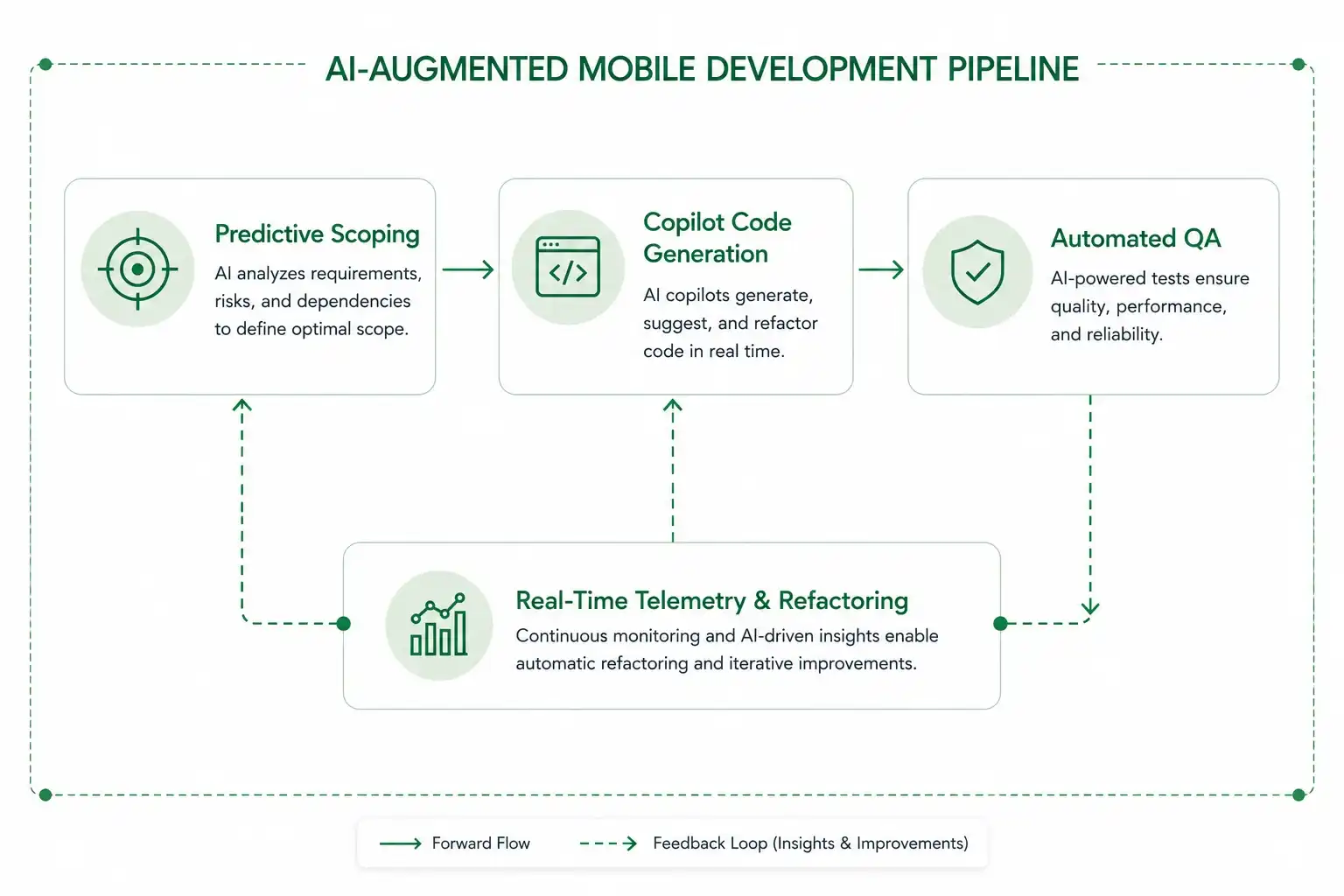
| Lifecycle Metric | Traditional Mobile Engineering Pipeline | AI-Augmented Software Development Lifecycle |
| Code Composition Velocity | Manual line-by-line syntax drafting and manual library linking | Intent-driven generation using fine-tuned LLM and SLM coding agents |
| QA & Vulnerability Testing | Manual test case scripting and periodic scheduled regression runs | Continuous, automated synthetic user behavioral loops & fuzzing |
| Technical Debt Remediation | Scheduled manual refactoring sprints (highly delayed execution) | Real-time static analysis and automated client-side patch generation |
| Performance Tuning | Reactive debugging based on crash analytics reports | Proactive memory and battery optimization via edge telemetry |
Key Benefits of AI in Mobile Apps
The rapid advancement of AI is transforming the mobile development industry on two distinct fronts. First, it empowers developers with intelligent automation that streamlines routine workflows and accelerates time-to-market. Second, the integration of AI unlocks unprecedented functionalities, fundamentally shifting how users interact with digital products.
1. Boosting Development Productivity
On the development side, AI acts as a high-performance catalyst, removing the friction of repetitive and time-consuming tasks.
- Automated Coding & Quality Assurance: AI-powered tools (like GitHub Copilot) offer real-time code suggestions and predictive bug detection. This doesn’t just speed up development; it significantly reduces human error, making apps more stable and secure from the first commit.
- Intelligent Monitoring: AI tools track app performance in real-time, allowing teams to make data-driven decisions about updates and optimizations before technical debt accumulates.
- Democratization of Tech: With the rise of low-code and no-code AI platforms, innovation is no longer limited to seasoned developers. More people can now participate in building complex apps, focusing on business logic rather than syntax.
2. Engineering Smarter, More Capable Apps
The most exciting shift, however, is what AI brings to the end-user. Beyond flashy features, AI creates experiences that feel tailored, intuitive, and human-centric.
- Hyper-Personalization: AI doesn’t just track clicks; it understands intent. By analyzing user habits and preferences in real time, apps can deliver truly relevant content - from Amazon’s "frequently bought together" to Netflix’s "just for you" algorithms. It utilizes advanced machine learning profiles to make the application feel like it truly "gets" the user.
- Advanced Computational Photography: AI has redefined smartphone photography. Using advanced computer vision frameworks, apps can perform scene optimization, accurate portrait rendering, and low-light auto-enhancements in milliseconds, turning every user into a professional content creator.
- Autonomous App Agents: AI-powered virtual assistants like Siri, Google Assistant, and Alexa are now part of everyday life. Modern autonomous mobile agents have shifted from rigid pre-written scripts to context-aware task orchestration layers, allowing apps to be interactive and helpful around the clock.
- Multimodal Interaction (Voice & Image Recognition): Voice search, voice commands, and visual search (like scanning items with a camera to find them online) are becoming standard features. These tools remove the clunky "search bar friction," making apps easier and more accessible - such as helping visually impaired users understand images through tools like Android's TalkBack powered by Gemini Nano.
- Proactive Security: Security is no longer a reactive measure. AI constantly monitors for unusual behavior to prevent fraud and powers seamless biometric logins (face, fingerprint, and voice recognition), giving users complete peace of mind without compromising convenient accessibility.
Core AI Technologies Driving Modern Apps
AI isn't just a single technology — it’s a mix of powerful tools working together to make mobile apps smarter, more helpful, and way more fun to use. Here’s a breakdown of the main AI technologies that are changing the mobile app game:
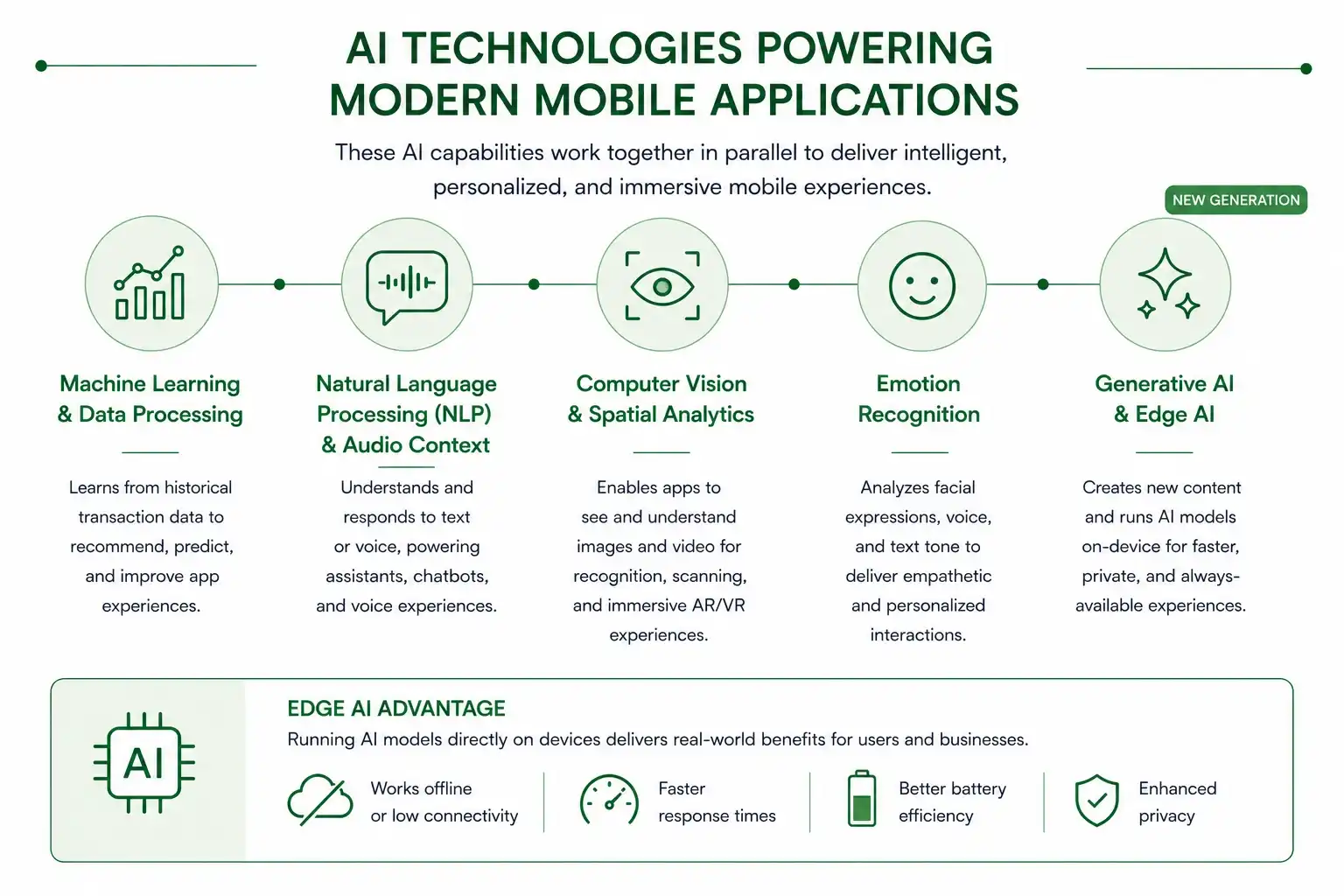
Machine learning (ML)
Machine learning lets apps learn and improve without being told exactly what to do. Instead of following fixed rules, apps learnt by analyzing data.
In mobile apps, ML is used to offer personalized recommendations and make predictions based on your habits. For example, Netflix suggests movies you might like based on what you’ve watched, and Amazon recommends products based on your browsing and buying history. The more you use the app, the better the suggestions get. It’s all about creating a more personal experience that keeps users engaged and coming back.
Natural language processing (NLP)
Ever talked to a chatbot or used voice search? That’s NLP in action. It helps apps understand and respond to human language — whether you’re typing or speaking.
NLP powers virtual assistants (hello, Siri and Google Assistant), chatbots that answer your questions, and voice-driven features like hands-free search or voice shopping. It makes conversations with apps feel more natural and removes a lot of the usual clunky interface stuff.
Computer vision
Computer vision enables apps to "see" and understand images and video. This opens the door to all kinds of cool features — like facial recognition for unlocking your phone, scanning documents or handwritten notes, and recognizing products in a photo.
It also plays a huge role in AR (augmented reality) and VR (virtual reality) apps, helping to create immersive experiences for everything from gaming to online shopping. There’s even a push to use computer vision to improve accessibility — for example, helping visually impaired users understand images through tools like TalkBack powered by Gemini Nano.
Emotion recognition
Yep, AI can even try to read your emotions — by analyzing your facial expressions, tone of voice, or even the words you use. Apps can use this info to adjust how they respond, what content they show, or how the interface looks, all based on how you might feel.
It’s still a developing field, though. Emotion recognition has great potential for creating more empathetic experiences, but it also raises some ethical questions about privacy and how emotional data is used. So, while exciting, this technology needs to be handled with care.
Chatbots & virtual assistants
We’ve all chatted with bots at this point, right? Whether it’s getting quick help from a customer service chatbot or asking your voice assistant to set a reminder, these AI tools are everywhere.
Chatbots can answer FAQs, solve common issues, and free up human support teams. And virtual assistants — like Alexa, Siri, and Google Assistant — can handle everything from controlling smart devices to giving weather updates. They make life easier and more efficient, both for users and businesses.
Generative AI
Generative AI is the rising star of the group. It’s the tech that lets apps create new content — such as writing text, generating images, or even building simple app layouts.
Google’s Gemini models are already powering some of this in Android, with tools that can run directly on your device (thanks to Gemini Nano), keeping things private and fast. Generative AI opens up awesome possibilities: think AI-created avatars, customizable in-game content, or even AI helping developers build features faster by generating UI mockups or app content on the fly.
So, AI isn’t just one thing. It’s a complete toolkit that’s transforming what apps can do and how we interact with them. Whether it’s making apps smarter, more personal, or just more fun to use, AI is playing a huge role in shaping the future of mobile experiences.
Personalizing Mobile Apps With AI
One of the coolest things AI brings to mobile apps is personalization — the ability to make the app feel like it was designed just for you. It all starts with data. Apps collect tons of info, like your age, what you click on, what you search for, what you’ve bought, and even how you navigate through the app.
AI takes all that data and looks for patterns. Maybe you always shop for sneakers late at night, or you tend to binge-watch comedies on the weekend. These insights help the app figure out what you’re into and how best to serve it up.
From there, machine learning builds a "profile" for each user — not just basic info, but a detailed picture of your interests, habits, and preferences. Based on this, AI can suggest things you’re more likely to enjoy — whether that’s movies, products, songs, or even app features you haven’t tried yet.
Here’s how it works behind the scenes:
- Content-based filtering recommends things that are similar to stuff you’ve already liked.
- Collaborative filtering looks at what other users with similar tastes enjoy and suggests that to you.
- Hybrid approaches combine both methods for even better results.
And the best part? These systems keep getting better. AI is always learning, based on how you react, what you skip, what you love, and how others behave. That means your recommendations get smarter over time, keeping your experience fresh and relevant as your tastes shift.
So whether it’s getting the perfect playlist, spotting a deal on something you’ve been eyeing, or discovering your next favorite show — AI is working in the background to make sure your app experience feels uniquely yours.
Making Mobile Apps More Secure With AI
As cyber threats get trickier and more frequent, AI is stepping up as a powerful ally in keeping mobile apps — and the people who use them — safe. It’s not just about locking things down anymore. AI helps apps think ahead, detect weird behavior, and respond to threats in real time.
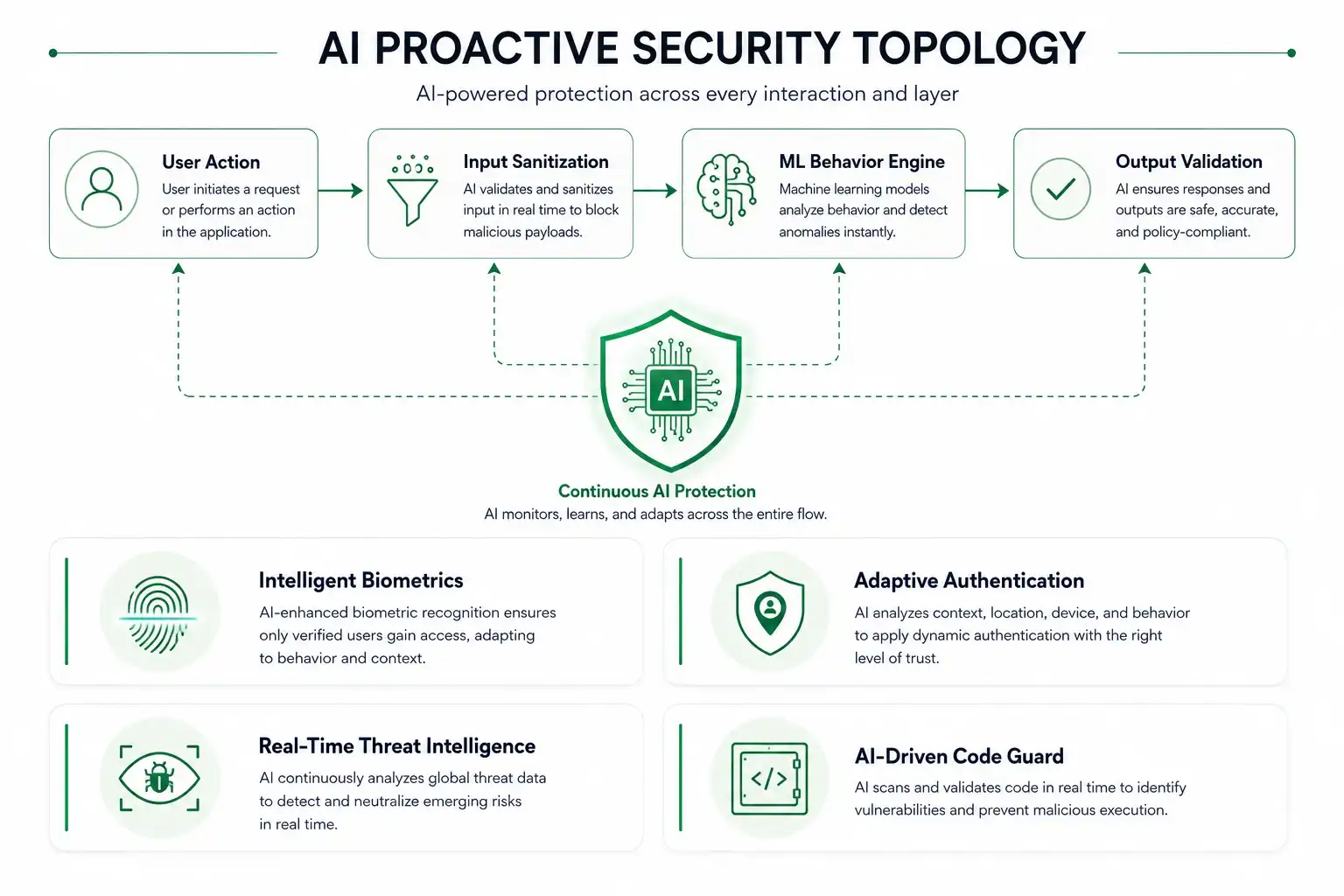
Let’s break down some of the ways AI is boosting mobile security:
- Smarter Logins with Biometrics: Face ID and fingerprint scanners use specialized machine learning models to verify identity locally before granting entry, making logins fast and highly secure.
- Behavior Tracking & Adaptive Authentication: AI learns how a user typically interacts with an app - their standard login times, navigation pacing, and common locations. If a login occurs from an unfamiliar device or geo-location, the system flags it and triggers adaptive authentication, asking for extra validation metrics only when risk scores rise.
- Real-Time Threat Detection: AI acts as an active security guard, catching red flags like malicious data injections, hack attempts, or malware execution lines instantly before they cause structural system breaches.
- AI-Driven Code Scanning: Security starts in the source repository. Through automated penetration testing, AI tools scan application code for vulnerabilities, flag potential buffer overruns, and uncover zero-day threats early in the CI/CD pipeline.
To insulate your digital product from severe data liability penalties and protect against advanced threats like Prompt Injection attacks, ensure your mobile infrastructure enforces local database-level encryption (such as SQLCipher for client storage). All user payloads must be rigorously sanitized and tokenized before interacting with cloud-based machine learning endpoints. Navigating these compliance landscapes (under UK-GDPR, CCPA, and HIPAA regulations) requires ironclad security engineering directly embedded into the architecture.
Technical Stack: Choosing the Best AI Tools for Mobile Platforms
Integrating AI into mobile apps has become much easier these days, thanks to a range of specialized tools and libraries designed for mobile platforms. Choosing the right tools depends on the specifics of your project, performance needs, and available resources.
To start, most AI app development relies on popular programming languages like Python, Java, C++, and R, thanks to their rich ecosystems of machine learning and data processing libraries. But when it comes to directly integrating AI into mobile apps, here are some specialized frameworks and tools you should consider:
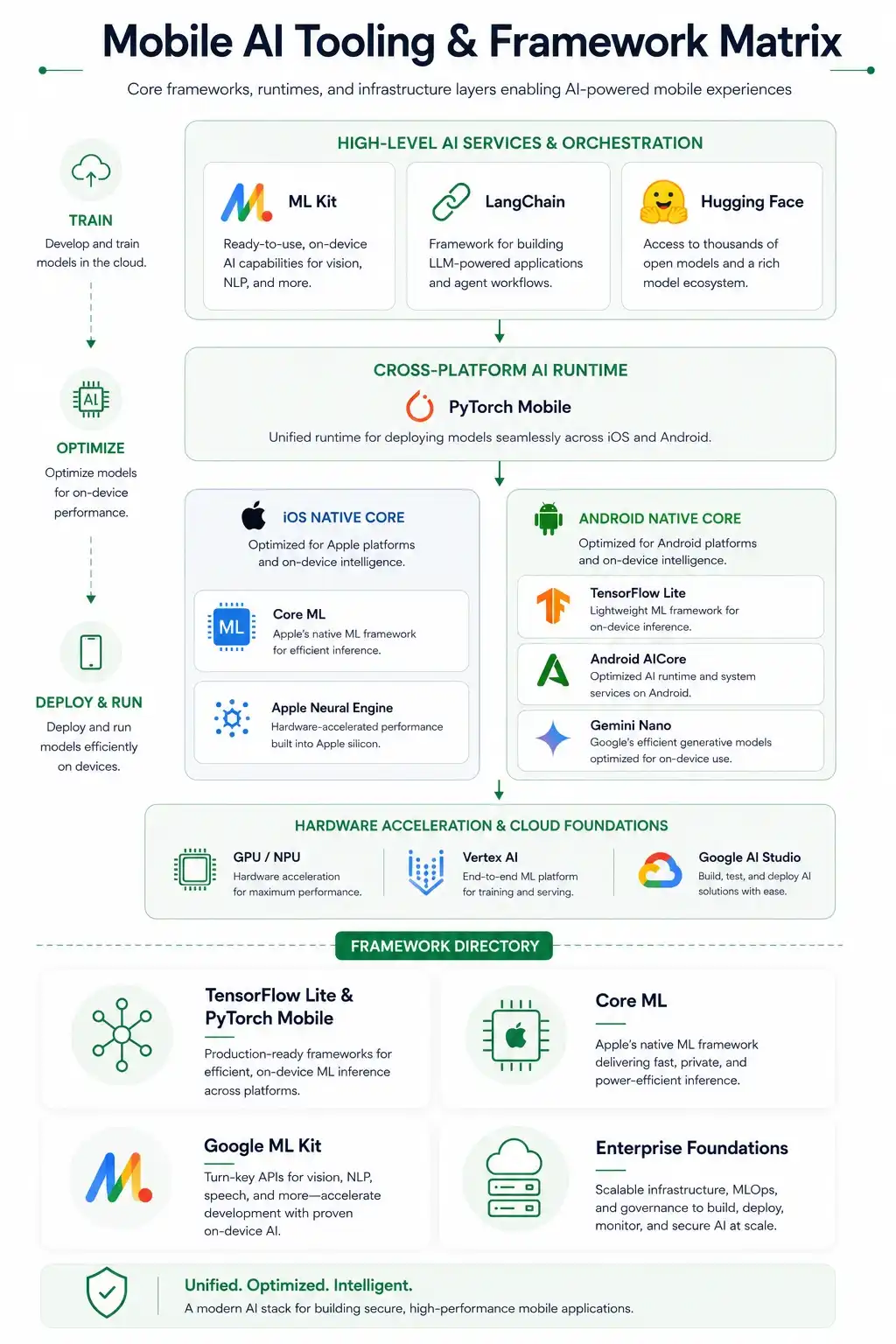
1. TensorFlow Lite (Android & iOS)
Google’s TensorFlow Lite is a streamlined, mobile-friendly version of TensorFlow built to run efficiently on embedded devices. It is ideal for image recognition and natural language processing where low latency and data privacy are key. It allows developers to convert models trained in TensorFlow, PyTorch, and JAX into a mobile-optimized .tflite format, leveraging hardware acceleration via the device GPU or Neural Engine.
2. Core ML (iOS)
Apple’s proprietary Core ML framework is deeply optimized for iOS devices. It processes machine learning models directly on-device using the Apple Silicon Neural Engine, ensuring maximum performance while maintaining absolute user data security. It natively supports model conversions from external training environments like PyTorch.
3. ML Kit (Android & iOS)
For mobile developers looking to quickly deploy AI capabilities without deep data science expertise, Google’s ML Kit is an excellent option. This cross-platform SDK offers turn-key APIs for tasks like text recognition, face detection, and barcode scanning, operating seamlessly both on-device and through Google Cloud AI services.
4. PyTorch Mobile (Android & iOS)
PyTorch Mobile brings the popular deep learning framework to mobile devices. It is a perfect fit for engineering teams requiring deployment flexibility and easy debugging, thanks to PyTorch’s support for dynamic computational graphs.
5. Other Tools & Platforms
Beyond the big names, there are other tools that can help level up your AI game in mobile development:
- Vertex AI: Google’s unified platform for creating and deploying enterprise-level AI solutions.
- Google AI Studio: A web tool for rapid prototyping and experimenting with Gemini models.
- Hugging Face & LangChain: Open-source libraries that offer access to pre-trained models and tools for building more complex AI apps.
- No-code/Low-code Platforms: For those who don’t want to dive deep into coding, platforms like Softr, Microsoft Power Apps, Quickbase, and Airtable allow you to build apps with AI features with minimal or no coding.
Choosing the right AI tools for your mobile app project comes down to your specific needs - whether it’s the need for fast, on-device processing, or the flexibility to customize complex models. With the variety of tools and platforms available today, there’s an AI solution out there for every type of mobile app development.
How AI Is Making Mobile Apps More User-Friendly
AI isn’t just making apps smarter - it’s also making them a lot nicer to use. From cleaner interfaces to fewer clicks, AI is quietly working behind the scenes to create smoother, faster, and more intuitive user experiences (UX) and user interfaces (UI).
Here’s how:
Smarter, more adaptive interfaces
AI pays attention to how you use the app — what features you tap most often, how long you stay on certain screens, and what actions you take regularly. Based on that, it can tweak the interface in real time to better match your needs.
That might look like:
- Moving your most-used features to the home screen
- Offering helpful hints when you’re stuck on a confusing screen
- Switching to dark mode at night, or showing different layouts depending on where you are
It’s all about making the app feel more responsive and personal — without you having to lift a finger.
Less repeating, more doing
Nobody likes filling out the same info over and over. AI steps in to automate those repetitive tasks. Think:
- Auto-filling forms with your saved info
- Showing smart suggestions or search results based on context
- Sending useful, timely notifications without being spammy
It’s like the app just gets you — and that makes using it way more enjoyable.
More ways to interact
AI also unlocks new ways for users to engage with apps, including:
- Personalized recommendations based on your habits and interests
- Computer vision features that let your phone understand what it sees (like scanning items or translating signs)
- Voice control so you can use the app hands-free
All these upgrades come together to create a faster, more efficient, and enjoyable experience — turning ordinary apps into powerful, user-focused tools that feel tailor-made.
What's Next for AI in Mobile Apps?
AI is rapidly transforming mobile apps, and the next few years promise even more exciting developments. According to a report by Grand View Research, the global mobile AI market is projected to grow from USD 16.03 billion in 2023 to nearly USD 85 billion by 2030, with a compound annual growth rate (CAGR) of 26.9%.
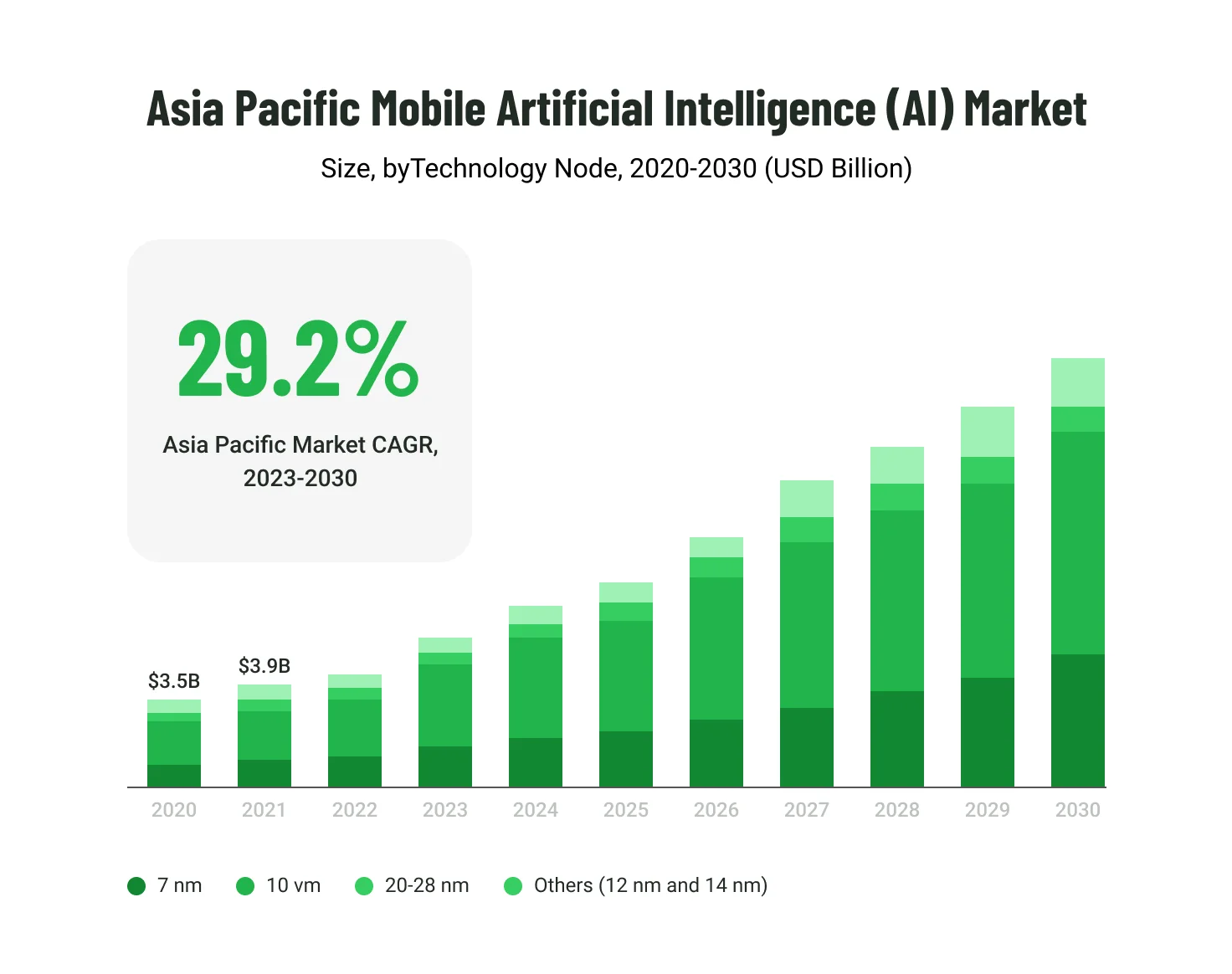
Here are some key trends shaping the future of AI in mobile applications:
Hyper-personalization
AI will enable apps to offer even more tailored experiences by analyzing user behavior and context in real-time. This means more relevant content, features, and services that adapt to individual preferences.
Enhanced AR and VR integration
The fusion of AI with augmented and virtual reality will lead to more intelligent and immersive experiences. Expect advancements in gaming, education, product visualization, and remote collaboration.
Growth of voice interfaces
Voice assistants are becoming more prevalent, making voice search and commerce increasingly common. This trend will continue as users seek more natural and convenient ways to interact with apps.
Rise of edge AI
Processing AI data directly on mobile devices (edge AI) will reduce reliance on cloud connectivity. This approach enhances response times, improves privacy, and allows for offline functionality.
Smarter UI/UX design
AI will play a significant role in UI/UX development by analyzing user interactions to dynamically optimize app interfaces. This leads to more intuitive and personalized user experiences.
Predictive text and smart replies
AI-driven features like predictive text input and smart replies will continue to evolve, making communication more efficient and convenient.
AI-generated interfaces
AI will assist in designing and creating user interfaces, potentially accelerating development processes and offering more personalized solutions.
These trends indicate a future where mobile apps become increasingly intelligent, responsive, and user-centric, thanks to the ongoing advancements in AI technology.
Challenges of Using AI in Mobile App Development
While AI brings incredible benefits to mobile apps, its rapid growth also comes with a few challenges and potential risks that need careful attention.
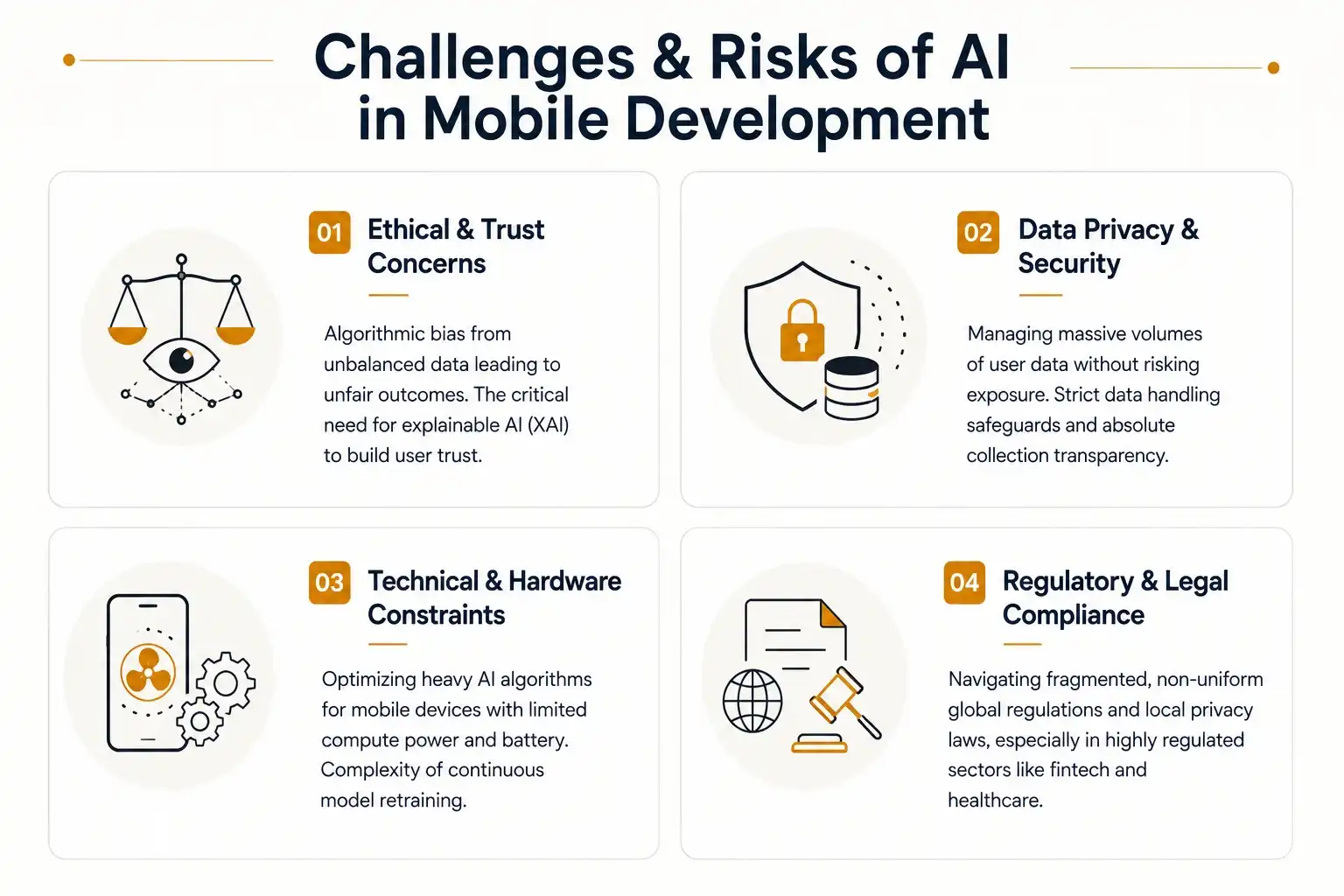
Ethical concerns
One big issue is algorithmic bias, which happens when AI models are trained on unbalanced or biased data. This can lead to unfair or discriminatory outcomes, which is a serious concern. Another challenge is ensuring transparency — it can be tough to understand exactly how AI systems make decisions, and it’s important for developers to create AI that users can easily trust and explain.
Data privacy issues
AI needs lots of user data to work well, but that also raises privacy and security concerns. Without proper safeguards, sensitive personal information could be exposed or misused. Developers must be extra careful when handling user data, making sure to be transparent about how it’s collected and used to protect privacy.
Technical issues
Integrating AI into mobile apps isn’t always easy — it requires a lot of expertise and resources. One challenge is making sure AI algorithms run smoothly on mobile devices with limited computing power. Additionally, training and managing the massive amounts of data AI needs can be tough. Since AI models need regular updates and retraining, maintaining their performance can also be tricky.
Regulatory and legal issues
Right now, there aren’t uniform global regulations for AI, and the rules can vary greatly depending on the country. This creates challenges for developers who need to stay on top of local laws, especially when it comes to data protection and privacy. This issue is very important in industries like healthcare or finance, where sensitive information is often involved.
In the end, while AI offers huge potential in mobile app development, it’s important to balance those benefits with an awareness of the challenges. Addressing these issues thoughtfully will help create AI-powered apps that are safer, more reliable, and ultimately more user-friendly.
Choosing the Best Technology for Specific AI Tasks
When it comes to picking the right AI tools, it really depends on the task at hand. Here’s a quick guide to help you decide:
Image and video recognition
If you’re working on image or video recognition, TensorFlow Lite and Core ML are great choices. These tools are designed for high performance and work well when running models directly on mobile devices. If you’re looking for something quicker and more basic, ML Kit offers ready-made APIs for common recognition tasks.
Natural language processing (NLP)
For tasks like text analysis, machine translation, or building chatbots, TensorFlow Lite and ML Kit can do the job. The choice depends on how complex the task is — both are versatile but have different strengths.
Personalization and recommendation systems
If you’re creating a more advanced recommendation or personalization system, you might want to go with TensorFlow Lite or PyTorch Mobile. These tools give you the flexibility to develop and train custom models tailored to your app’s needs.
Building chatbots and virtual assistants
For integrating NLP models into chatbots, ML Kit and TensorFlow Lite are solid options. But if you want something more specialized, you can check out platforms like Dialogflow and IBM Watson, which focus specifically on chatbot development.
Generative AI
If you’re looking into tasks like generating text or images (think creating AI-generated content), Google’s Gemini models are the way to go, especially on Android devices. They offer powerful tools for these types of tasks.
A few things to keep in mind
When picking your tools, keep in mind the limitations of mobile devices — like memory size and CPU power. It’s always a good idea to test performance across different devices to make sure everything runs smoothly. And don’t forget to check out documentation and developer communities — tools with a good support can save you a lot of headaches during development.
AI in Mobile Apps: Real-World Success Stories
AI is becoming a game-changer for mobile apps, enhancing user experiences and boosting business efficiency across different industries. Let’s look at some great examples of AI in action:
E-commerce & retail
Take Amazon, for example. The platform uses AI for personalized product recommendations, visual search, and AI-powered customer support chatbots. By analyzing what you browse and buy, AI suggests products that are relevant to you, making shopping faster, easier, and more enjoyable. Other retail apps use machine learning to offer tailored recommendations, making the online shopping experience more personal and seamless.
Healthcare
In healthcare, AI plays a huge role in apps designed for diagnostics, patient monitoring, and personalized treatment recommendations. Think of AI-powered symptom checker apps or fitness trackers that help analyze your health data. AI also helps doctors make more accurate diagnoses by analyzing medical data and even assists in drug development. For example, AI can track your sleep and exercise patterns to suggest lifestyle changes, showing just how much mobile health apps are evolving.
At Emerline, we’ve developed an AI-powered medical app that provides advanced diagnostic and patient monitoring features. It’s a great example of how AI is revolutionizing healthcare.
Finance & banking
Banks are using AI to make mobile banking safer and smarter. AI helps detect fraud by monitoring unusual activity, automates financial transactions, and powers chatbots that provide personalized financial advice. Biometric authentication, like facial recognition or fingerprints, is also powered by AI, making banking apps both secure and convenient. AI is even used for predictive maintenance, letting users know when it’s time to replace filters or parts to keep services running smoothly.
Entertainment & streaming
Platforms like Netflix and Spotify use AI to personalize recommendations. By analyzing your viewing or listening history, AI suggests movies, series, or music tailored just for you. These apps use machine learning to build playlists, suggest new artists, and help you discover fresh content based on your tastes and current mood.
Virtual assistants
AI-powered virtual assistants like Siri, Google Assistant, and Alexa have become a staple in mobile apps. They help users control apps with their voice and perform tasks like setting reminders, checking the weather, or managing smart devices. More and more apps are integrating these virtual assistants to make user interactions more conversational and intuitive.
Other cool examples
- Logistics apps use AI to optimize delivery routes, ensuring better efficiency and faster service.
- On social media, AI helps personalize content feeds, detects harmful content, and even offers advanced facial recognition for tagging photos.
- Language learning apps like Duolingo use AI to make lessons more engaging with conversational interfaces, improving how users learn new languages.
At Emerline, we’ve also had success applying AI in the B2B space. For instance, we created an AI-powered SaaS lead acquisition solution to help businesses better target and engage potential clients.
We’ve also developed an AI-driven document search service for a large B2B client, enabling them to search and retrieve information from large document repositories quickly and accurately.
Finally, for an AI-focused company, we delivered a custom machine learning solution, showcasing our expertise in complex AI implementations.
FAQs
1. How do we choose between Cloud AI and On-Device (Edge) AI in 2026?
The decision is now driven by the "Privacy vs. Power" trade-off. On-Device AI (using frameworks like Gemini Nano or Apple Intelligence) is essential for ultra-low latency, offline functionality, and maximum privacy. However, for complex Generative AI tasks that require massive reasoning capabilities, Cloud-based LLMs are still necessary. In 2026, the gold standard is a Hybrid Model: process sensitive user data on-device and send anonymized, high-logic requests to the cloud.
2. Will adding AI to my mobile app significantly drain the user’s battery?
It is a major risk if not optimized. Running continuous inference on a mobile GPU/NPU is resource-intensive. To prevent "Battery Drain Churn," developers must use Quantization (reducing the precision of AI models to make them smaller) and Hardware Acceleration (utilizing the device's dedicated Neural Engine). At Emerline, we prioritize model optimization to ensure that AI features don't increase battery consumption by more than 3-5% per session.
3. How does the 2026 AI Act affect mobile app development?
Compliance is no longer optional. If your app uses "High-Risk" AI (such as in healthcare, finance, or biometric ID), you must provide Explainable AI (XAI). This means the app must be able to document why an AI decision was made. Additionally, you are legally required to label AI-generated content (deepfakes or synthetic text) to avoid heavy fines from EU and US regulators.
4. Can we implement AI features without a massive data science team?
Yes. In 2026, the rise of "Model-as-a-Service" (MaaS) through Google ML Kit and Apple’s pre-trained APIs allows mobile developers to integrate sophisticated features (like real-time translation or object detection) with just a few lines of code. You don't need to build the model; you just need to orchestrate it. We help startups leverage these "Off-the-Shelf" tools to launch AI features in weeks instead of months.
5. What is "Multimodal UX" and why is it replacing standard touch interfaces?
Multimodal UX allows users to interact via voice, sight, and touch simultaneously. For example, a user can point their camera at a broken part and ask, "How do I fix this?" while the app highlights the solution in AR. This removes the "Search Bar" friction. In 2026, apps that rely solely on typing are seeing a 30% drop in engagement compared to multimodal competitors.
6. How do we protect our AI-integrated app from "Prompt Injection" attacks?
Security has moved from the network layer to the input layer. Hackers now use "Prompt Injection" to trick your app’s internal AI into revealing system instructions or user data. To defend against this, we implement Input Sanitization (filtering malicious prompts) and Output Validation (ensuring the AI doesn't leak sensitive strings). Security audits for AI-native apps are now a mandatory part of our deployment pipeline.
Optimize Your Mobile Development Pipeline with Emerline
Integrating AI into mobile apps brings exciting possibilities, but it also requires careful planning and expertise. At Emerline, we specialize in AI solutions and are here to help you optimize development costs while maintaining top-notch quality and functionality.
Our team will assist you with:
- Selecting the best tools and technologies tailored to your specific needs.
- Optimizing AI model performance on mobile devices, keeping device limitations in mind.
- Ensuring user data security and privacy throughout the development process.
- Navigating ethical and regulatory standards to ensure your project aligns with the latest requirements.
We know every project is unique, and we take a personalized approach for each client. Get in touch with us today to discuss how Emerline can bring your AI project to life — efficiently and within budget.
Updated on Jan 23, 2026