12+ Best NHL Front Office Software Solutions for 2026
Table of contents
- The Foundation: ERP & Data Sovereignty
- 1. SAP-NHL Coaching Insights (Powered by SAP BTP)
2. Microsoft Fabric / Snowflake
Performance Intelligence: Tracking & Context
- 3. NHL EDGE (Puck and Player Tracking)
- 4. Sportlogiq (Vision AI)
- Scouting & Roster Management
- 5. Custom Scouting Solutions & RinkNet
- 6. PuckPedia / CapFriendly (Custom API)
- High Performance: Medical & Biomechanics
- 7. Catapult (Vector)
- 8. Kitman Labs / Zone7
- The Cognitive & Psychological Stack (The Edge)
- 9. Sense Arena (VR Training)
- 10. Emotional AI & HRV
- Operations & Video Analysis
- 11. Thunder / XOS Digital (Catapult)
- 12. Teamworks
- Unified Stack vs. Best-of-Breed: Is There a "Single App" for Everything?
- 1. The Reality: Why One App Isn't Enough
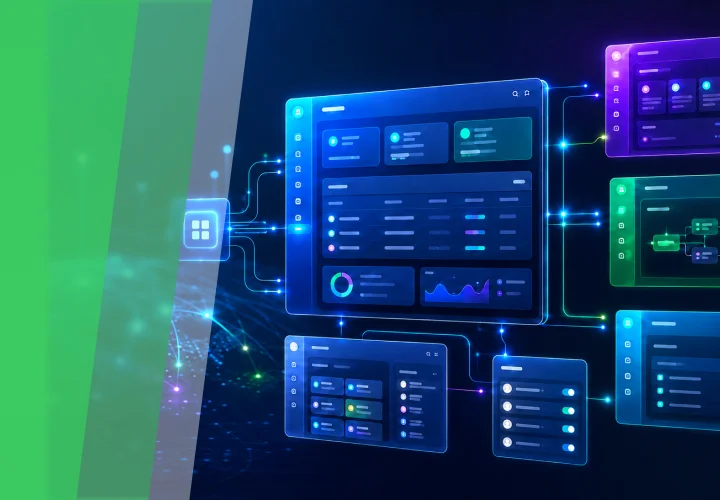
- 2. The Modern Unified Data Hub
- 3. Emerging "All-in-One" Contenders
- The Emerline Role: Middleware & Agentic AI
In 2026, the gap between NHL contenders and pretenders is defined not just by on-ice talent, but by the quality of an organization's Data Pipeline. The modern front office is a high-tech hub where SAP ecosystems, video analytics, biometrics, and scouting intelligence converge to drive multi-million dollar decisions.
Below is a detailed list of the systems that form the foundation of an elite club's technology stack.
The Foundation: ERP & Data Sovereignty
At this level, the primary goal is transforming fragmented data streams into a unified, strategic club asset.
1. SAP-NHL Coaching Insights (Powered by SAP BTP)
The league’s official technological cornerstone, this platform has transitioned coaching from "paper clipboards" to the era of predictive analysis. This iPad-optimized cloud solution provides coaching staffs with instantaneous access to mission-critical data directly on the bench.
Technical Depth: Built on the SAP Business Technology Platform (BTP), the app ingests real-time feeds from NHL EDGE (smart pucks and jersey sensors) and merges them with the league’s historical databases.
Key Capabilities: The system automatically visualizes shot heatmaps, face-off win probabilities by zone, and player fatigue indicators by comparing current skating speeds against seasonal averages.
Core Value: It provides a "single source of truth" for official metrics, allowing coaches to make tactical adjustments - such as line matching for critical face-offs - based on hard data rather than intuition alone.
2. Microsoft Fabric / Snowflake
These are enterprise-grade tools used for building a proprietary "Data Lake" and managing sophisticated Data Warehouses. While the SAP app provides league-wide data, Microsoft Fabric and Snowflake allow clubs to aggregate proprietary data that must never leave the team’s internal perimeter.
Technical Depth: These platforms enable the unification of fragmented streams - from Catapult biometrics and RinkNet scouting reports to Sportlogiq video analytics. By utilizing OneLake architecture (in Fabric) or decoupled storage and compute (in Snowflake), clubs can train custom AI models to find correlations that remain invisible to the rest of the league.
Data Sovereignty: Implementing these tools ensures that a club’s intellectual property (IP) - such as unique player evaluation algorithms and tactical models - remains within the organization, even if the league changes its official tech partners.
The Strategic Shift: Modern clubs are migrating from cumbersome, slow Excel spreadsheets to high-performance cloud architectures. This allows for complex game simulations and draft scenarios to be run in seconds rather than hours.
Learn more about this fundamental transformation in our deep dive: From Excel to Insights: Why NHL Clubs are Migrating to Microsoft Fabric.
Performance Intelligence: Tracking & Context
This is where "raw" coordinates are transformed into actionable tactical insights.
3. NHL EDGE (Puck and Player Tracking)
This is the bedrock of the league’s "smart data" infrastructure, powered by SMT sensor technology. The system transforms every movement on the ice into a high-precision stream of digital coordinates, generating a massive data set used for both broadcast enhancement and deep internal analysis by front offices.
Technical Depth: Infrared sensors are embedded within the puck and stitched into the shoulder pads of every player’s jersey. A sophisticated array of cameras and receivers positioned around the arena perimeter tracks these sensors at a rate of up to 25 times per second. This setup captures not just positioning, but complex variables such as puck rotation speed and shot velocity.
Key Capabilities: The system automatically logs critical physical metrics, including Max Speed, Explosive Acceleration, and Total Distance Traveled. Front offices leverage this data to evaluate physical decline in aging veterans and to meticulously monitor an athlete’s mechanical recovery following surgery or injury.
Core Value: NHL EDGE provides an objective physical baseline that eliminates scouting bias. It allows a club to determine with scientific certainty whether a player has actually lost a step or if their perceived drop in speed is merely an illusion caused by a change in tactical deployment.
4. Sportlogiq (Vision AI)
While NHL EDGE provides the "raw" coordinates, Sportlogiq provides the intelligent context. As a world leader in AI-powered basketball and hockey analytics, this system utilizes advanced Computer Vision to analyze standard broadcast feeds, understanding the game as a sequence of meaningful tactical events rather than just moving dots.
Technical Depth: Using deep learning algorithms, Sportlogiq identifies players on screen and tracks their actions without the need for wearable sensors. The system understands rink geometry and player orientation, allowing it to digitize abstract concepts such as "spatial control" and "passing lane efficiency."
Key Capabilities: The system analyzes the "why" and "how" of every play. It recognizes when a player is effectively sealing the boards, applying high-danger pressure in the offensive zone, or successfully executing a zone exit under heavy physical duress.
The Advantage: The primary competitive advantage lies in its sophisticated calculation of xG (Expected Goals) and passing quality, both of which are adjusted for defensive density. This enables the front office to evaluate a player’s true contribution to playmaking, even in instances where their efforts do not result in a traditional goal or assist.
Scouting & Roster Management
Tools for global talent discovery and managing the complex salary cap landscape.
5. Custom Scouting Solutions & RinkNet
RinkNet serves as the "central nervous system" for hockey scouting operations, providing the infrastructure to organize thousands of reports. However, in 2026, the competitive edge is found in the custom analytical layers that clubs build on top of this raw data to filter for specific organizational needs.
Technical Depth: While RinkNet handles the logistics—schedules, rosters, and standardized scouting forms—custom solutions integrate this with external data sources like the NCAA, SHL, and KHL. By using modern APIs, clubs can feed RinkNet data into proprietary algorithms that normalize scouting grades across different leagues to account for "league difficulty" factors.
Key Capabilities: Elite clubs use custom visualization modules to create "Player Comp" models. These tools compare a 17-year-old prospect’s data profile with the historical data of current NHL stars at the same age, predicting the probability of a successful transition to the North American pro game.
The Competitive Edge: Proprietary software allows front offices to define their own "Success DNA." Discover how custom software helps scouts find "hidden gems" in overlooked markets by focusing on non-traditional metrics: The Advantage of Custom Hockey Scouting Software.
6. PuckPedia / CapFriendly (Custom API)
In the hard-cap era of the NHL, financial literacy is as important as puck-handling. While public sites like PuckPedia provide a baseline, professional front offices utilize private, API-driven versions of these tools to perform high-stakes financial modeling.
Technical Depth: Clubs integrate contract data directly into their internal ERP systems via Custom APIs. This allows for real-time "Trade Simulators" that don't just check if a trade fits the cap today, but model the impact on the cap for the next five years, including projected raises for Restricted Free Agents (RFAs) and "dead money" from buyouts.
Key Capabilities: The software performs "Aging Curve" analysis on veteran contracts. By feeding historical performance data into the model, the front office can calculate the "Long-Term Risk" of an extension. It answers the critical question: At what age does this player’s cap hit exceed their projected on-ice value?
Core Value: These tools provide a defensive shield against salary cap mismanagement. They allow General Managers to enter trade negotiations with a clear "walk-away" price, backed by automated financial projections that account for every nuance of the Collective Bargaining Agreement (CBA).
High Performance: Medical & Biomechanics
The layer responsible for protecting the club's most valuable assets (the players) and ensuring peak physical readiness.
7. Catapult (Vector)
Catapult Vector represents the gold standard in wearable elite performance monitoring. By utilizing Local Positioning System (LPS) technology specifically tuned for indoor ice arenas, it captures high-frequency movement data that traditional GPS cannot reach.
Technical Depth: The Vector device, worn in a specialized vest between the shoulder blades, contains a 3D accelerometer, gyroscope, and magnetometer. These sensors collect data at 100Hz (100 times per second), allowing the system to track "Player Load" - a proprietary metric that quantifies the mechanical stress placed on an athlete's body during every stride, turn, and collision.
Key Capabilities: The system is uniquely calibrated for hockey-specific movements. It monitors "Skating Symmetry," detecting if a player is favoring one leg over the other, and tracks "Explosive Efforts" to ensure a player hasn't lost their initial burst after a long road trip.
The Advantage: The primary value lies in Early Injury Detection. By identifying micro-deviations in skating mechanics - subtle changes that the human eye cannot see - medical staffs can flag groin, hip, or knee injury risks before they become season-ending tears.
8. Kitman Labs / Zone7
If Catapult provides the "raw" physical data, platforms like Kitman Labs and Zone7 serve as the "Central Intelligence" for an athlete’s health. These AI-driven ecosystems act as an Early Warning System by aggregating fragmented data into a single, actionable risk profile.
Technical Depth: These platforms utilize Machine Learning (ML) to ingest data from multiple sources: physical load from Catapult, recovery data from sleep trackers, subjective "wellness" surveys, and even blood chemistry or hormone levels. The AI compares this data against thousands of historical injury "patterns" to predict when an athlete is entering a high-risk zone.
Key Capabilities: The software generates a daily "Ready-to-Play" Index. This provides the coaching staff with a green, yellow, or red light for every player on the roster. It helps balance the "Push vs. Pull" dynamic—knowing when to push an athlete to peak and when to pull them back to prevent overtraining.
Core Value: These platforms foster collaboration between the medical staff and the coaching staff. Instead of vague medical reports, the Front Office receives a data-backed recommendation on minute management and roster rotation, ensuring that the team’s stars are healthy when the playoffs begin.
The Cognitive & Psychological Stack (The Edge)
The newest layer of technology, providing the "1% advantage" in quantifying intuition.
9. Sense Arena (VR Training)
Sense Arena has redefined off-ice training by moving beyond physical reps into the realm of "cognitive load" management. This Virtual Reality (VR) ecosystem allows player - especially goaltenders and defensemen - to experience professional-level shot velocities and tactical patterns without the physical wear and tear of additional ice time.
Technical Depth: Utilizing proprietary algorithms and high-fidelity VR headsets, the system simulates thousands of game scenarios with realistic puck physics. It tracks "Cognitive Response Time" - the millisecond-level gap between a puck leaving a shooter’s blade and the player’s reaction - providing a data point that was previously impossible to quantify.
Key Capabilities: The platform measures "Release Recognition" and "Screen Management." For the Front Office, this data flows directly into the player's centralized profile, serving as a critical metric during the scouting process or when evaluating a prospect’s "Hockey IQ" and mental processing speed.
Core Value: It acts as a "flight simulator" for hockey. It allows injured players to maintain their mental timing during rehab and provides a objective baseline for "mental sharpness," helping the Front Office decide if a young player is cognitively ready for the speed of the NHL.
10. Emotional AI & HRV
This represents the "bleeding edge" of the NHL Front Office stack. While traditional stats track what a player does, this custom module analyzes how a player feels and how they react under extreme psychological pressure. It bridges the gap between raw physical output and mental resilience.
Technical Depth: The system utilizes high-definition bench cameras equipped with Computer Vision (CV) to perform real-time facial action coding (micro-expressions). This data is then correlated with Heart Rate Variability (HRV) data - collected via subtle wearable sensors - to measure the state of the athlete's Autonomic Nervous System (ANS).
Key Capabilities: The module identifies "Performance Anxiety" and "Decision Fatigue." By monitoring shifts in a player's baseline emotional state during high-stakes moments, the system can detect when a player has moved from "optimal arousal" into a state of "cognitive paralysis" or panic.
Core Value: The primary goal is identifying "Emotional Burnout" before it manifests as a game-losing error. During a grueling seven-game playoff series, this intelligence allows the Front Office and coaching staff to manage ice time proactively, resting a star player who is showing physiological signs of mental exhaustion, even if they claim to be "fine."
Operations & Video Analysis
11. Thunder / XOS Digital (Catapult)
Thunder (formerly XOS Digital) is the industry standard for professional video coaching and tactical preparation. It serves as the bridge between raw game footage and actionable coaching intelligence, allowing teams to deconstruct thousands of hours of video into specific, searchable tactical clips.
Technical Depth: The platform utilizes high-speed video servers that sync multi-angle arena feeds (broadcast, overhead, and "scout" views) with the NHL’s official play-by-play data. This integration allows coaches to instantly filter every "Power Play Zone Entry" or "Neutral Zone Turnaround" from the last five seasons with a single click.
Key Capabilities: Advanced Telestration Tools allow coaches to draw directly onto the video in a 3D environment, highlighting passing lanes or defensive gaps. In 2026, these tools are often enhanced by AI that automatically tracks player movement, allowing coaches to visualize "what-if" scenarios (e.g., "What if the defenseman had stepped up here?").
Core Value: It accelerates the "learning loop" for the entire roster. By providing players with personalized video edits (clips of their specific shifts and assignments) delivered directly to their mobile devices, the Front Office ensures that every player is tactically aligned with the head coach’s system.
12. Teamworks
If SAP is the brain and Catapult is the body, Teamworks is the "central nervous system" for team operations. It is a unified communication and scheduling platform designed to eliminate the logistical friction of a grueling 82-game season involving constant travel across multiple time zones.
Technical Depth: Teamworks acts as a secure, centralized hub that integrates with the league’s scheduling API, travel providers, and the club’s internal HR systems. It provides a mobile-first interface where every byte of operational data is encrypted and accessible based on specific user roles (Player, Coach, Medical Staff, or Front Office Executive).
Key Capabilities: The app manages the complexity of Team Logistics: charter flight details, hotel room assignments, digital playbooks, and personalized nutrition menus. It also serves as a secure vault for player contracts and legal documents, ensuring that every member of the organization is literally on the same page.
Core Value: It maximizes "Recovered Time." By automating the administrative chaos of pro sports - like notifying players of a schedule change or collecting digital signatures on a document - Teamworks allows the athletes to focus entirely on recovery and performance, while the Front Office maintains a high-resolution view of the organization's daily operations.
Unified Stack vs. Best-of-Breed: Is There a "Single App" for Everything?
In 2026, the question of whether a league needs a single unified platform or a collection of specialized tools separates "tech consumers" from "tech innovators."
1. The Reality: Why One App Isn't Enough
A pro hockey club is essentially three different businesses operating under one roof, each with distinct software requirements:
- Performance Block: Needs high-frequency sensor precision and sub-second video sync (Catapult, Sportlogiq).
- Business Operations: Focuses on ticket sales, CRM, and sponsorship ROI (Salesforce, Microsoft Dynamics).
- Governance & Administration: Manages compliance, international logistics, and CBA-related payroll (SAP, Teamworks).
Attempting to force all these functions into a single "all-in-one" application usually results in a mediocre tool that fails to excel in any specific area. Therefore, elite NHL clubs follow a Best-of-Breed strategy: selecting the top solution for each niche and unifying them through a central data architecture.
2. The Modern Unified Data Hub
Instead of searching for one "magic button," top-tier organizations build a Unified Intelligence Layer. In 2026, this architecture looks like this:
- The League Standard (NHL-SAP): Every club uses the SAP NHL Coaching Insights App. This is the "common denominator" that ensures basic data parity across the league.
- The Club’s Sovereign Core (Microsoft Fabric / Snowflake): This is where true unification happens. All 12+ solutions mentioned above feed their data into this private Data Warehouse via APIs. Here, Catapult’s physical data finally "meets" RinkNet’s scouting insights, allowing the club to build proprietary models that competitors cannot see.
3. Emerging "All-in-One" Contenders
While no single app does everything, two players are leading the race to close the gap:
- Kitman Labs: By acquiring specialized firms, they are consolidating medical, performance, and scouting data into a single, highly polished interface.
- Catapult: With the integration of Thunder (video) and SBG (analytics), they offer the most complete "Video + Wearables + Analytics" stack on the market.
The Emerline Role: Middleware & Agentic AI
When an organization manages 12+ fragmented solutions, the primary challenge is the lack of interoperability. Emerline acts as the technological bridge that connects these industry-leading tools into a cohesive ecosystem.
Rather than replacing your existing investments like Catapult or Kitman Labs, we augment them by providing:
- Unified Player Passport: We create a single, intuitive interface where a player’s contract details (from CapFriendly/SAP), injury risk (from Kitman/Catapult), current form (from Sportlogiq), and psychological profile (from Emotional AI) are visible in one unified dashboard.
- Tactical Agentic AI: We configure custom AI agents that "sift" through raw data streams from SAP and Sportlogiq to deliver real-time, prescriptive coaching recommendations directly to iPads on the bench.
Are you ready to unify your data into a single decision-making powerhouse? Emerline helps you build the architecture of the future, ensuring full sovereignty over your data and a clear technological edge over the competition.
Updated on May 19, 2026