Technical Audit of a Microsoft Azure Platform for a Major UK Automotive Dealership


Emerline performed an in-depth audit of the core platform and Azure infrastructure. We uncovered critical stability flaws and technology risk (unsupported .NET Core 3.1), delivering an actionable roadmap of 20+ recommendations to stabilize operations and initiate long-term modernization.
Client and Challenge
The client operates one of the largest networks of car dealerships across the United Kingdom, handling thousands of vehicle sales, financial transactions, and service bookings annually. This extensive operation relies entirely on their proprietary, custom-built internal platform. The platform was therefore mission-critical for sales and dealership operations. Despite its importance, the system suffered from severe issues causing operational risk:
- Frequent instability: The platform experienced periodic server hangs and intermittent spikes in SQL database performance, directly impacting sales and operations.
- Technology risk: The monolithic backend was built on .NET Core 3.1, a technology that was unsupported, posing a major security and maintenance risk.
- High operational costs: Lack of optimization in the Azure infrastructure led to unnecessary cloud spending on misconfigured or unused resources.
- Poor observability: The absence of unified logging and alerting systems made it difficult to identify the root causes of outages and performance degradation.
Methodology and Approach
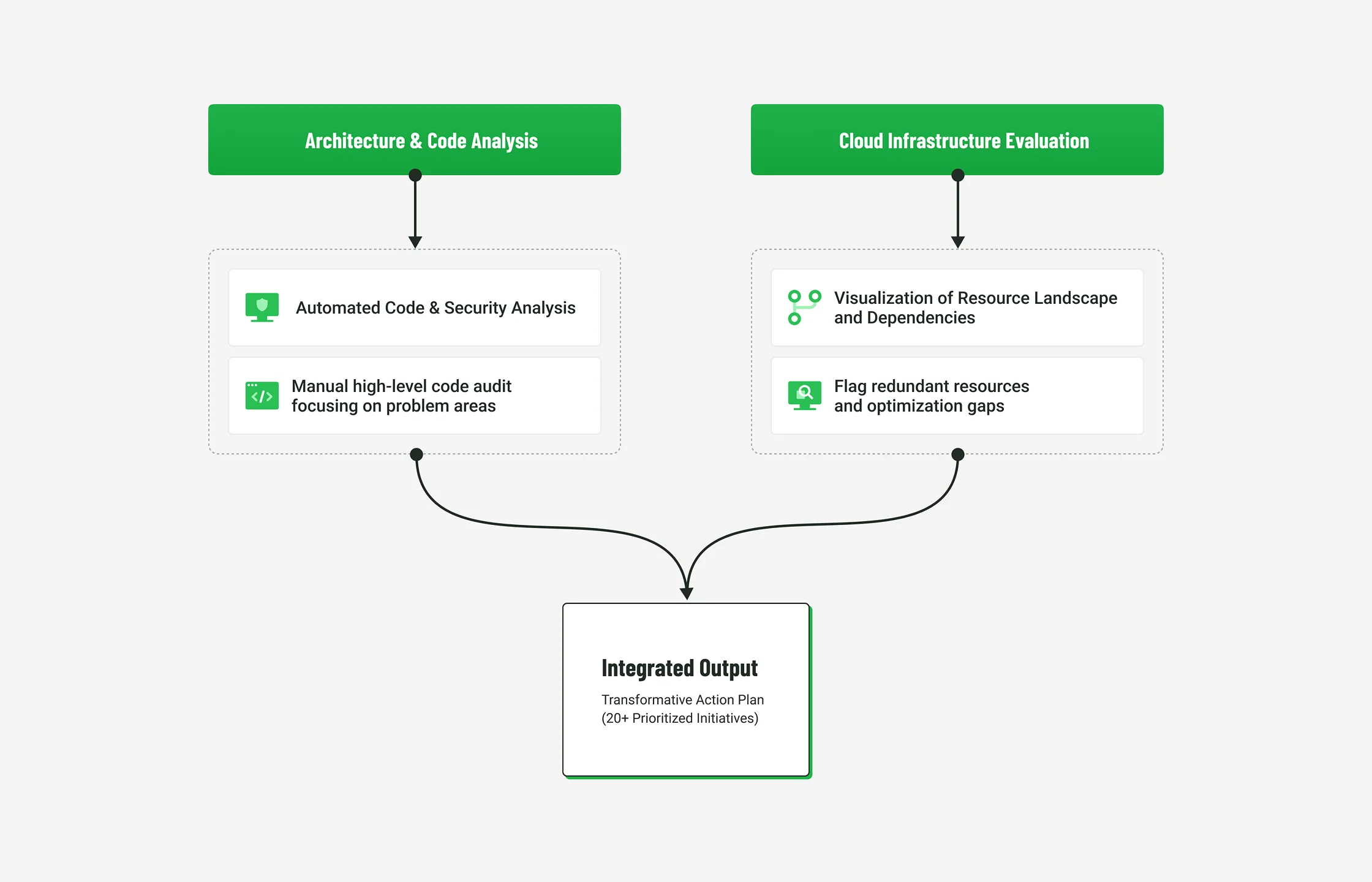
Phase 1: Time-boxed in-depth audit (efficiency & scope)
Phase 2: Code assessment (deep technical dive)
Phase 3: Infrastructure assessment (cloud optimization)
Key Deliverable
The Actionable Roadmap. The final deliverable included visual diagrams and 20+ prioritized, actionable recommendations, clearly categorized into short-term stability fixes and a robust long-term modernization strategy.
Solution
The core deliverable provided by Emerline was a thorough audit combined with a strategic, prioritized roadmap. This blueprint offered the client an actionable plan to rapidly move away from critical operational instability and technical debt toward a resilient, modern, and cost-efficient architecture.
The entire solution was built around a set of clear strategic recommendations, which included:
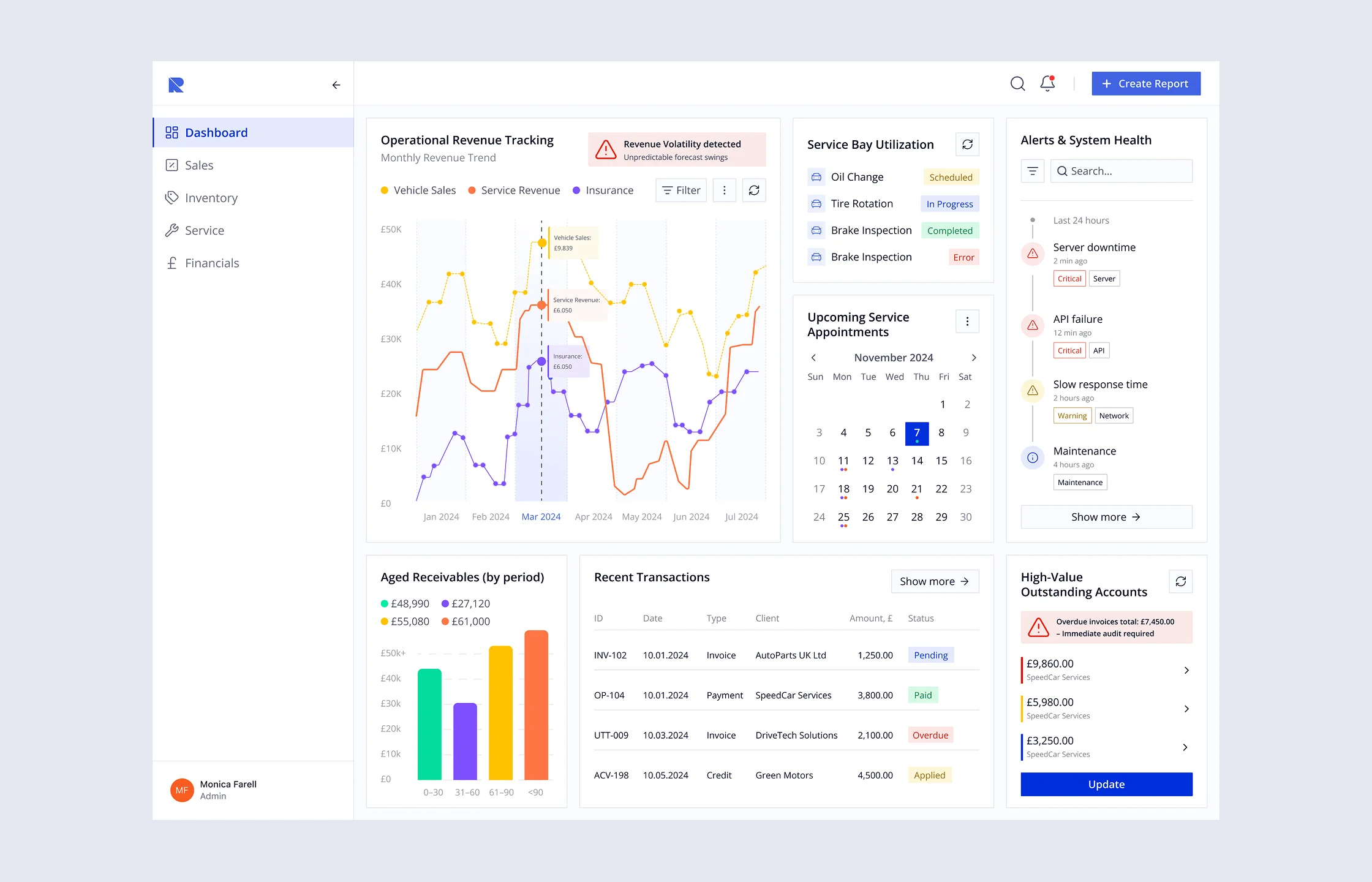
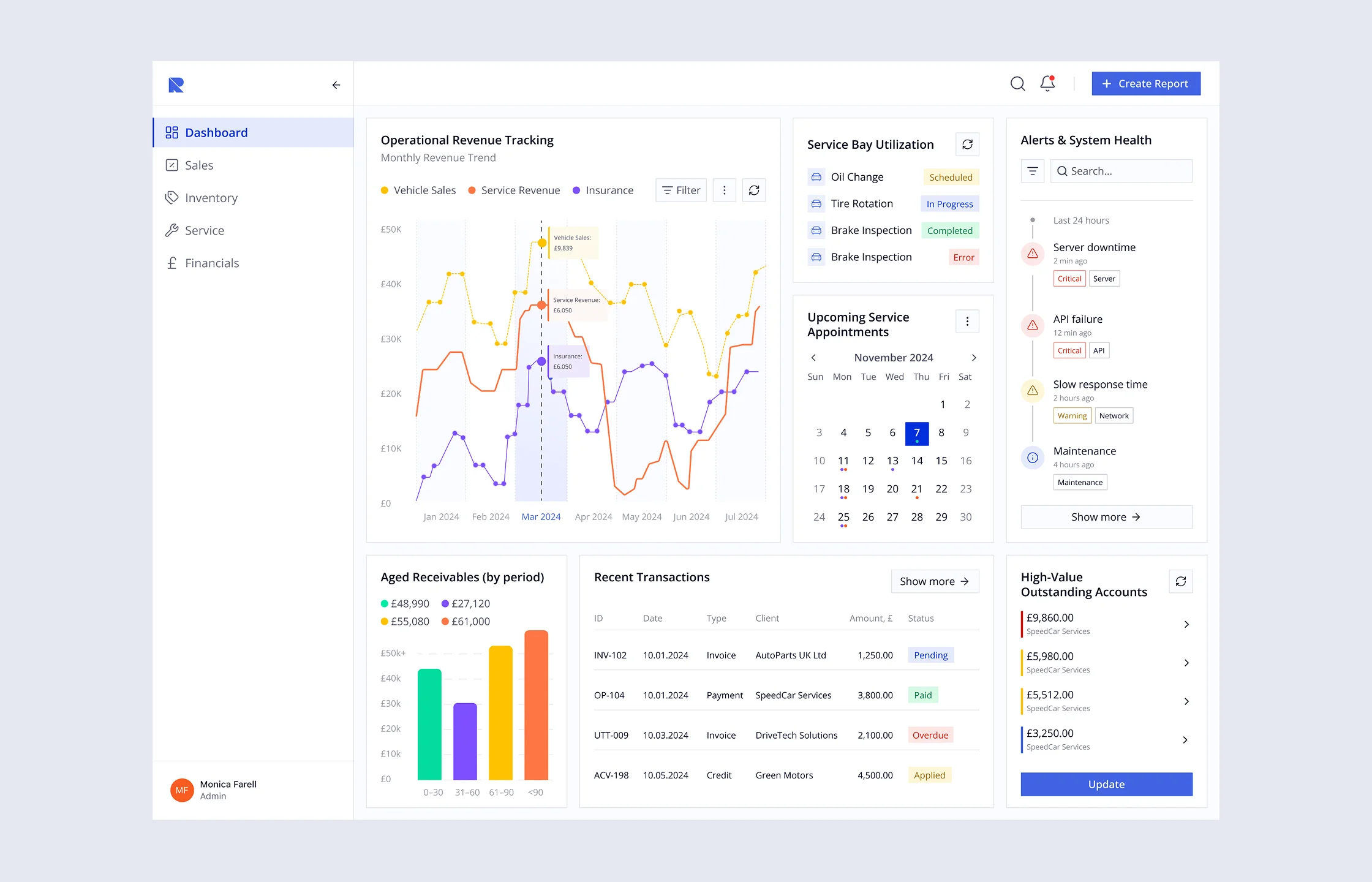
Automotive retail operations dashboard UI displaying real-time monthly revenue trends, service bay utilization metrics, and automated system health alerts for server downtime
Stability fixes
Implementation of Unified Logging and Alerting (Observability) to reduce time-to-resolve outages.
Optimization of High-Cost SQL Queries to eliminate performance spikes directly impacting sales operations.
Security remediation
Migration of .NET Core 3.1 to a Supported Version (.NET 6/8) to address direct security threats.
Cost optimization
Flagging unused and misconfigured Azure resources to achieve immediate cost reduction.
Future-proofing strategy
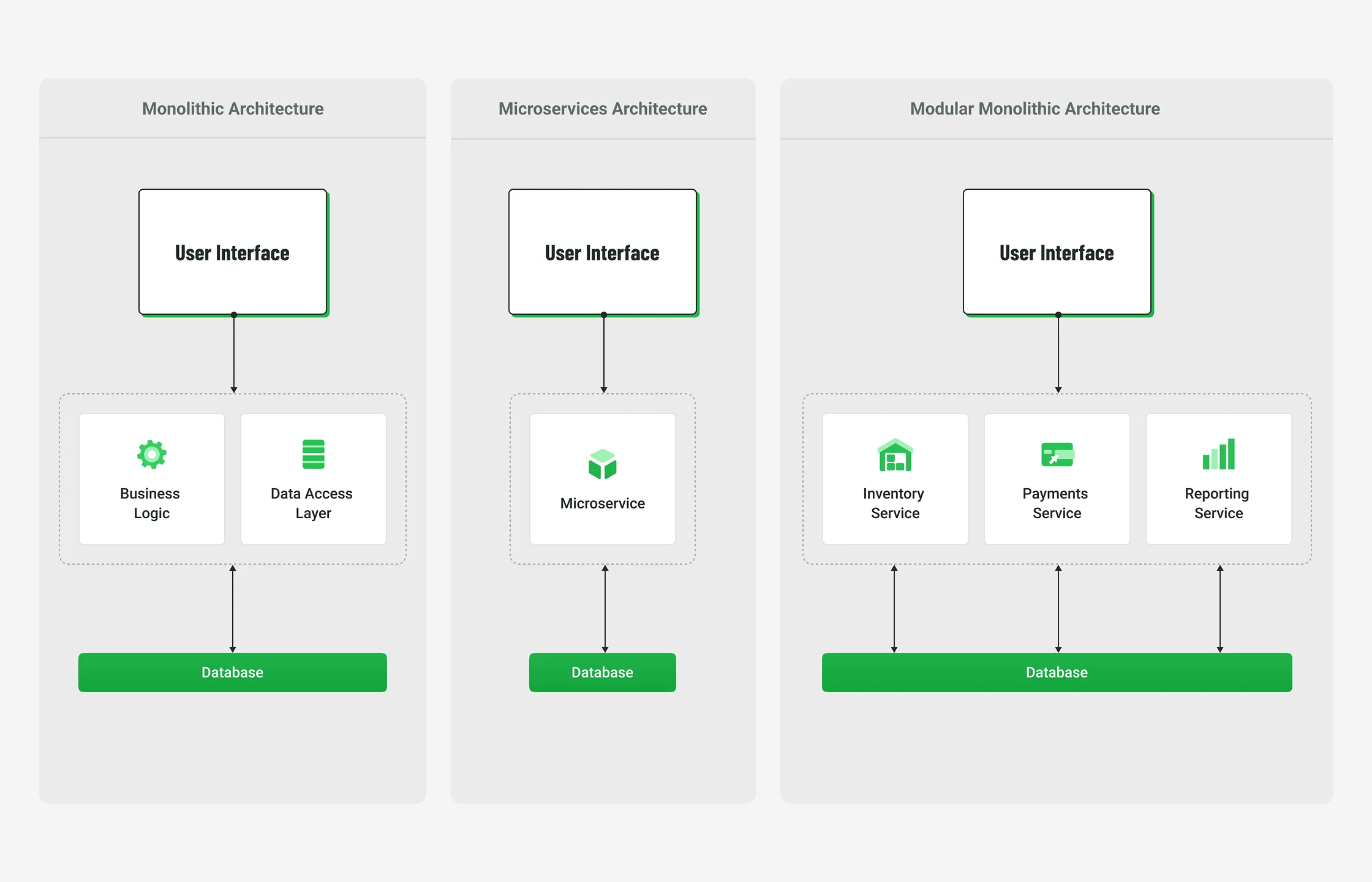
A long-term plan for the migration from the monolith to a modular, container-ready architecture.
Technology Stack
Results
The audit delivered immediate and strategic value, providing a clear path to stability and long-term cost reduction. After implementing enhanced logging and alerting, all critical issues were resolved within two weeks, enabling a smooth transition to the modernization phase in 2025.
- Stability improvements
The audit successfully identified root causes, providing a path to reduce critical system downtime by an estimated 80% and eliminate intermittent server hangs that previously disrupted sales operations.
- Cost optimization
Findings flagged misconfigured resources, providing a roadmap for an immediate 15-20% reduction in monthly Azure spend by optimizing VM sizing and eliminating unused services.
- Strengthened security
The review surfaced and prioritized 6 critical security risks (including the unsupported .NET Core), enabling rapid remediation to achieve full regulatory compliance.
- Future-proofing
A long-term strategy was established for migrating to a modular architecture, increasing the system’s capacity for traffic growth by 4x and simplifying future feature development.
- Improved observability
Implemented recommendations set the stage to reduce the Mean Time To Resolution (MTTR) for future outages by over 50%, enabling the engineering team to monitor the system proactively.
This structured technical assessment successfully cut operational risks, delivered a clear path to generating immediate ROI through cloud cost savings, and provided a strategic roadmap for the client's most critical platform.