





We reimagined the key enterprise management procedures for FUCHS, the world's No. 1 independent supplier of lubricants, empowering them to achieve a previously unattainable level of productivity.

Streamlining Asset Operations with a Modern Cross-Platform Mobile App


Overview
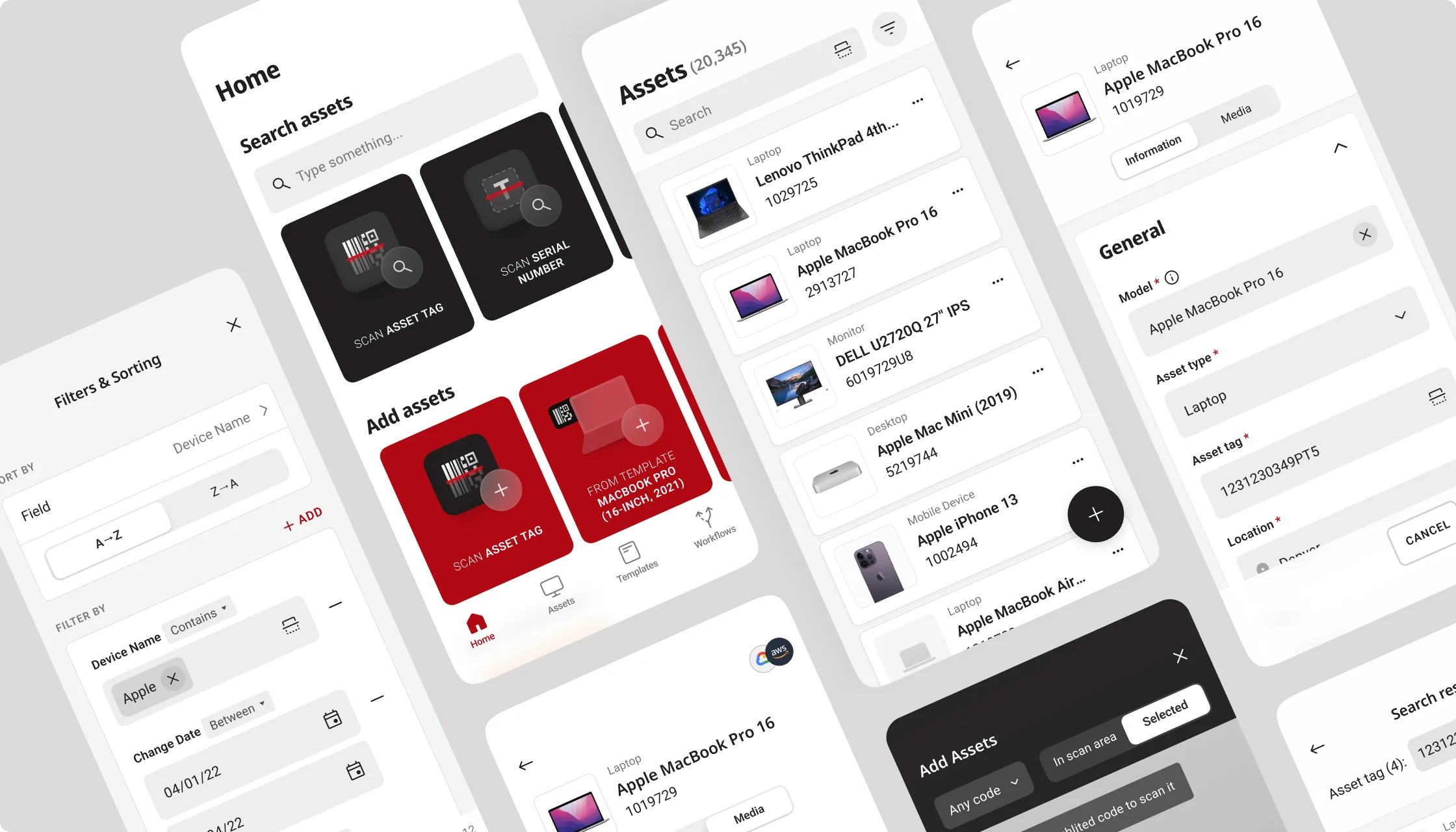
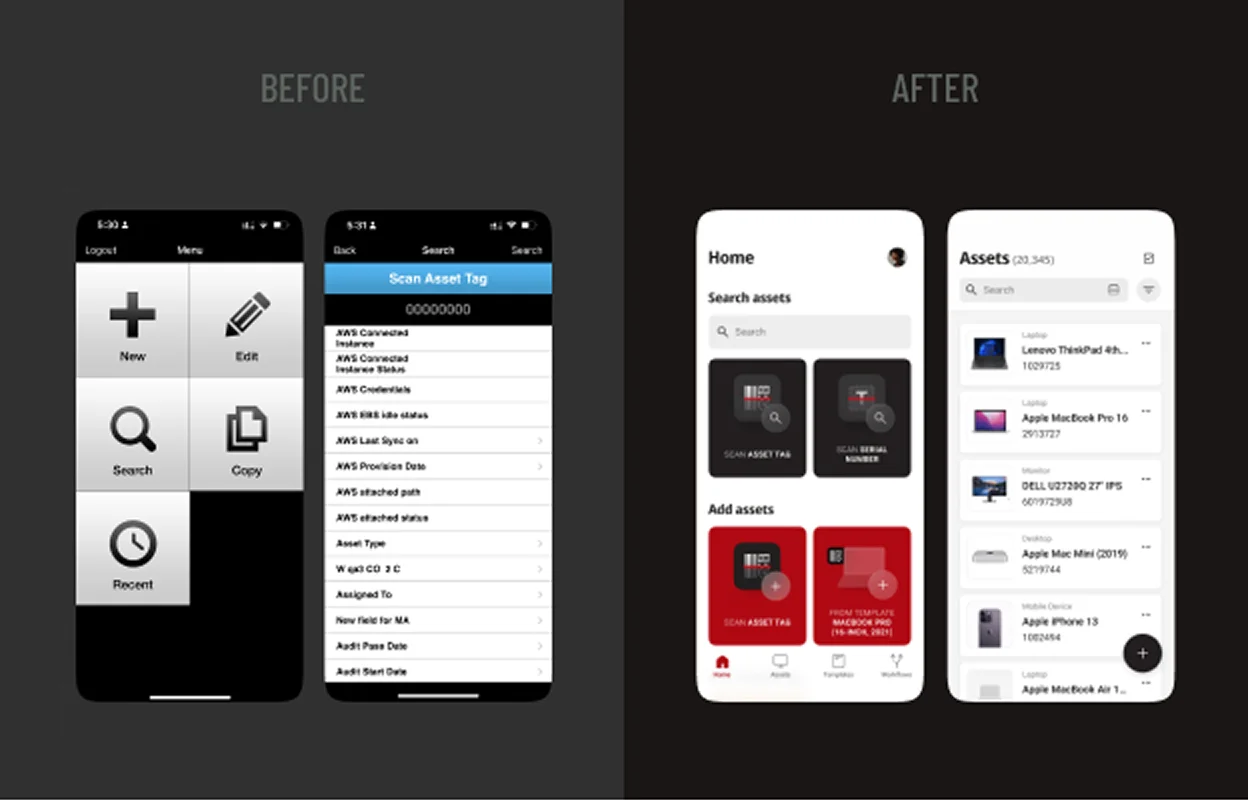
The Emerline team redesigned and rebuilt a legacy mobile asset management solution into a modern cross-platform application for iOS and Android. The project combined UX research, workflow optimization, and modernization to address critical usability issues, improve operational efficiency, and meet the requirements of a key enterprise prospect.
![]() $100B+
$100B+Strategic Enterprise Client Secured
Our client secured a strategic partnership with a $100B+ revenue technology company, marking a major enterprise milestone.
![]() 20%
20%Reduction in core workflow steps
Measured by comparing the redesigned flow with the legacy experience in a high-frequency operational scenario.
![]()
Positive feedback from end users
The updated user experience and visual design were positively received by the client’s customers.
Background
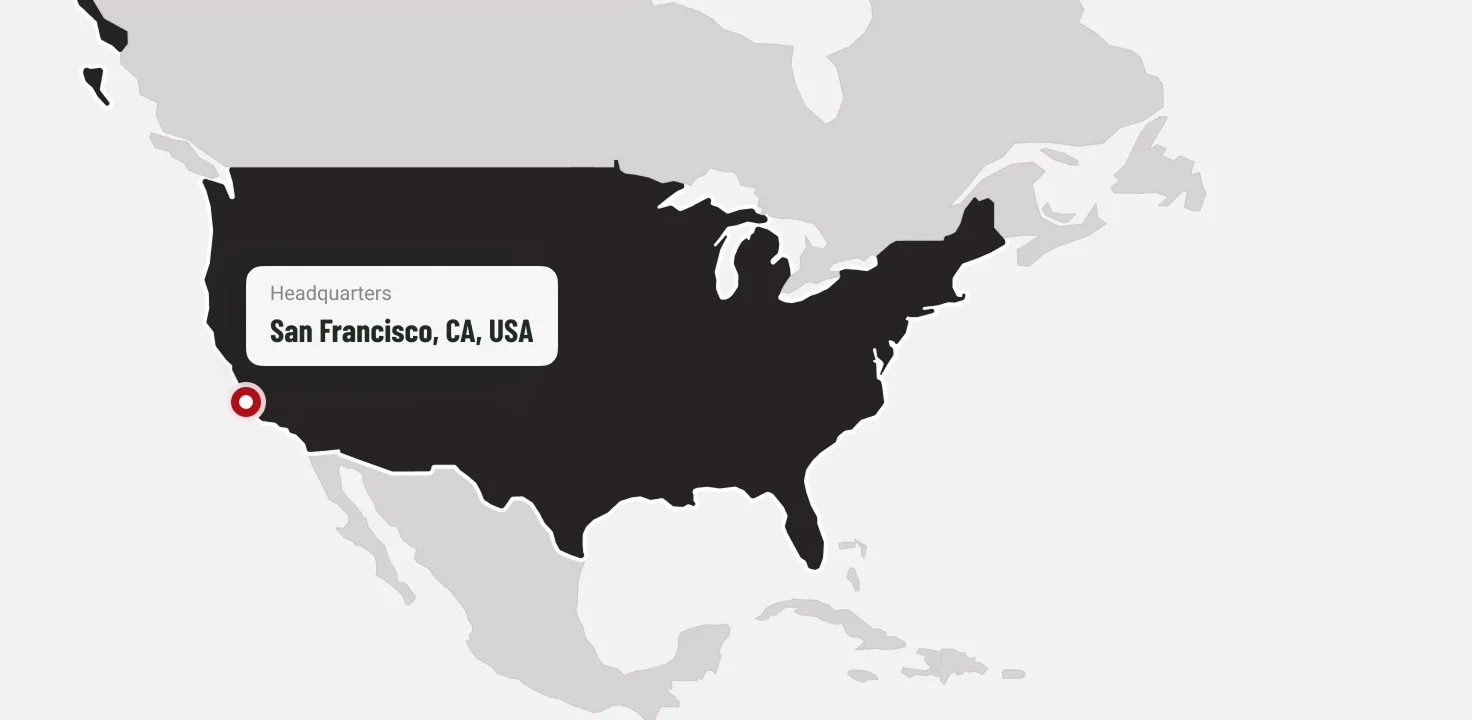
The client operates a global enterprise IT asset management platform headquartered in the United States, serving 200+ companies across multiple industries.
The platform is primarily web-based, while mobile applications are used by IT and hardware managers to handle asset-related tasks in physical environments, such as scanning new equipment in warehouses and assigning or retrieving assets on-site.
The mobile apps had been built over a decade by different teams and evolved separately across iOS and Android, relying on different backend APIs and increasing maintenance complexity. Mobile usage remained limited to a narrow group of experienced users who adapted to the usability issues. The need to rethink the mobile experience became critical when a key enterprise prospect required a high-quality mobile client as a core part of their workflow.
Challenges
Business goals and timeline
The client needed to deliver a high-quality mobile solution within a limited timeframe to meet the strict expectations of a key enterprise prospect. At the same time, the objective extended beyond a simple visual refresh; the goal was to build a reliable, scalable product that could drive broader adoption across their entire client base.
Technical limitations (AS-IS State)
Having been built over a decade earlier by different teams, the legacy iOS and Android applications had evolved separately. Relying on completely different architectures and backend APIs, they created massive maintenance complexity, increased technical debt, and significantly slowed down the development of new features.
User experience and adoption
The existing mobile experience suffered from low adoption due to complex, error-prone core workflows. Poor feature discoverability meant that new users couldn't navigate the application intuitively, forcing the client to rely heavily on manual user training for basic field operations.
Methodology & Approach
Given the uncertainty from client side around the required scope and the need to move quickly, we proposed starting with a condensed discovery phase:
- UI/UX Audit to identify immediate usability improvements based on established UX best practices.
- Interviews with end users, client-facing team representatives, and stakeholders from the new enterprise prospect whose requirements triggered the initiative.
This helped us better understand real usage patterns, critical pain points, and specific expectations for mobile workflows. Based on these insights, we defined a prioritized scope of improvements and proposed consolidating the existing applications into a single cross-platform mobile solution to reduce maintenance overhead and accelerate development.
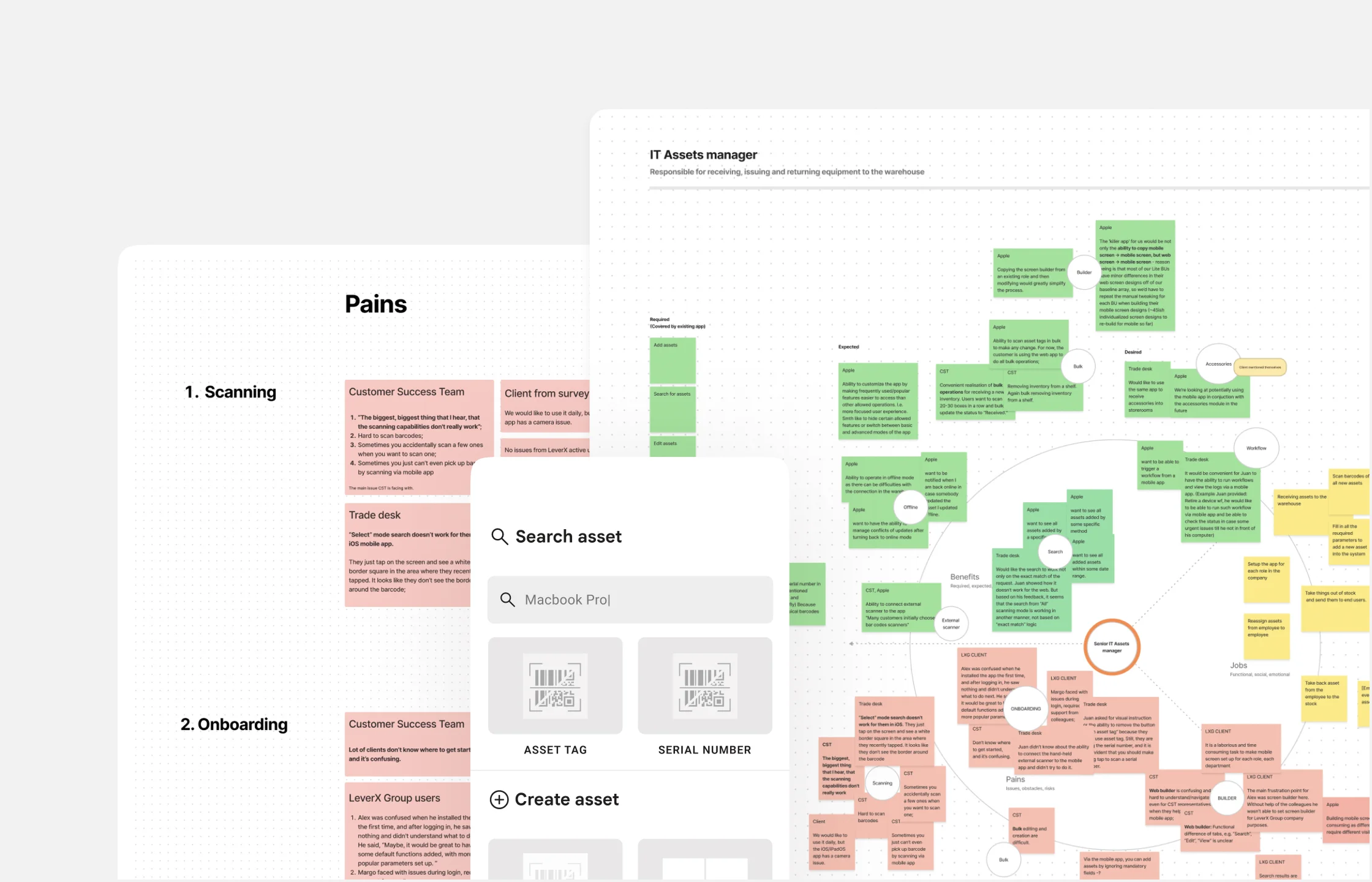
Low-fidelity wireframe and feedback organized through a Value Proposition Canvas
Solution
We transformed outdated iOS and Android apps into a unified modern cross-platform solution that addressed both the requirements of a key enterprise prospect and the most critical pain points of the existing user base.
Key improvements are described in the following sections.
Configurable homepage
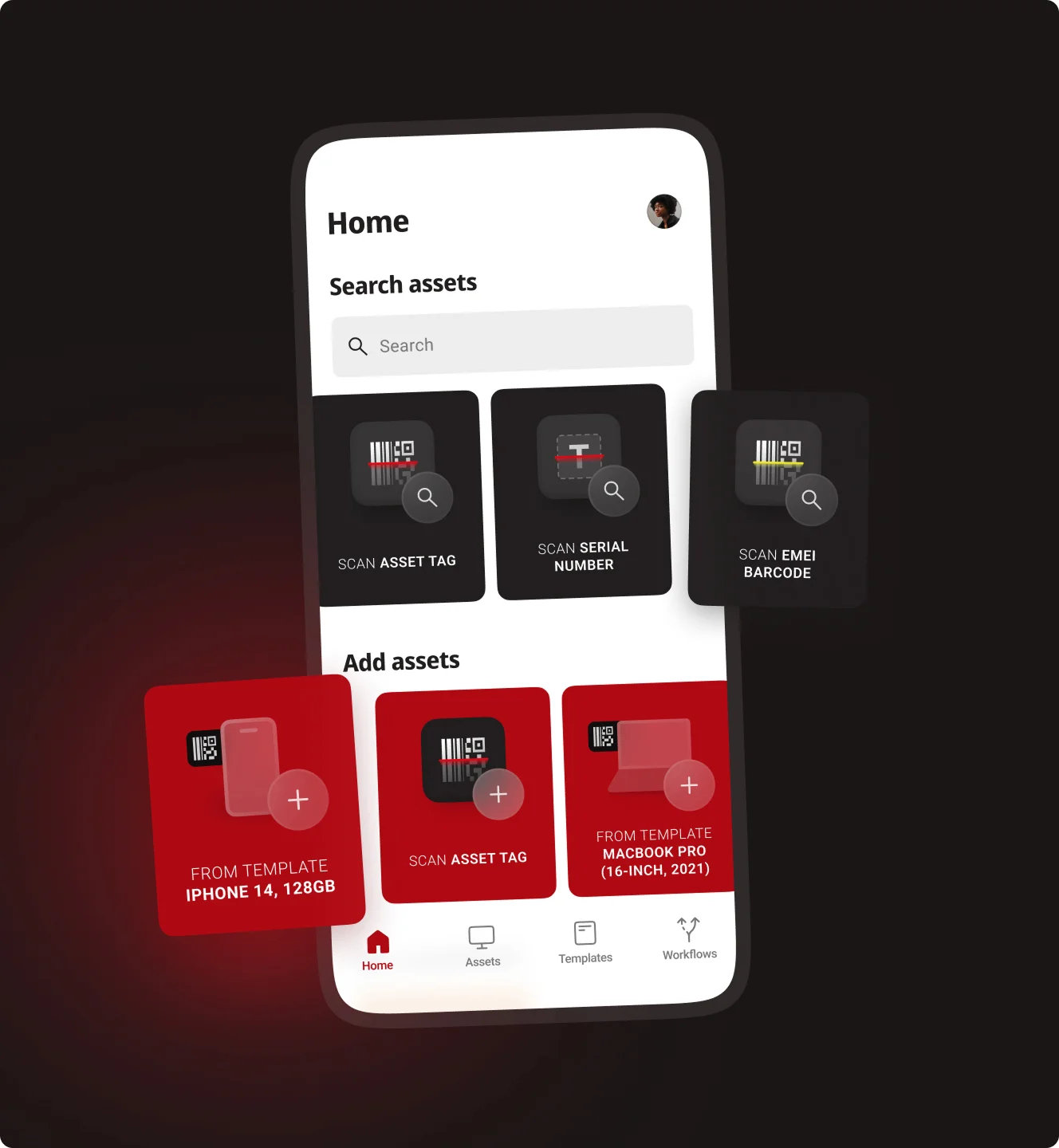
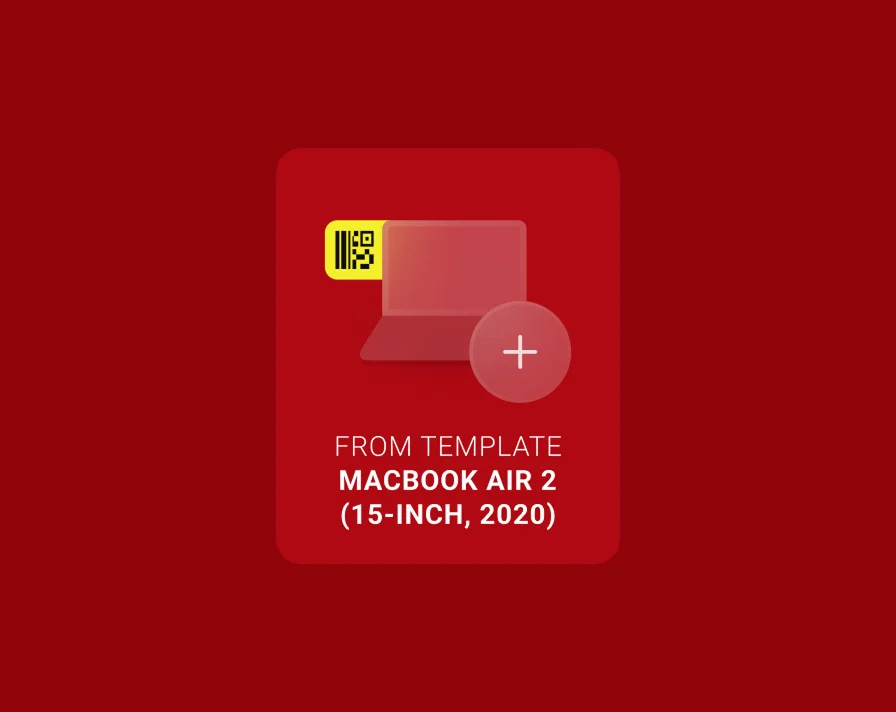
We introduced a company-admin, configurable homepage that provided quick actions tailored to specific operational needs, along with support for custom workflows and templates. This significantly reduced manual input and sped up asset registration.
Improved asset search and navigation
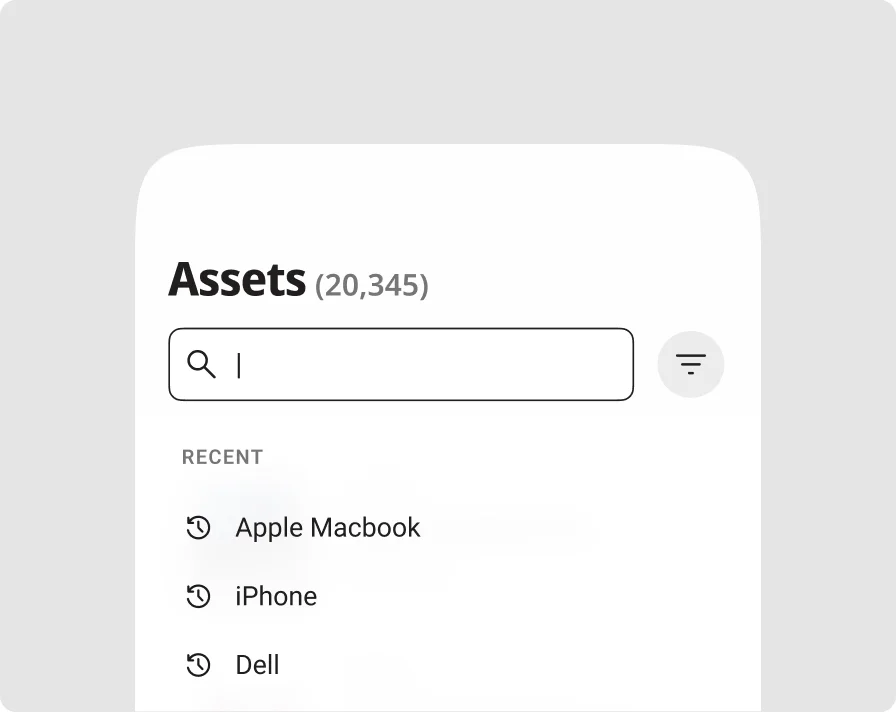
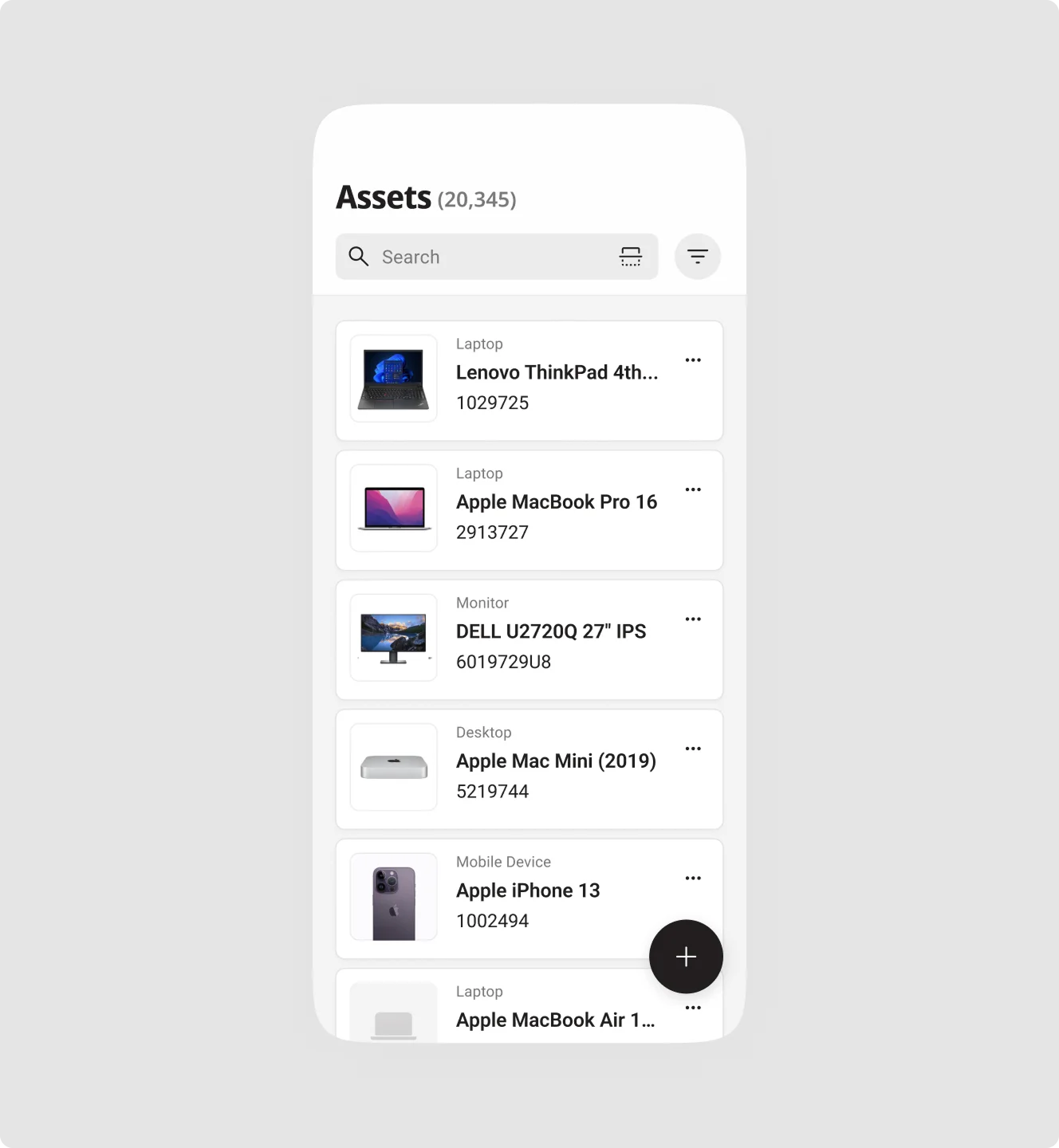
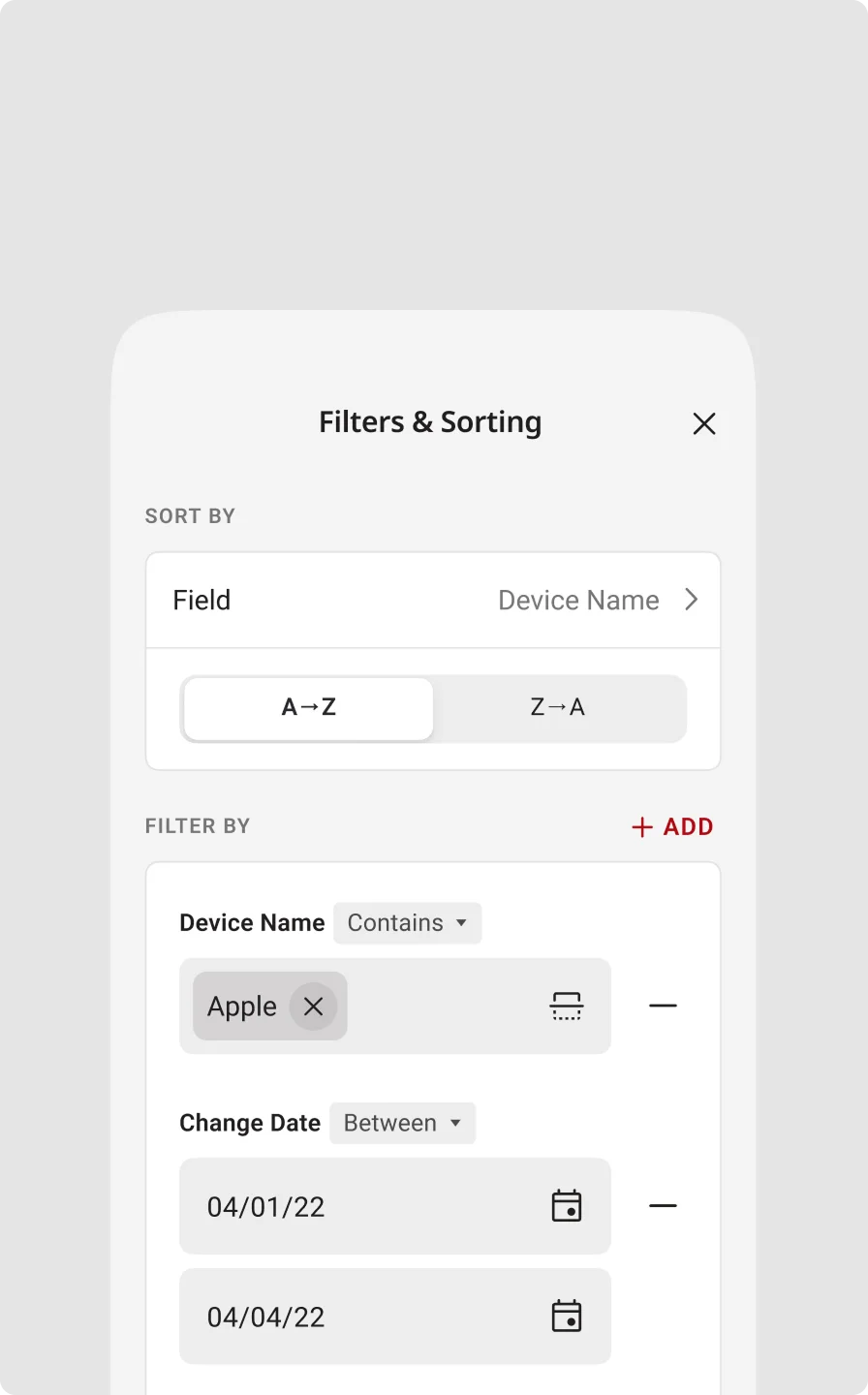
We introduced a clearer, intuitive asset list with advanced filtering and search. This allows users to quickly find, review, and act on the right assets.
Enhanced the scanning experience
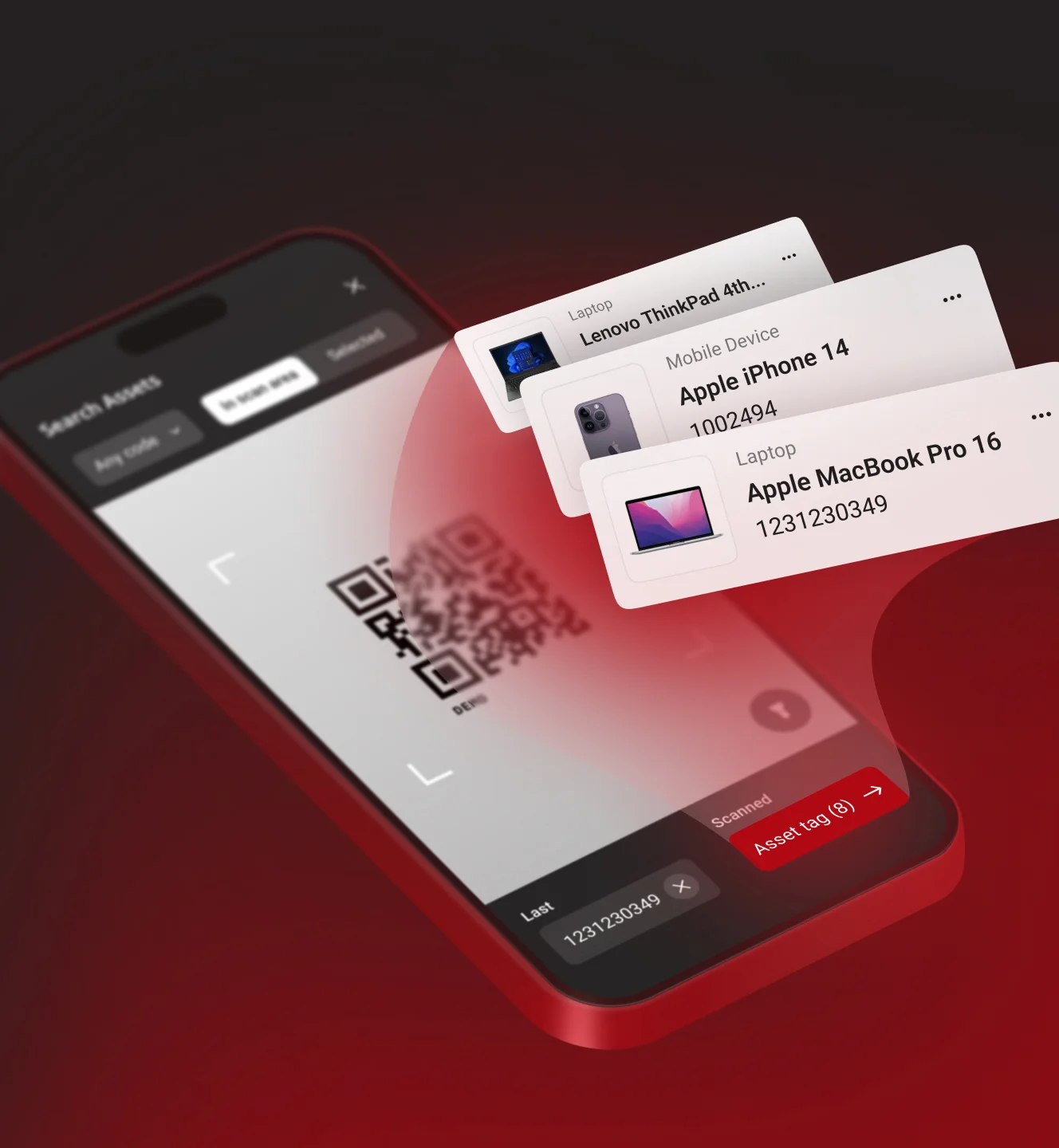
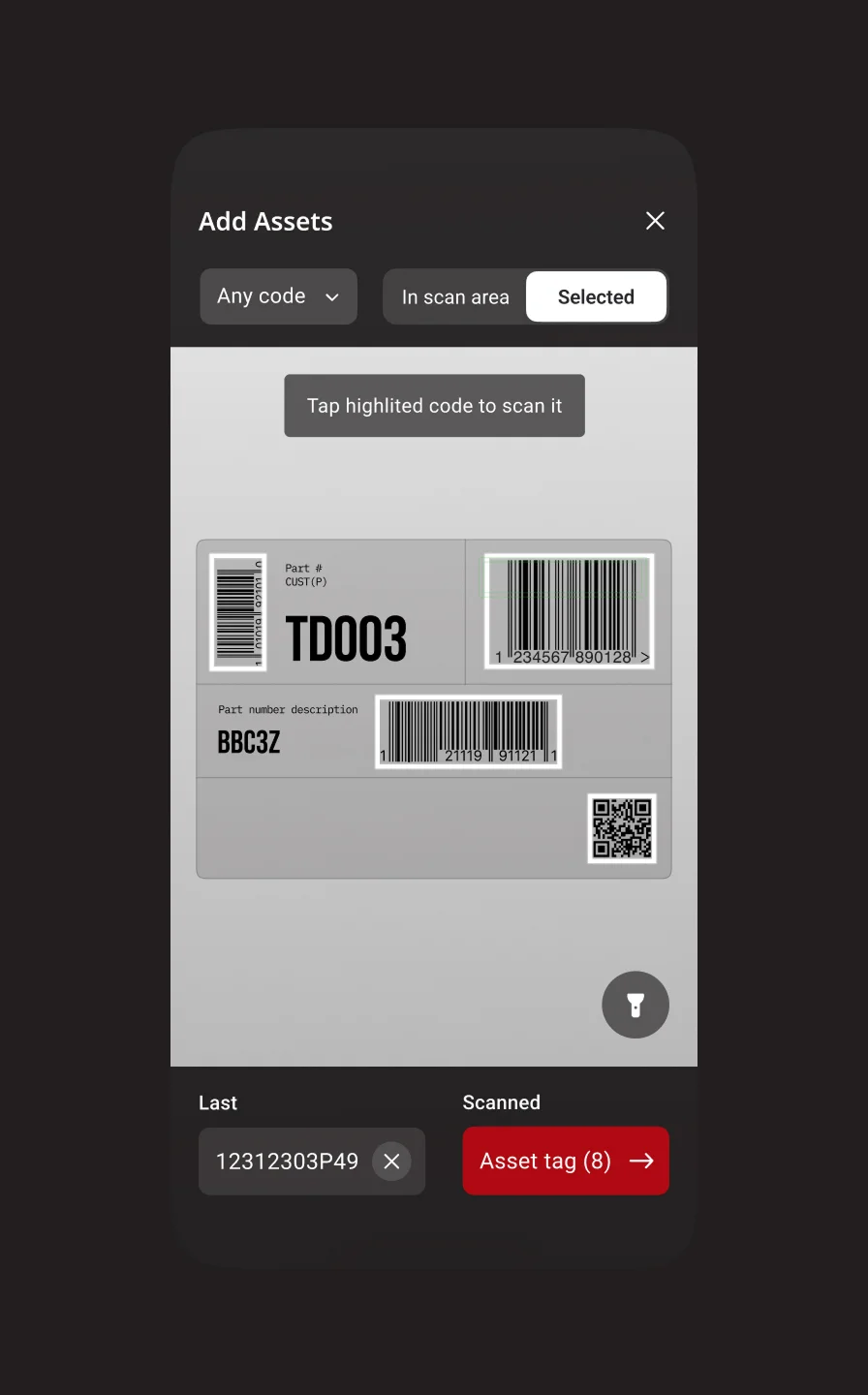
We introduced clearer system states, real-time feedback, more reliable recognition across a wide range of code types, and well-defined recovery paths for edge cases and errors. We also redesigned the bulk scanning and asset intake flow to make large-volume operations more intuitive and efficient.
Rebuild UX around real workflows
We restructured the product experience and redesigned the visual language to better support core asset management scenarios in the field, making the application more predictable and easier to use.
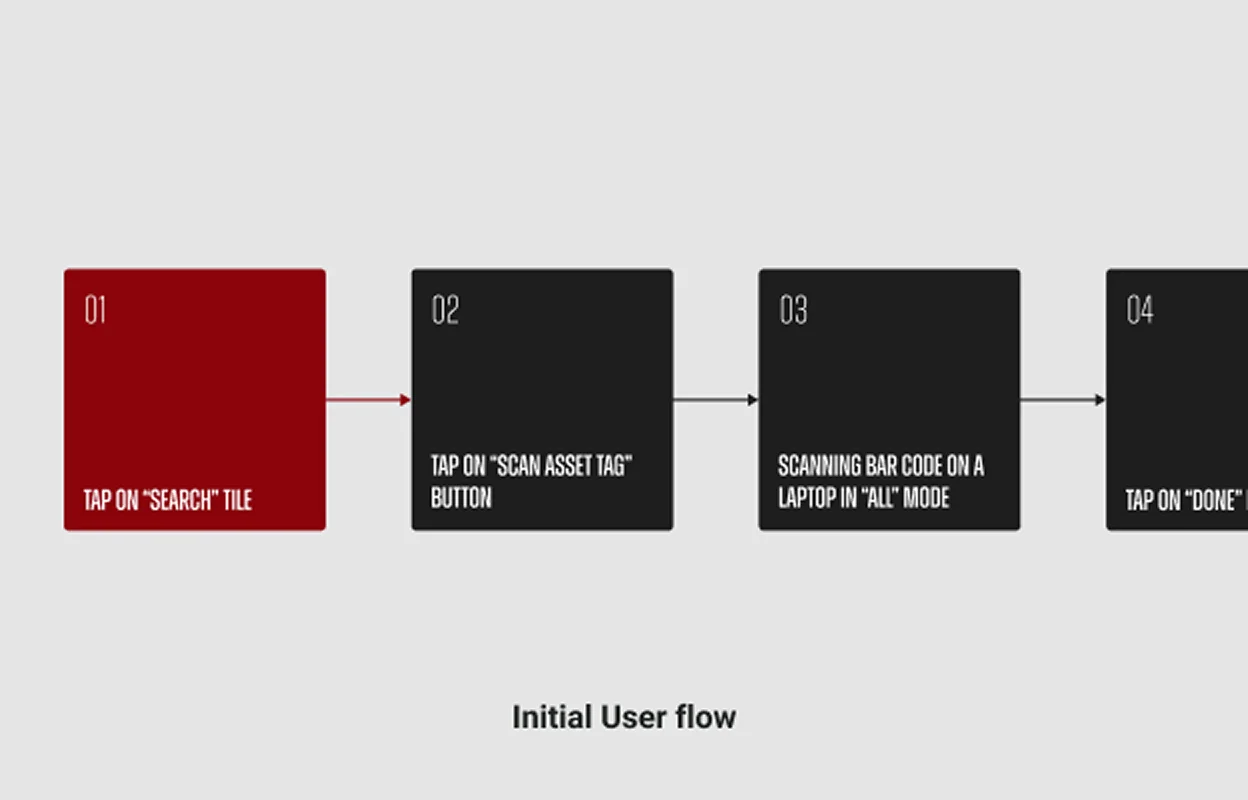
Expanded the solution with a full tablet experience
We designed a dedicated tablet version that better supports operational scenarios where larger screens are preferred. This expanded the range of potential client use cases and made the solution more relevant for a broader set of enterprise workflows.
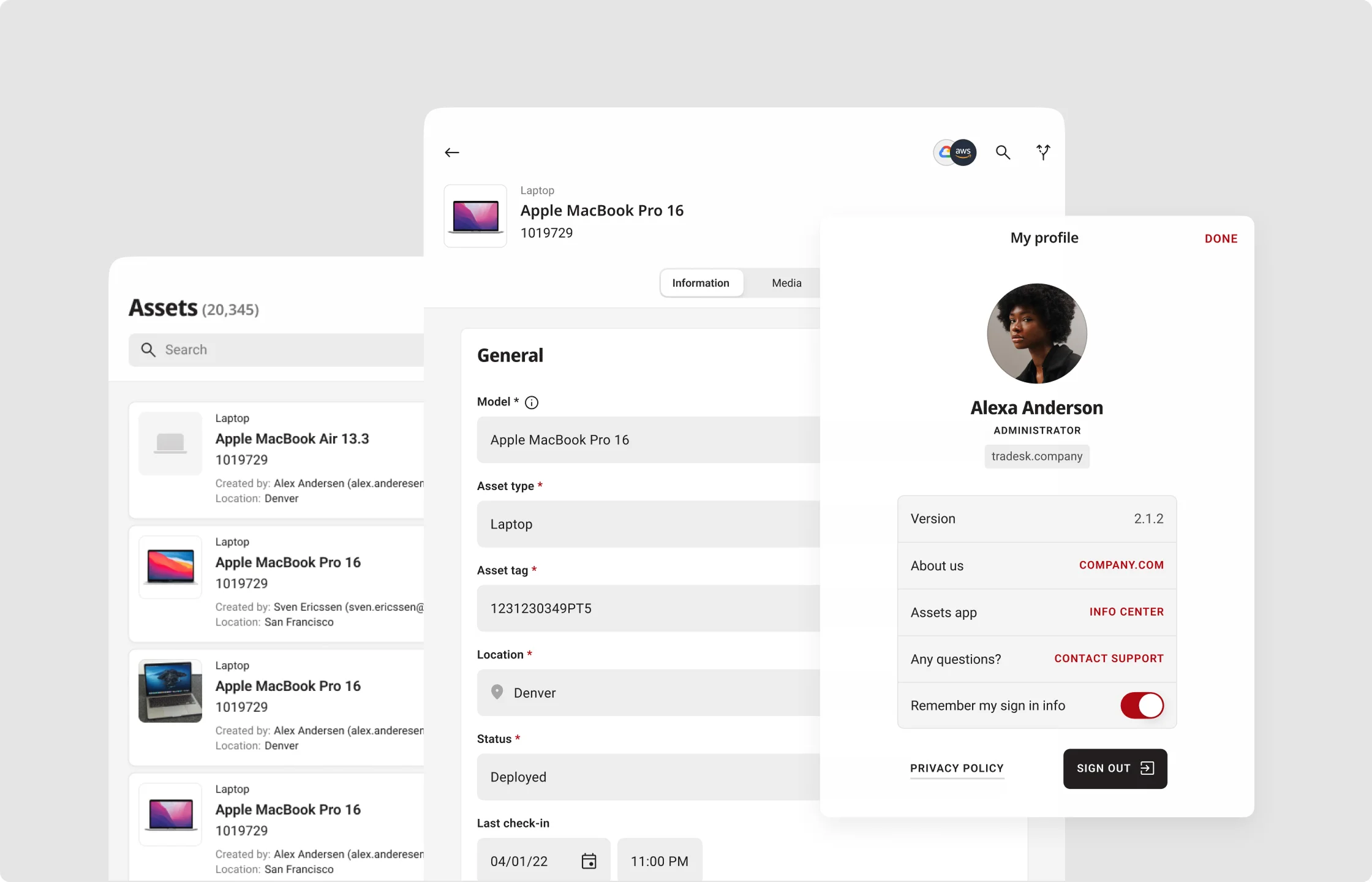
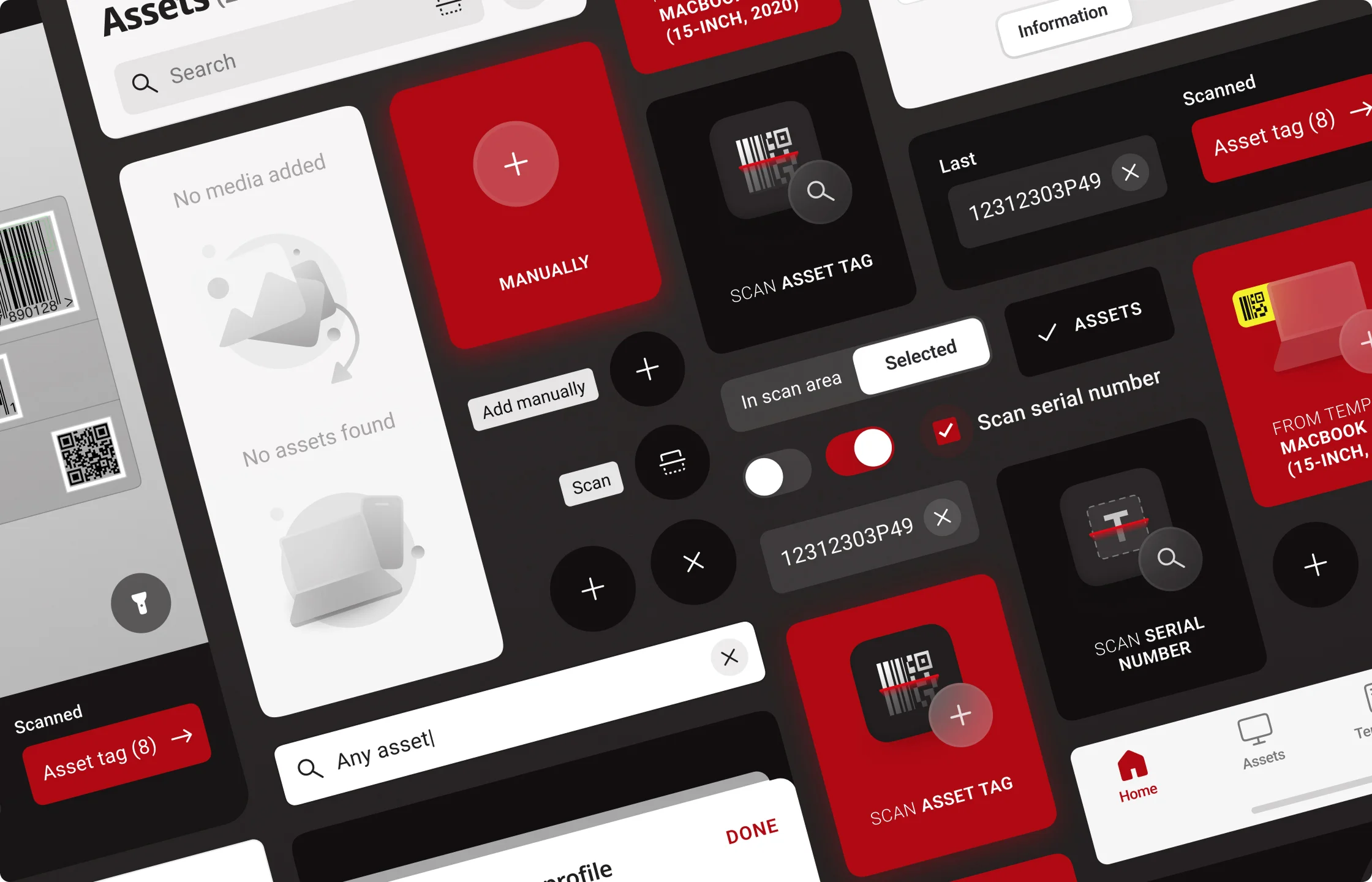
Established a consistent cross-platform UI foundation
We unified iOS and Android experiences through shared components, interaction patterns, and design guidelines, creating a scalable foundation for future product development.
Technologies
- Redux based offline-first approach to handle both online and offline modes for the application to help onsite warehouse staff to work with an application while they have poor / no network connectivity.
- Scandit SDK integration for QR-code and barcode scanning with support for multiple scanning modes (auto scan / manual scan using AR pressable overlay to handpick codes you want to scan) to resolve random scan issue.
- Fastlane for CI/CD and Firebase distribution for testing purposes and multiple environments.
- Support for external scanners using BLE to help staff to scan assets with poor lighting.
- Optimized large form list using virtualization and memoization to provide smooth UX.
Mobile Platform
iOSAndroid
Frameworks
React Native
Libraries
Scandit SDKRedux ToolKitReact Native AsyncStorageReact Native BLE
Facing a shortage of essential services for your product development competence?
Results
- The redesign achieved its primary goal and helped secure a key enterprise client.
- Our approach helped avoid a narrow solution shaped only by one prospect’s request, while also addressing real user problems across asset management workflows. This allowed us to meet the immediate business need and resolve broader product limitations.
- The outdated and fragmented mobile experience was transformed into a unified cross-platform solution that reduced friction in core field operations and created a more scalable foundation for future delivery.
![]() $100B+
$100B+Strategic Enterprise Client Secured
Our client secured a strategic partnership with a $100B+ revenue technology company, marking a major enterprise milestone.
![]() 20%
20%Reduction in core workflow steps
Measured by comparing the redesigned flow with the legacy experience in a high-frequency operational scenario.
![]()
Positive feedback from end users
The updated user experience and visual design were positively received by the client’s customers.
More Case Studies
all case studies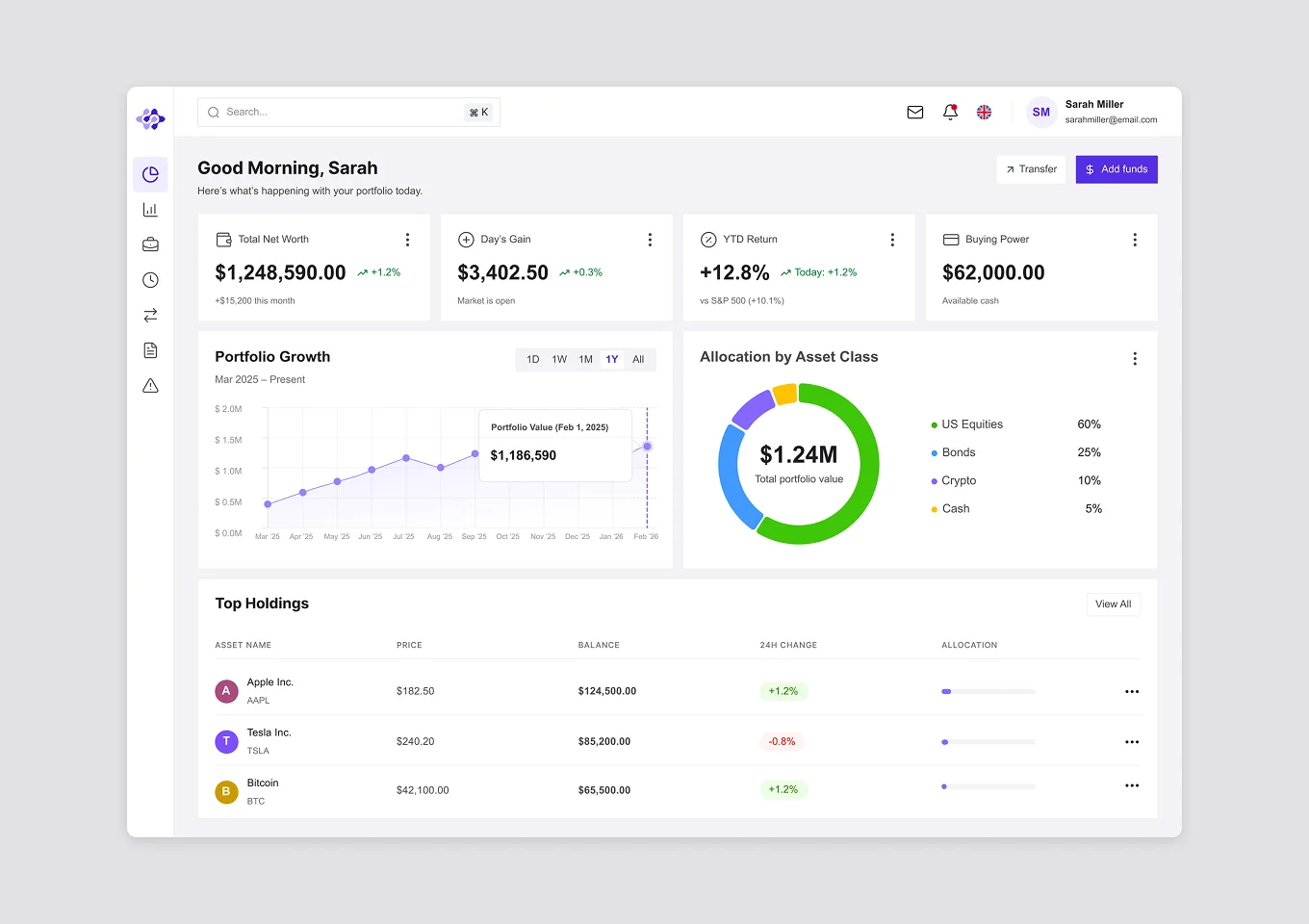
Wealth Management Digital Transformation
How a regional wealth management firm leveraged open banking APIs to automate the 'Fact Find' process, uncover $50M in held-away assets, and deliver a seamless mobile experience.