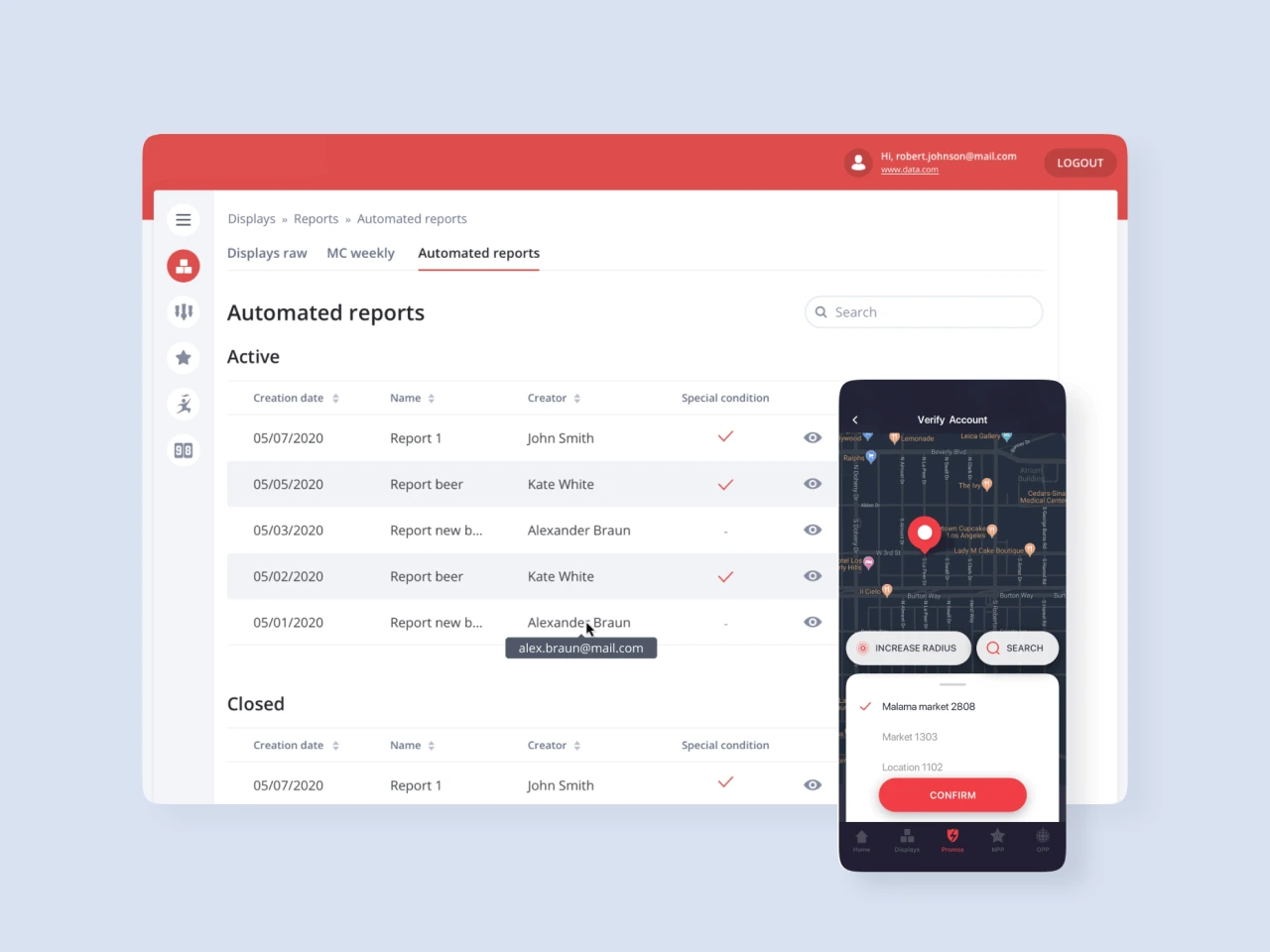
The development of an extensive sales analytics platform with a variety of modules aimed at facilitating the work of distributors and maximizing their performance.

CPG Data. AI Brand Recognition in Retail for Faster and More Accurate Real-Time Reporting


We automated CPG Data’s manual report creation with an edge AI brand recognition model, delivering a high-accuracy, confirmation-based workflow that slashed brand selection time by 80%.
Background
CPG Data is a US-based company empowering the alcohol industry with real-time, total-market visibility into retail execution. Recognized as the #1 Sales Performance Management Platform in the beer, wine, and spirits distribution industry, CPG Data supports distributors and wholesalers with focused reporting and analytics for tracking the most important execution metrics at retail. The platform enables field sales and merchandising teams to document in-store activities, capture visual evidence, and measure brand presence across stores, bars, and restaurants. By combining mobile technology with structured analytics, CPG Data delivers actionable insights that help distributors strengthen execution, optimize performance, and drive consistent results across their retail network.
Methodology & Approach
To ensure both technical viability and seamless user adoption, we followed a staged, validation-driven development strategy. By combining early proof-of-concept testing with close UI/UX collaboration, we minimized deployment risks and designed a highly efficient system that matures autonomously over time.
Validating feasibility through POC before scaling
Development of the MVP started with a proof of concept to validate whether existing data quality and user labeling were sufficient for reliable brand recognition. The team first trained models on servers using a limited data set of brands to evaluate achievable accuracy and confirm that on-device processing can demonstrate required accuracy.
Reducing user correction effort through UX improvements
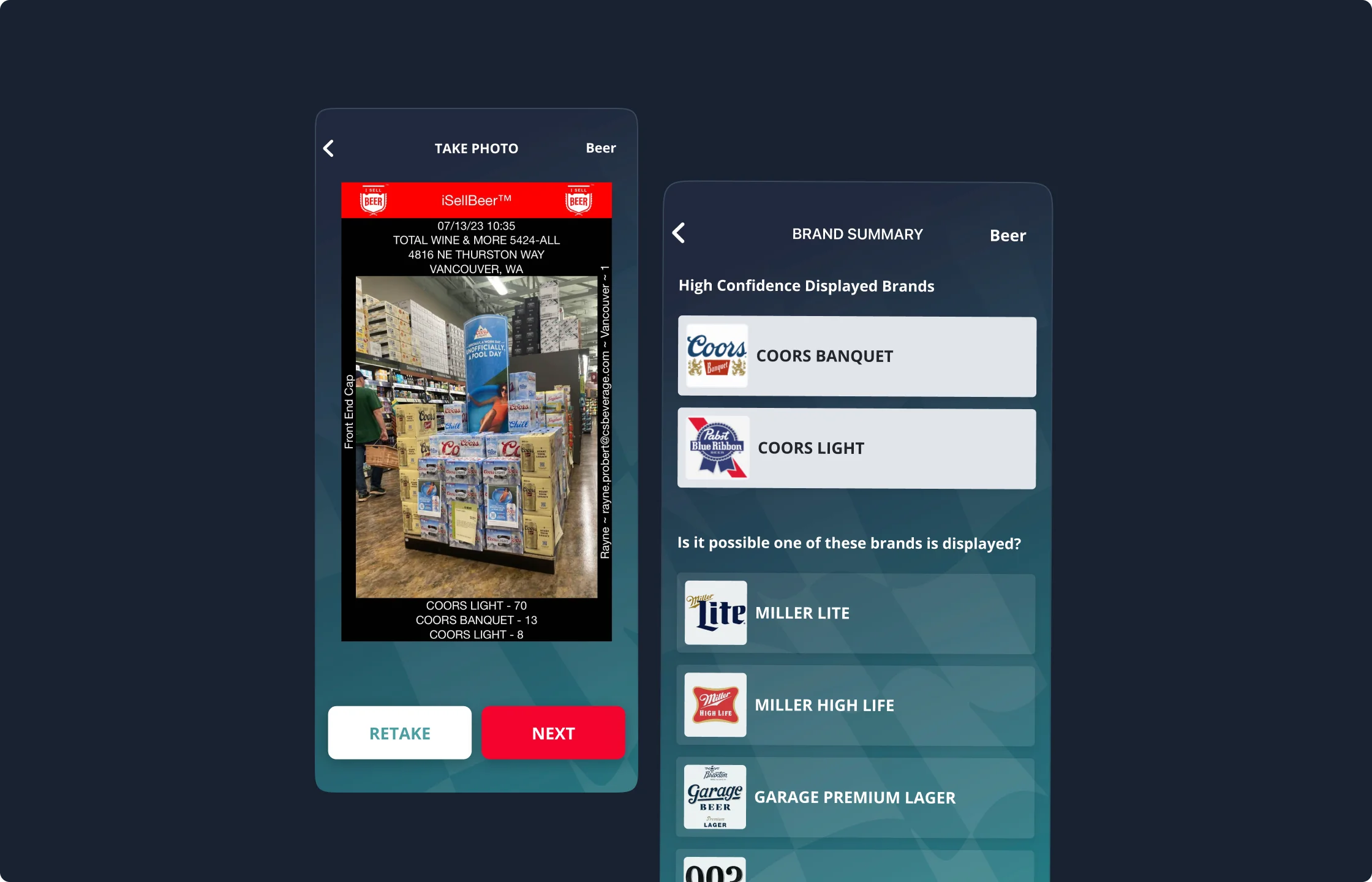
Instead of relying solely on computer vision model outcomes, the team collaborated with UI/UX designers to streamline user corrections. A single-screen workflow was introduced where users could quickly:
- Deselect incorrectly recognized brands
- Add missing brands likely present in the photo
- Close and finalize the report efficiently
Only after confirming feasibility and acceptable accuracy in the POC phase did the team proceed to production implementation. The solution was rolled out to the largest customer to validate real-world performance and collect structured feedback.
Establishing a feedback loop and automatic retraining
Following the initial rollout, a feedback loop was introduced to continuously improve model performance. Automatic retraining logic was implemented to eliminate the need for manual retraining, enabling scalable model updates as new labeled data became available.
Challenges
CPG companies operating across distributed sales networks face growing complexity in data collection and reporting. Two major challenges stand out:
- Time-intensive brand selection during report creation
As product portfolios expand - especially in categories such as beer, wine, and spirits - sales representatives must deal with long brand lists. This adds around 7.5 seconds per brand, which quickly compounds when reports include multiple brands. In wine menus, where ten or more brands may appear, the reporting process becomes significantly more time-consuming.
- Inaccurate manual data capture
Report data is often entered manually, which can lead to inconsistencies due to mistakes or intentional misreporting. Currently, there is no validation layer to ensure accuracy. All that reduces trust in the collected data that really matters for managers that rely on portal analytics.
Solution
The solution introduces an advanced AI-powered analytics framework designed to eliminate manual reporting overhead. Operating seamlessly both online and offline, the system utilizes mobile computer vision and automated retraining to deliver real-time, highly accurate brand tracking.
AI-powered brand recognition and quantity detection
A proprietary computer vision model was developed and trained on millions of user-labeled photos to recognize brands and predict quantities (cases, bottles) directly from images. Optimized for mobile devices, the solution operates fully online and offline, enabling field users to capture photos and instantly see the most probable brands pre-selected and sorted by likelihood. This significantly reduces manual effort while maintaining flexibility for user adjustments.
Human-in-the-loop model optimization
AI-generated results can be corrected directly by users, embedding a human-in-the-loop feedback mechanism into daily operations. Corrections are systematically tracked and used to retrain the model on a weekly — and sometimes daily — basis depending on feedback volume. This ensures rapid adaptation to packaging updates, seasonal designs, and special event branding while continuously improving accuracy.
The impact
- ~80% reduction in brand selection time (to ~1.5 seconds per brand)
- Increased reporting accuracy through confirmation-based workflow
- Improved data quality with traceable manual corrections and error filtering
- Faster adaptation to packaging or visual identity changes
Technology Stack
Results
Transitioning to an AI-driven, confirmation-based reporting model allowed CPG Data to secure highly reliable, real-time retail execution analytics. The solution successfully streamlined daily in-store workflows for field teams while maintaining strict quality control and continuous system improvement.
This strategic shift delivered immediate, measurable operational improvements:
- 80% reduction in reporting time
Reduced user time spent on reports and brand selection by 80% through on-device AI processing, improving efficiency and data control.
- Offline AI with cost-efficient processing
On-device execution (under 0.5s per photo) enables full offline availability, processes ~2.5M of photos per year, and avoids thousands of dollars in cloud costs while improving data quality and detection capabilities.
Transferability
Beyond brand selection and reporting acceleration, this model addresses common industry challenges such as:
- Planogram compliance – Verifying real-time product placement against reference shelf maps.
- Shelf share and out-of-stock detection –Identifying missing items and calculating exact on-shelf display share.
- SKU and misplacement detection – Instantly spotting incorrectly placed items or wrong SKUs.
- Fraud prevention – Eliminating human errors and intentional inaccuracies in field reporting.
In all these cases, fast on-device AI enables real-time validation, prevents incorrect submissions, and improves operational transparency.
More Case Studies
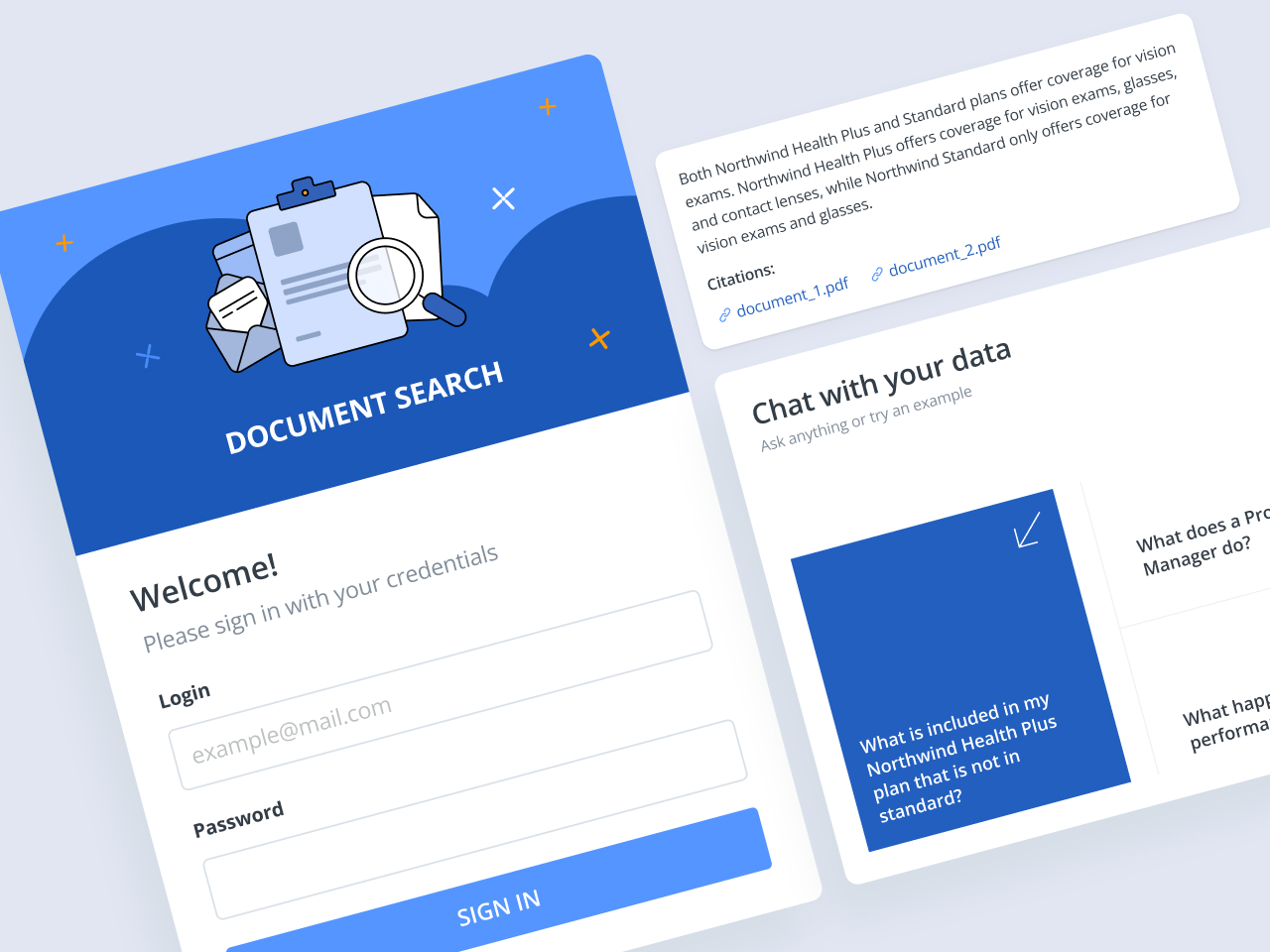
AI-powered Document Search Service for B2B Customers
Emerline has developed an innovative AI-powered chatbot document search service tailored for B2B customers, designed to significantly enhance document management and retrieval processes in a business environment.
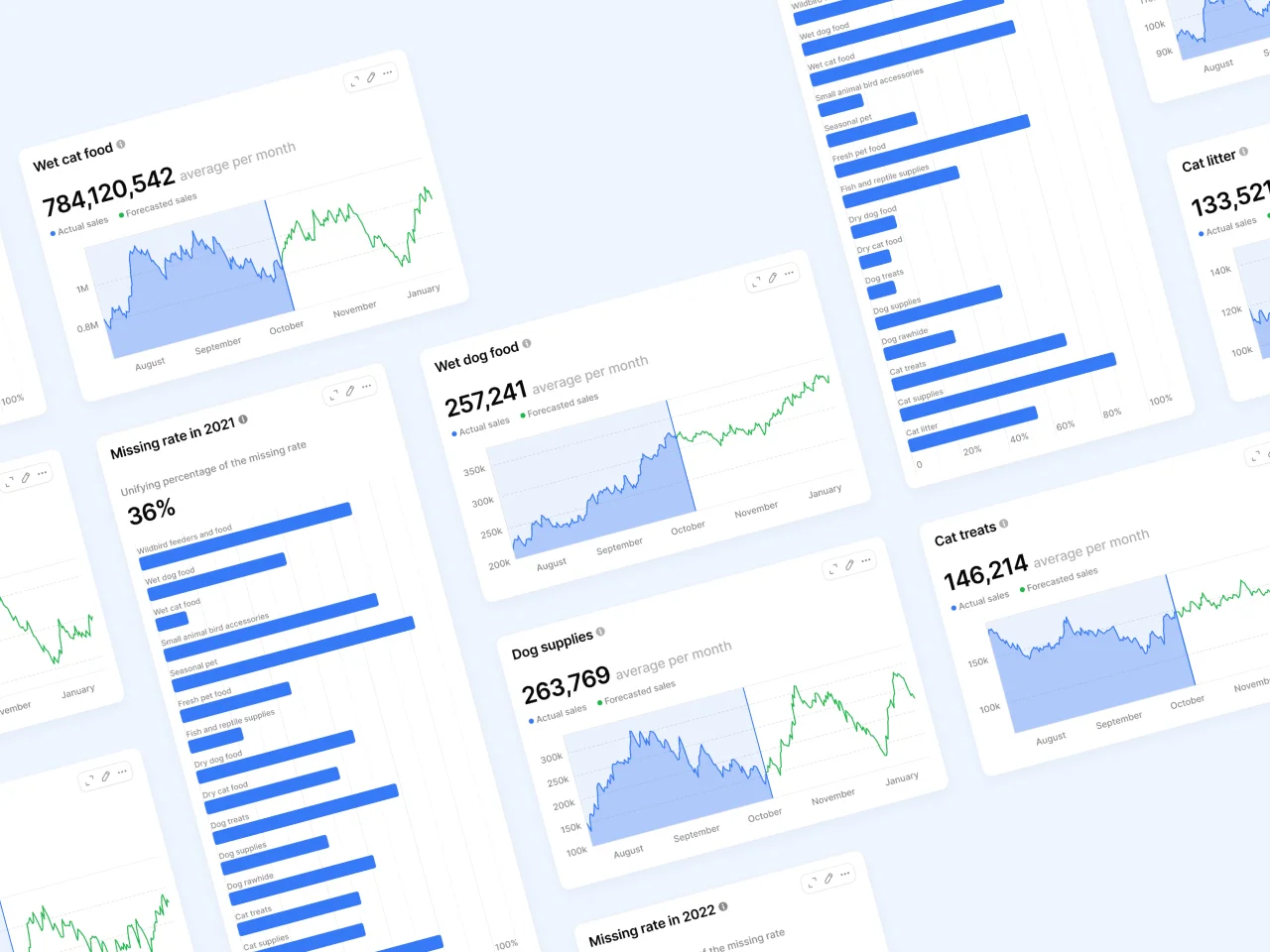
Emerline Helped an AI Company Optimize Store Layouts and Improve Sales Predictions for Large Retailers
Our AI and Data Science professionals developed tailored machine learning models contributing to the improvement of sales forecasting and store layout optimization for major retail leaders in the United States.