Web and Mobile App Development for Sports Technology Startup

Propalytics: Engineering a Player Prop Analytics Platform for High-Velocity Data Insights


Emerline developed Propalytics — a high-performance analytics ecosystem for serious US sports enthusiasts, delivering iOS and Android apps alongside a tablet-ready web experience. The system was designed to maintain elite responsiveness during peak-game refresh surges without breaching third-party API quotas.
Client & Background
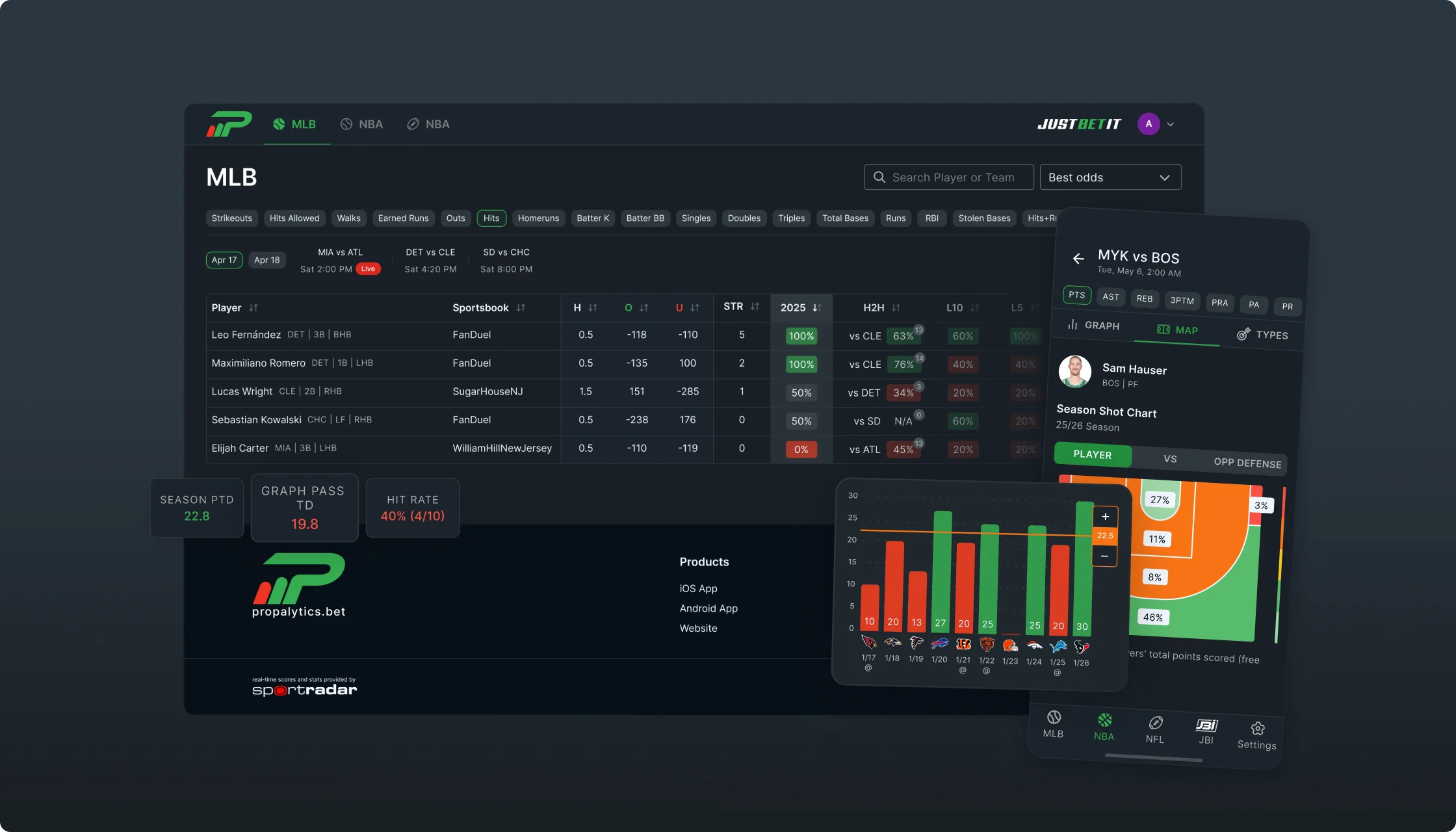
Propalytics is a US sports technology initiative that packages raw statistical feeds into actionable research. Their product-led strategy centered on launching a sophisticated, free-to-use analytical tool designed for high-frequency player prop research. The project’s core objective was to establish market authority by delivering data depth and processing speeds that far exceed standard market solutions.
The client partnered with Emerline to bridge a market gap that existing off-the-shelf solutions could not address. While mainstream sports applications typically provide surface-level statistics, Propalytics required a high-fidelity analytical engine capable of delivering in-depth, real-time insights optimized for mobile performance. The business requirement was clear, and the engineering constraint was equally rigid: deliver richer analytics and a user-centric interface while ensuring the data pipeline remains stable when demand spikes around marquee sporting events.
Challenge
We were to deliver a production-grade mobile and web analytics experience backed by a rate-limit-aware data platform, while navigating several critical challenges:
Burst traffic combined with strict upstream rate limits
During high-traffic games, thousands of users can trigger refresh actions simultaneously, quickly exhausting third-party API quotas and risking downtime at the most critical moments. This required us to design a resilient backend architecture that actively controls request concurrency and absorbs traffic spikes instead of passing them directly to upstream data providers.
Data freshness governance across mixed-cadence datasets
Player prop analytics relies on a mix of highly volatile signals, such as lines and matchup context, and slower-moving historical data. The challenge was not just fetching data fast, but defining explicit freshness rules that balance accuracy and cost, forcing us to formalize TTL policies and cache hierarchies at the platform level.
High analytics density without UI fatigue
The product needed to consolidate competitor-grade analytical features, such as shot-chart style views, into a single interface without overwhelming users during time-sensitive decision-making. This required careful UX structuring and consistent interaction patterns so that the depth of data enhances clarity rather than slowing users down.
Multi-sport consistency under a unified interaction model
Supporting MLB, NBA, and NFL introduced fundamentally different statistical models and update rhythms. We had to normalize these differences behind the scenes while preserving a consistent user journey, which required flexible data abstractions and reusable UI components across sports.
Methodology & Approach
We ran the engagement as an iterative product build under Scrum, keeping scope negotiable but non-functional requirements explicit from the start. QA was not positioned as a final gate; it participated in requirements review before implementation, ensuring edge cases could be surfaced while design and architecture were still flexible.
Solution
Within the agreed timeline and budget, we delivered Propalytics across iOS, Android, and web, complemented by a WordPress landing page for customer-facing content. Built for prop bettors and fantasy sports enthusiasts, the product provides high-velocity, actionable data that enables users to validate complex strategies with precision and confidence.
Architecture by layer
At a high level, we implemented a separation-of-concerns setup that keeps the UI responsive and the backend predictable under burst traffic.
- Client layer
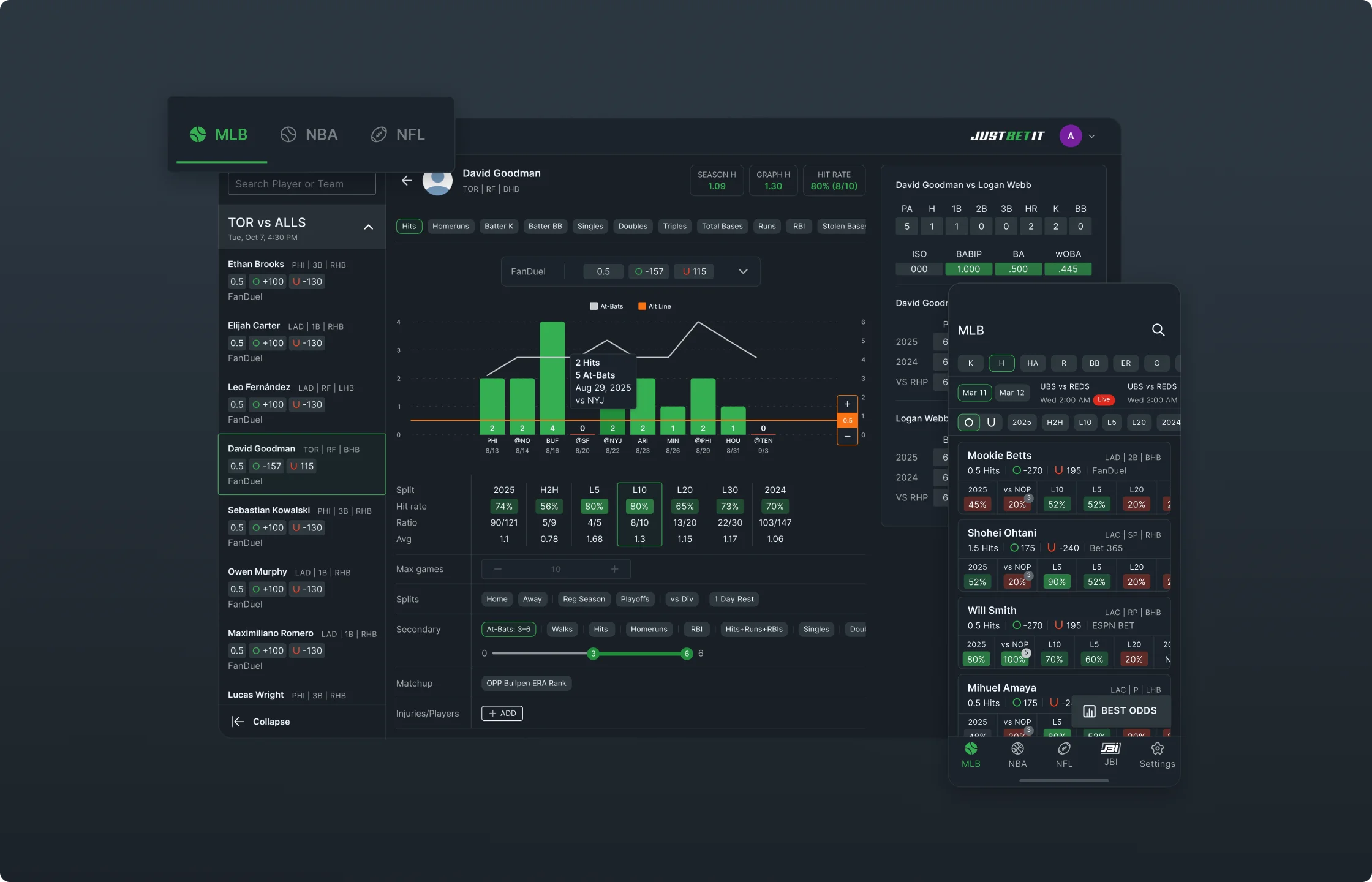
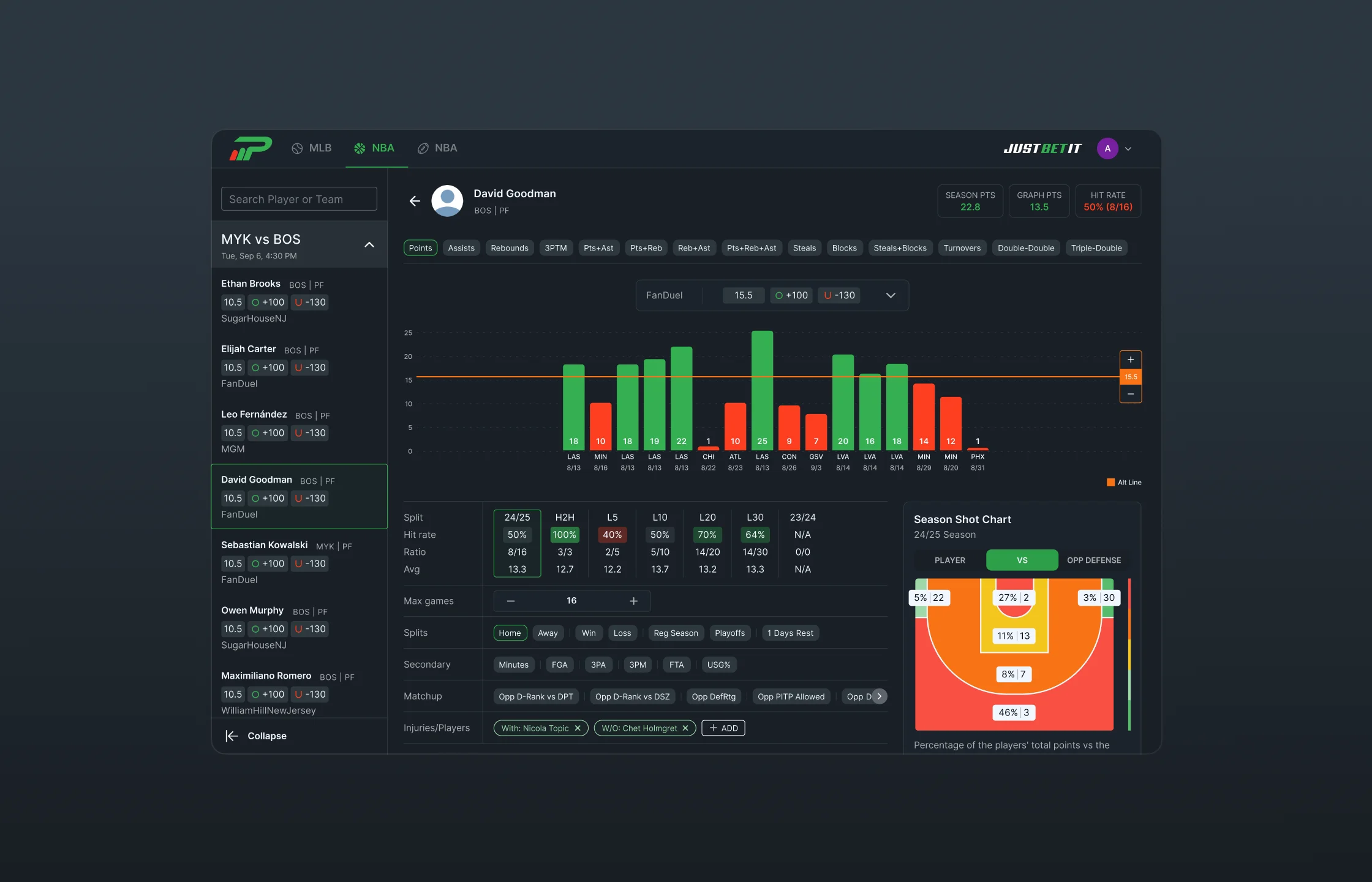
Mobile apps and the web UI render charts, splits, matchup views, and filters, requesting pre-aggregated datasets rather than raw feeds, reducing latency and stabilizing rendering even for complex visuals.
- API layer
A unified backend normalizes sports and odds data, enforces caching policies, and exposes consistent contracts to all client surfaces.
- Integration and control plane
Provider calls are mediated through a queue-driven scheduler with backoff and retry semantics, protecting API quotas during peak demand.
Reliability layer built on TTL-governed caching and controlled retries
To keep Propalytics available during peak-game refresh surges, we introduced multi-layer caching governed by explicit TTL rules, prioritizing freshness where it is truly decision-critical while reusing stable datasets aggressively. Upstream requests are throttled through a request queue, preventing rate-limit incidents from cascading into user-facing delays.
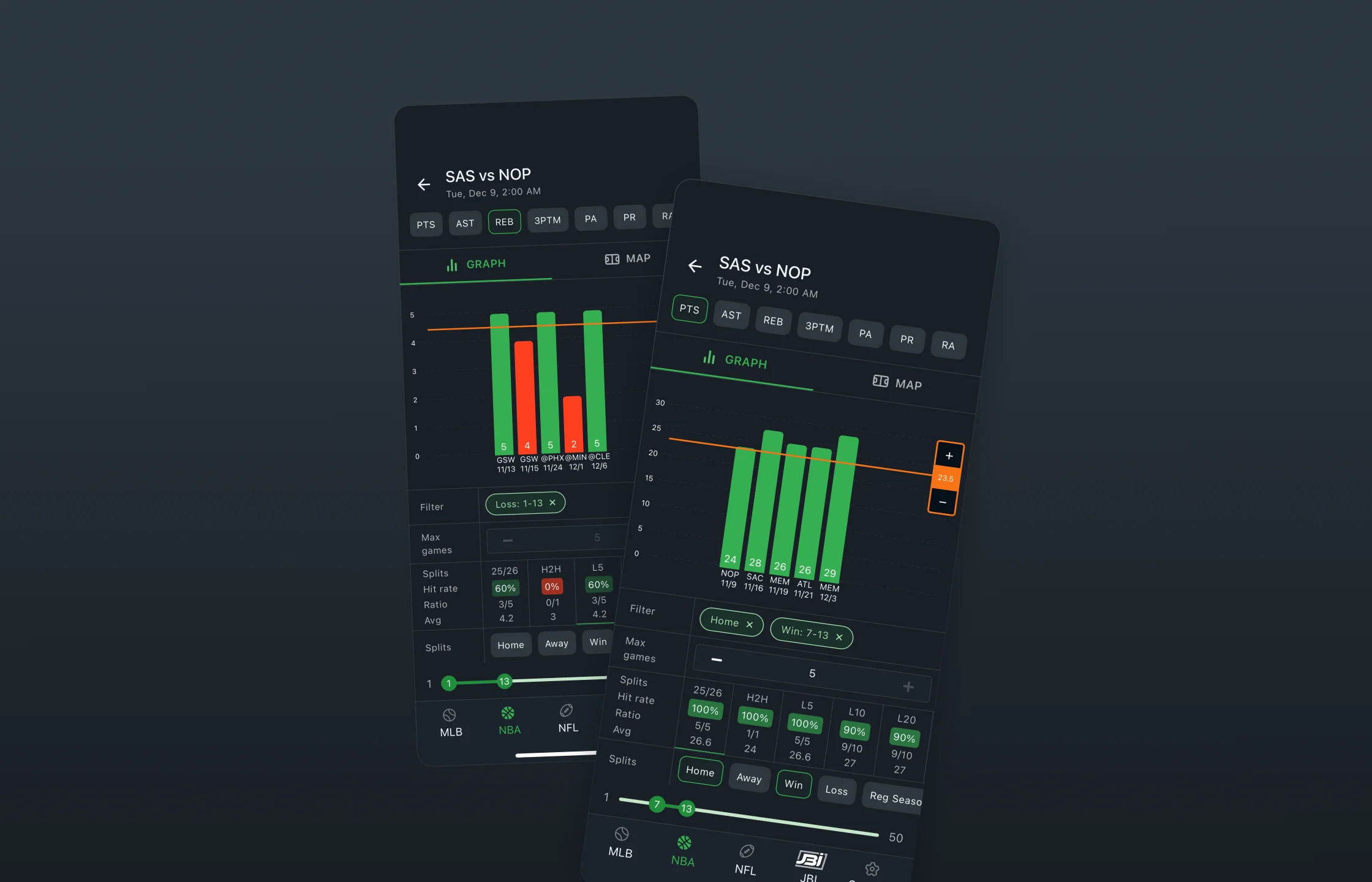
Prop line tracking with hit rate visibility
Users can validate historical outcomes against sportsbook lines and monitor hit rates within a single screen, optimized for mobile research.
Split-driven filtering and segment validation
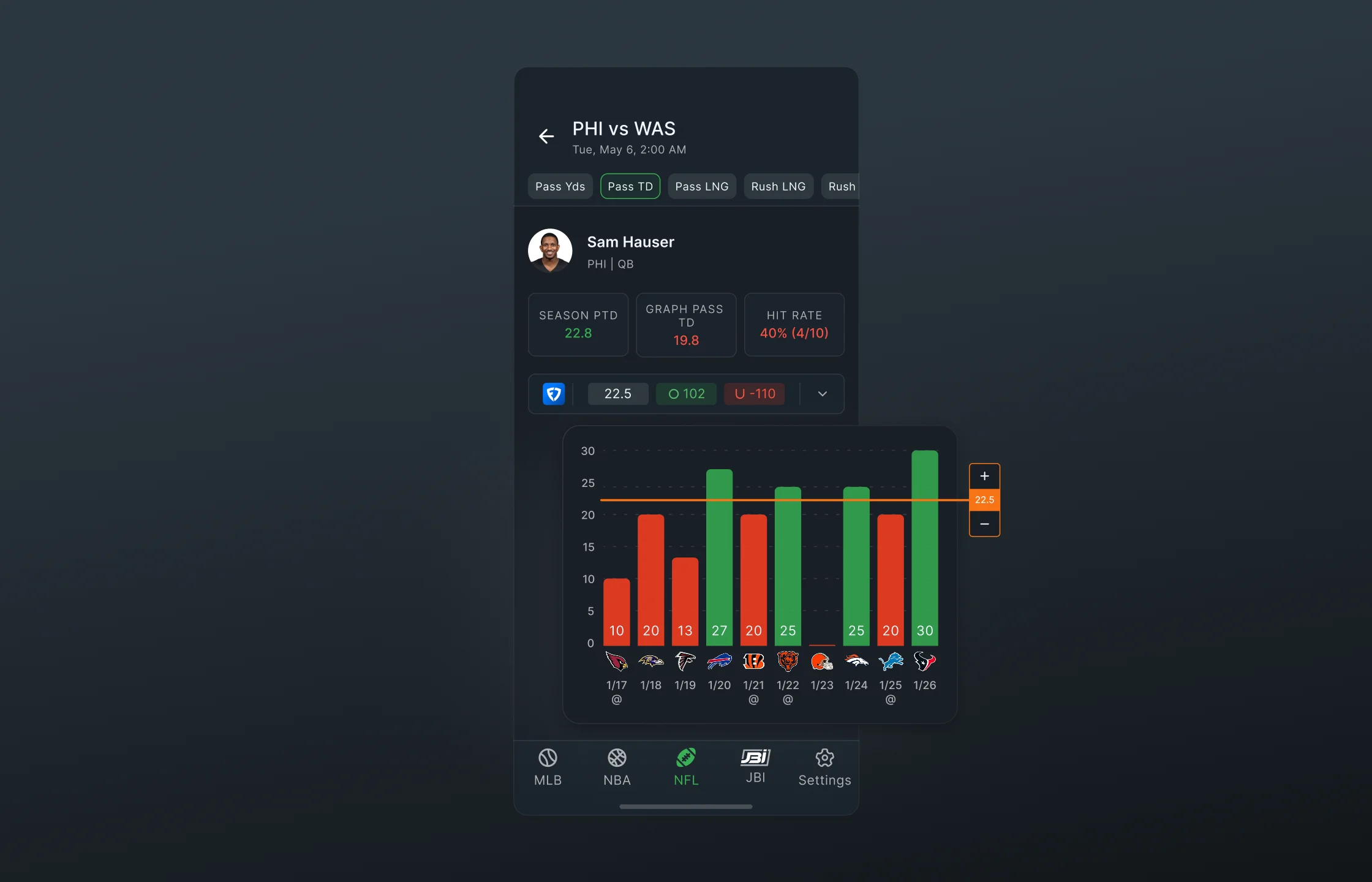
Instead of relying on broad season averages, users can validate a prop within relevant subsets such as Home/Away, Win/Loss, and short-window trends (L5, L10, L20). This is where the UX needed to stay disciplined: the screen exposes depth without turning analysis into a multi-step process.
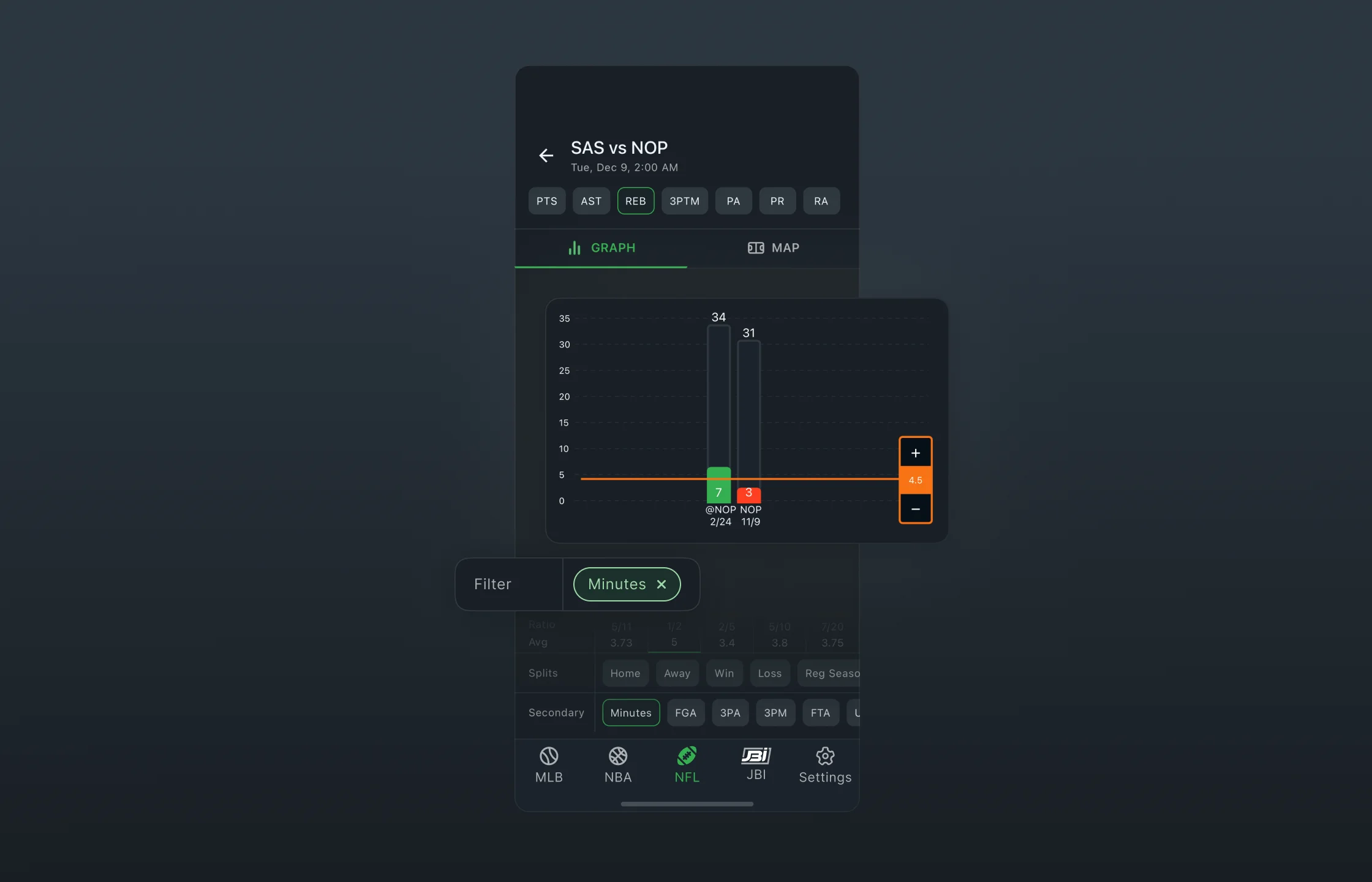
Secondary filters and matchup context for deeper screening
Beyond primary splits, the app supports secondary constraints such as minutes ranges, enabling users to test whether outcomes are correlated with playing time and role-driven variance. This reduces reliance on manual spreadsheets and makes “sanity checking” a first-class workflow.
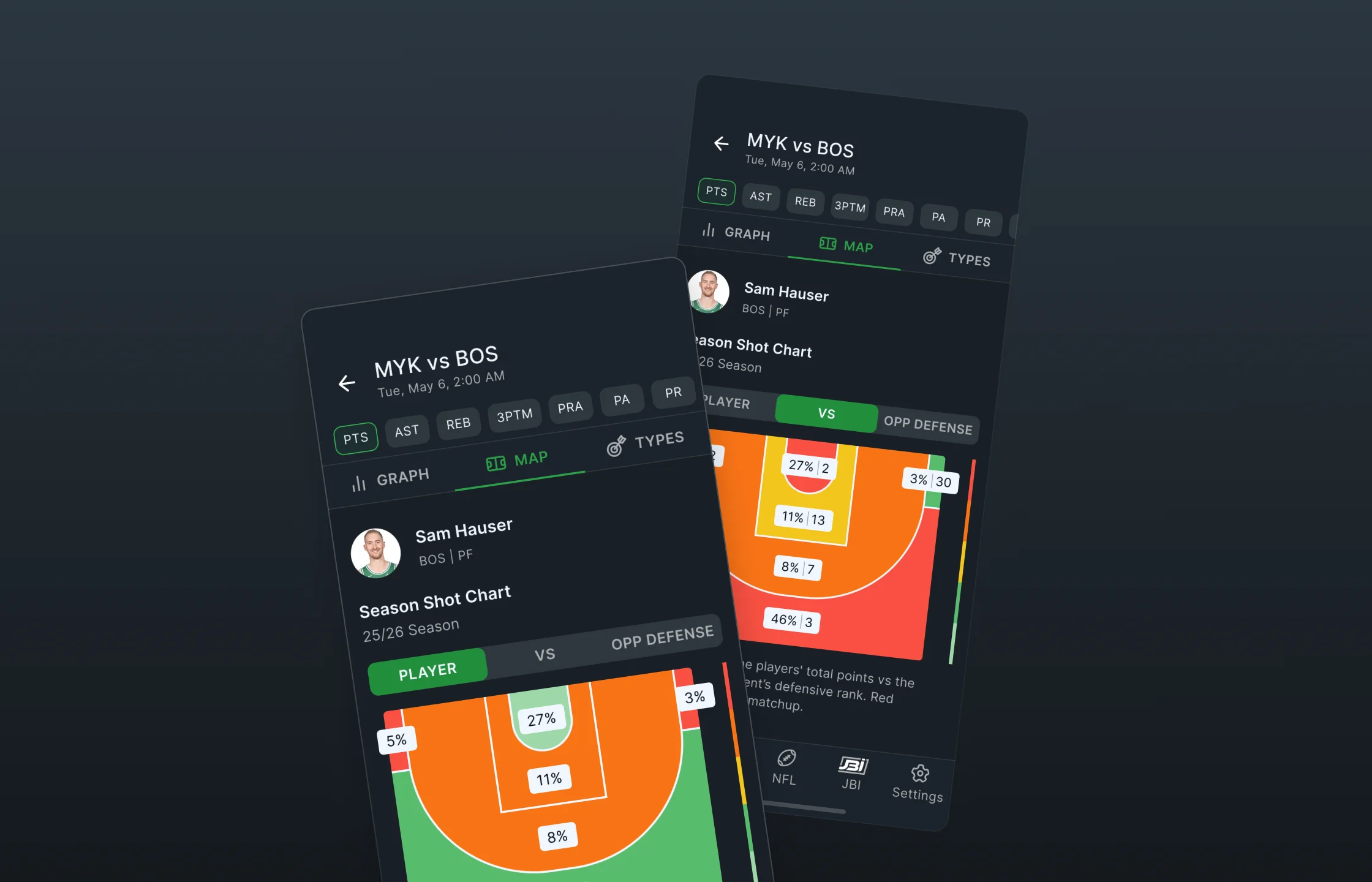
Zone-based matchup visuals in Map mode
A dedicated Map mode provides zone-based visuals that connect player tendencies with opponent context and quickly communicate matchup difficulty. This component was particularly important for differentiation, since it consolidates competitor-grade visual analytics into a single, coherent product surface rather than scattering it across multiple tools.
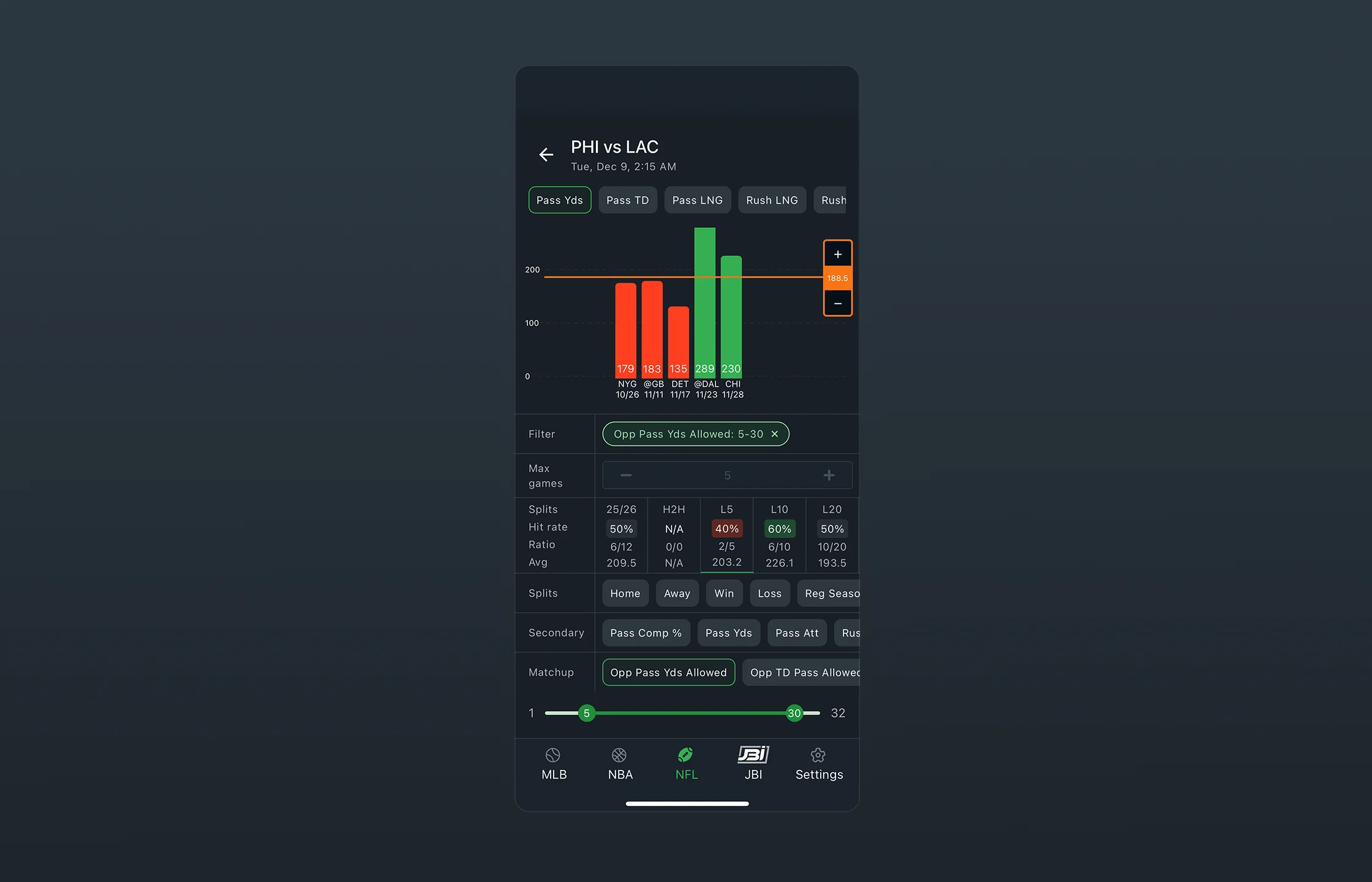
Multi-sport coverage with a consistent interaction model
Propalytics supports MLB, NBA, and NFL without fragmenting the user journey. While the underlying data models differ by sport, the interaction patterns remain predictable, keeping navigation and filtering consistent across contexts.
Tablet-ready web experience and content operations
To extend reach and simplify distribution, we delivered a tablet-responsive web version alongside the mobile apps, preserving the same analytical depth on a larger screen. In parallel, we implemented a WordPress-based landing page, providing the client with operational independence to publish strategic updates and expert insights without waiting for mobile store approval cycles.
Technology Stack
Project Results
Propalytics progressed from concept to a market-ready, multi-platform analytics product, built to serve bettors who demand depth, speed, and stability in the same workflow. The primary objective was to establish market presence and prove the platform's technical viability. By delivering a stable, high-value tool, Propalytics successfully validated user demand and created a foundation for future premium feature extensions.
Under the project, we achieved the following outcomes:
- Delivered the client’s core product
Launched native iOS and Android applications, providing deep analytics for player props across MLB, NBA, and NFL.
- Extended distribution through the web
Developed a tablet-responsive web application that makes onboarding easier for users who prefer a larger screen and supports shareability within sports analytics communities.
- Protected availability during peak demand
Implemented TTL-governed multi-layer caching and queue-based throttling with exponential backoff, effectively eliminating rate-limit-induced downtime during high-traffic surges.
- Enabled agile content operations
Integrated a WordPress-based landing page, allowing the client to publish expert analysis and strategic updates independently of mobile store release cycles.
Beyond the engineering output, the client secured a competitive edge through a product-led growth strategy. The platform now reliably serves a sophisticated user base while remaining extensible enough to support advanced monetization mechanics as the engagement curve justifies further expansion.
More Case Studies
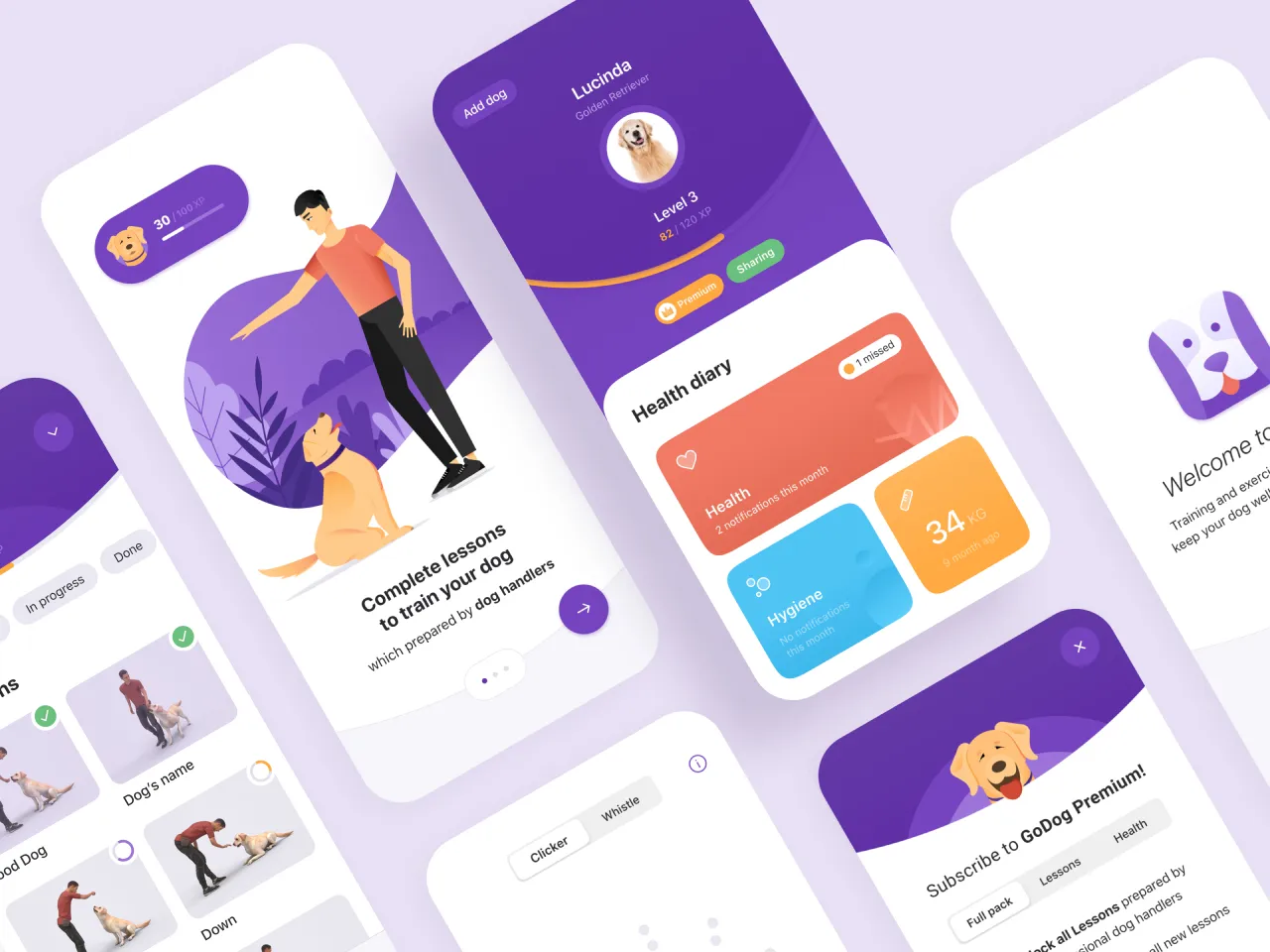
GoDog: Dog Training App Development
A customized dog training and walking plan in an app that helps you keep it well-behaved, fit, and happy
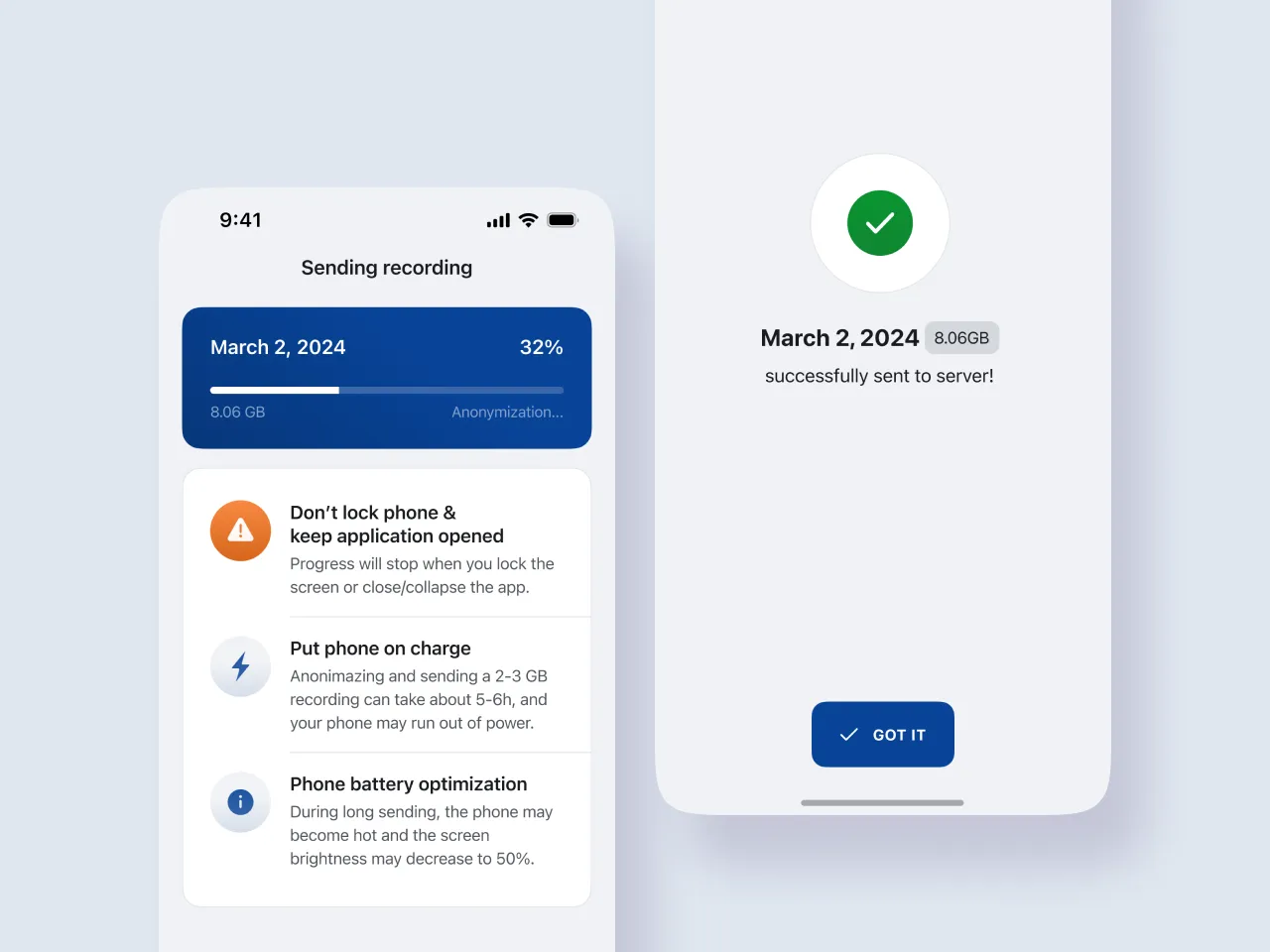
AI-Powered Medical Surgery Recording App
Advanced AI-powered iOS Application Integrated with Innovative Health Tech Software Platform