The Future of Healthcare: Mobile Apps Trends in 2026
Table of contents
- Key Takeaways for HealthTech Product Owners
- Why Mobile Healthcare Infrastructure Is Accelerating
- Global Adoption Dynamics
- Strategic Typology of Healthcare Applications
- Health App Market in Numbers
- Healthcare Mobile Apps Trends in 2026
- Internet of Medical Things (IoMT)
- Telemedicine
- Gamification
- Artificial Intelligence (AI)
- Voice Technology
- Blockchain
- Big Data & analytics
- Mental health apps
- Security and privacy
- Real-time tracking
- Cloud computing
- Benefits of Mobile Technology in the Healthcare Industry
- Advantages of healthcare mobile apps for doctors
- Advantages of healthcare mobile apps for patients
- Advantages of healthcare mobile apps for hospitals
- Engineering Against Abandonment Risks
- Why Event-Driven Architecture Wins
- Command Query Responsibility Segregation (CQRS) for Scalability
- HIPAA and GDPR Readiness
- Zero-Footprint Mobile Security
Frequently Asked Questions
1. How long does enterprise healthcare mobile development take?
2. Are cross-platform frameworks secure enough for healthcare applications?
3. What infrastructure handles wearable telemetry best?
4. How expensive is HIPAA compliance implementation?
5. Why do healthcare mobile applications fail?
- Wrapping Up
The global healthcare industry is experiencing a massive shift away from desktop-bound software ecosystems. Today, mobile technology acts as the primary operational layer connecting patients, physicians, insurance carriers, pharmacies, and remote patient monitoring infrastructure in real time.
For healthcare providers, HealthTech startups, insurance networks, and enterprise clinical systems, mobile healthcare platforms are no longer supporting products. They are now mission-critical digital infrastructures responsible for patient engagement, care continuity, clinical workflow orchestration, automated billing, remote diagnostics, and real-time medical communication. Organizations that fail to modernize mobile delivery pipelines face rising operational costs, fragmented patient journeys, and declining retention.
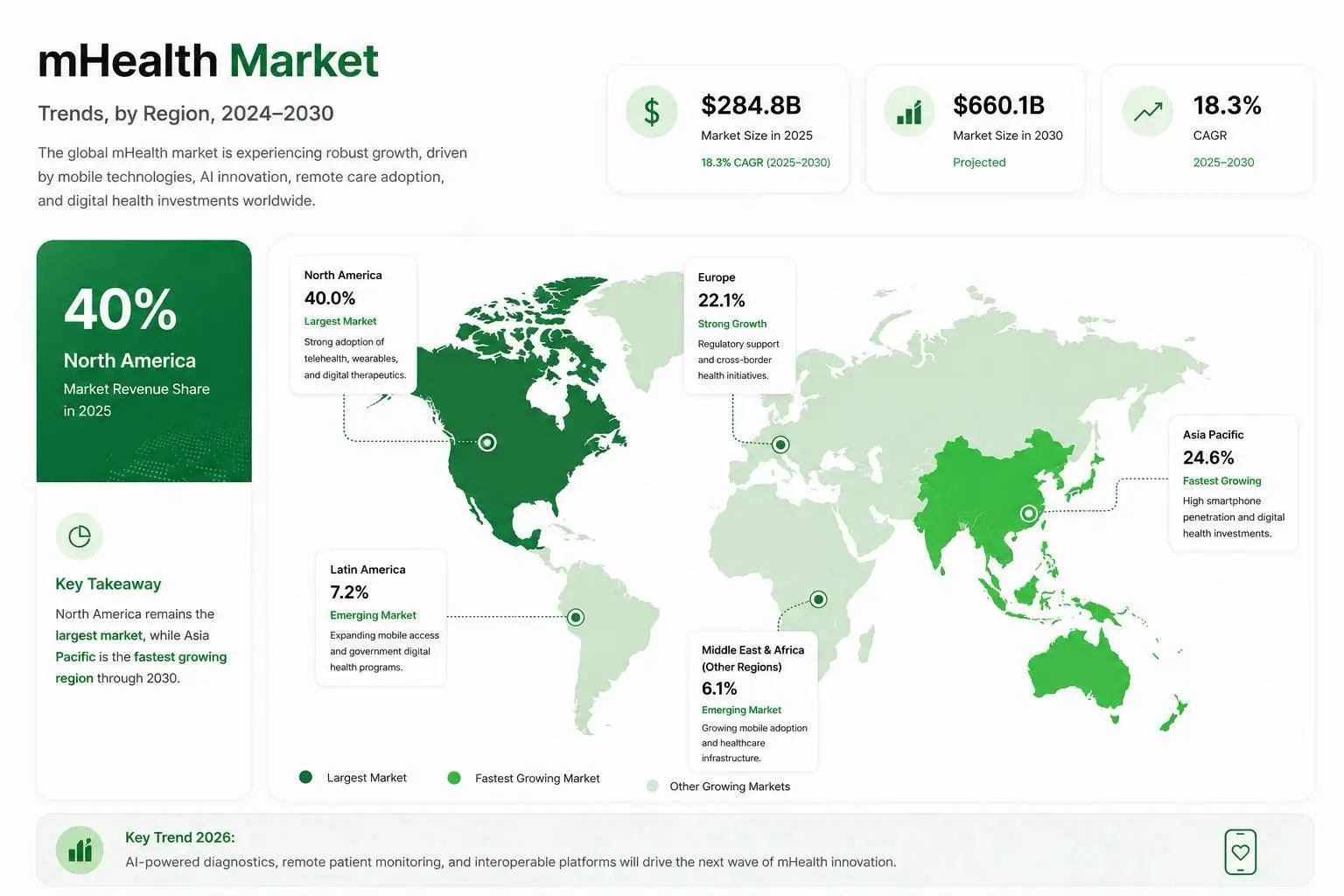
According to industry estimates from Grand View Research and Fortune Business Insights, the global mobile health market is projected to exceed $300 billion by 2030, driven by the rapid adoption of telehealth, wearable devices, remote patient monitoring, and decentralized care delivery. The United States alone accounts for approximately 40% of this value, reflecting substantial investment in healthcare innovation.
Before exploring the technical layers, discover our healthcare engineering capabilities on the Emerline Healthcare Industry Solutions page.
Key Takeaways for HealthTech Product Owners
- Mobile Is Strictly a Presentation Layer. Applications should operate as lightweight presentation environments. Core business logic must remain isolated behind secure microservices and web application program interfaces.
- Biometric Authentication Is the Minimum Baseline. Password-only healthcare applications are operationally obsolete and create severe data liabilities.
- Event-Driven Infrastructure Is Mandatory. Real-time synchronization between wearable devices, providers, pharmacies, and insurance systems requires an asynchronous streaming architecture to manage high concurrency without system lag.
- Compliance Must Be Hardcoded. Security cannot be treated as a final development phase. Encryption and isolation must be embedded directly into the infrastructure from day one.
- Interoperability Dictates Market Adoption. Platforms that cannot exchange data seamlessly with external Electronic Health Record ecosystems lose enterprise integration opportunities.
Why Mobile Healthcare Infrastructure Is Accelerating
Several structural market shifts are forcing healthcare systems to prioritize mobile-first delivery models over legacy desktop portals.
|
Market Driver |
Institutional Business Impact |
|
Physician Shortages |
Drives demand for automated workflow triage and virtual care environments. |
|
Rising Chronic Disease Rates |
Requires continuous, non-invasive remote telemetry tracking outside the clinic. |
|
Consumer Demand for Instant Access |
Makes mobile self-service engagement mandatory for patient retention. |
|
Insurance Carrier Digitization |
Enables instant financial reconciliation through automated web application program interfaces. |
|
Hospital Operational Overload |
Shifts simple therapeutic touchpoints toward decentralized outpatient networks. |
|
Wearable Device Adoption Growth |
Creates massive streams of patient telemetry that must be ingested without data lag. |
Global Adoption Dynamics
Analytical adoption metrics highlight a significant geographical distribution in user engagement. Leading the global shift, 69% of the surveyed population in India and 61% in China actively utilize mobile medical applications. In western markets, adoption remains highly consolidated, with the United Kingdom tracking at 49%, while Germany and the United States maintain a stable 43% user base.
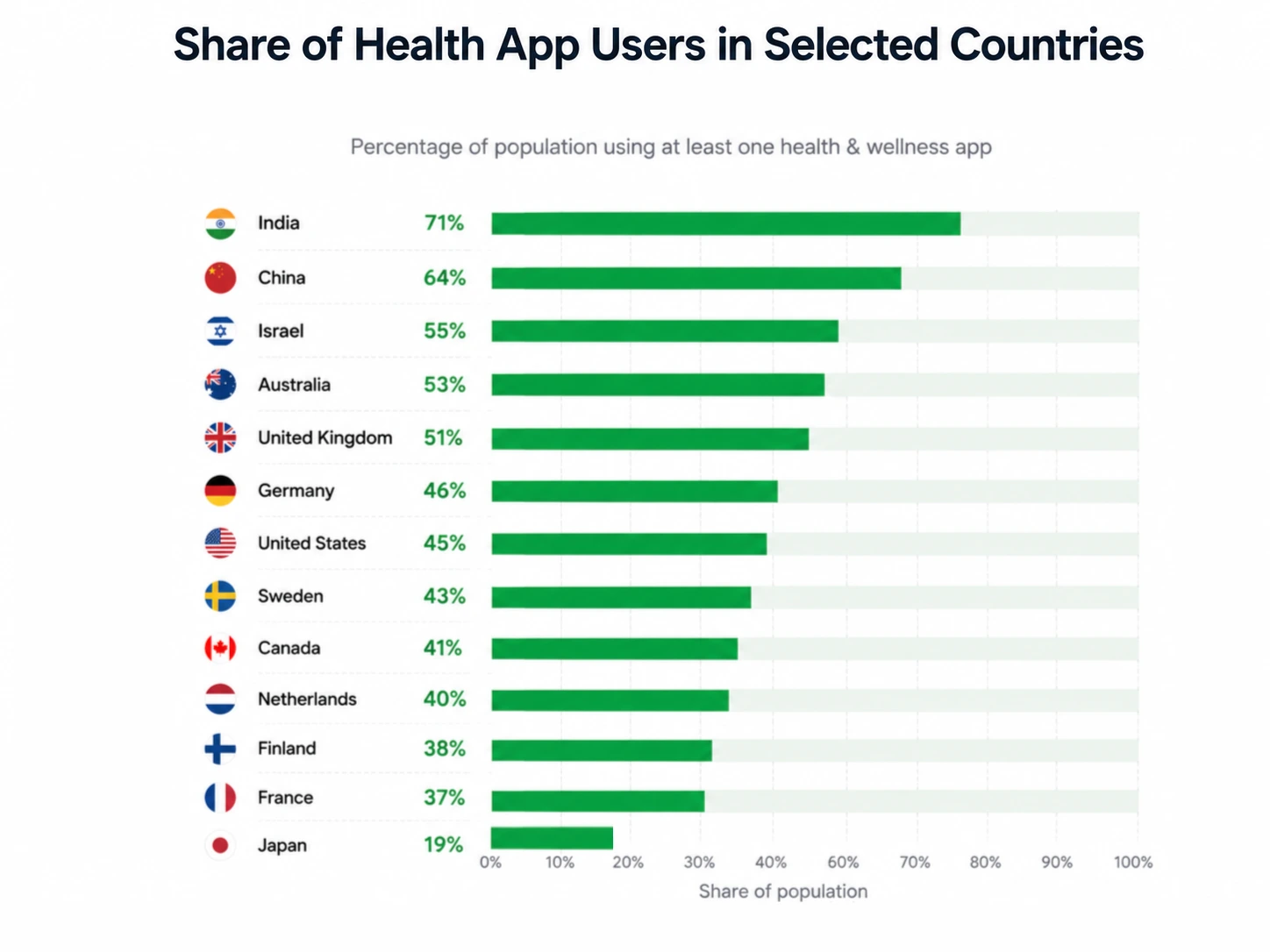 For HealthTech product teams, this distributed footprint proves that cross-border applications must be optimized to operate across varying cloud infrastructures, localization frameworks, and regional network performance profiles without dropping backend data synchronization layers.
Strategic Typology of Healthcare Applications
Let’s dive into the key types of healthcare apps driving this transformation:
- Mobile Health Apps (mHealth apps)
These applications provide easy access to medical information, appointment scheduling, and patient health tracking. They empower users to monitor their health conditions and engage actively in their care.
- Electronic Health Records (EHRs)
EHR apps allow healthcare providers to securely store, manage, and access patient data in real-time. With EHR apps, streamlining workflows, enhancing collaborations, and reducing administrative errors have become much more manageable.
- Telehealth Platforms
Telehealth solutions enable virtual consultations, bridging the gap between patients and providers. This technology is critical for expanding care access to remote areas.
- Remote Patient Monitoring (RPM)
Remote Patient Monitoring apps collect patient health data through connected devices, enabling continuous monitoring and timely interventions for chronic conditions.
- Wearable Devices
Smart wearables like fitness trackers and smartwatches integrate with mobile apps to monitor vital signs such as heart rate, sleep patterns, and activity levels.
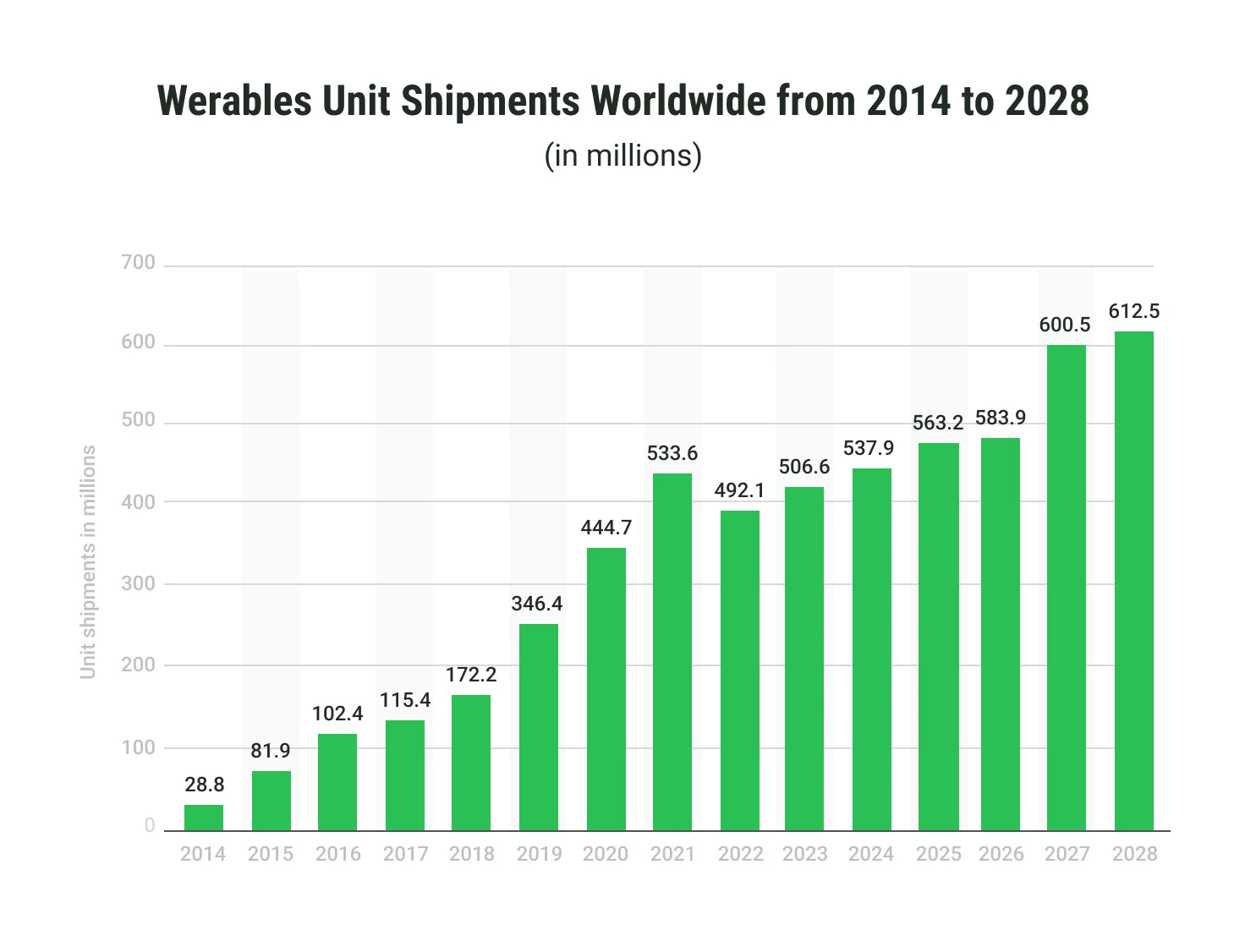
By the way, the global market for wearable devices has experienced phenomenal growth over the past decade. In 2014, only 28.8 million units were shipped worldwide, but by 2024, this number skyrocketed to an impressive 537 million units, marking a significant shift in the adoption of wearable health technologies. Various fitness trackers and smartwatches are now indispensable tools for continuous health monitoring, used to get real-time insights into users' health indicators and contribute to more efficient, data-driven healthcare management.
Health App Market in Numbers
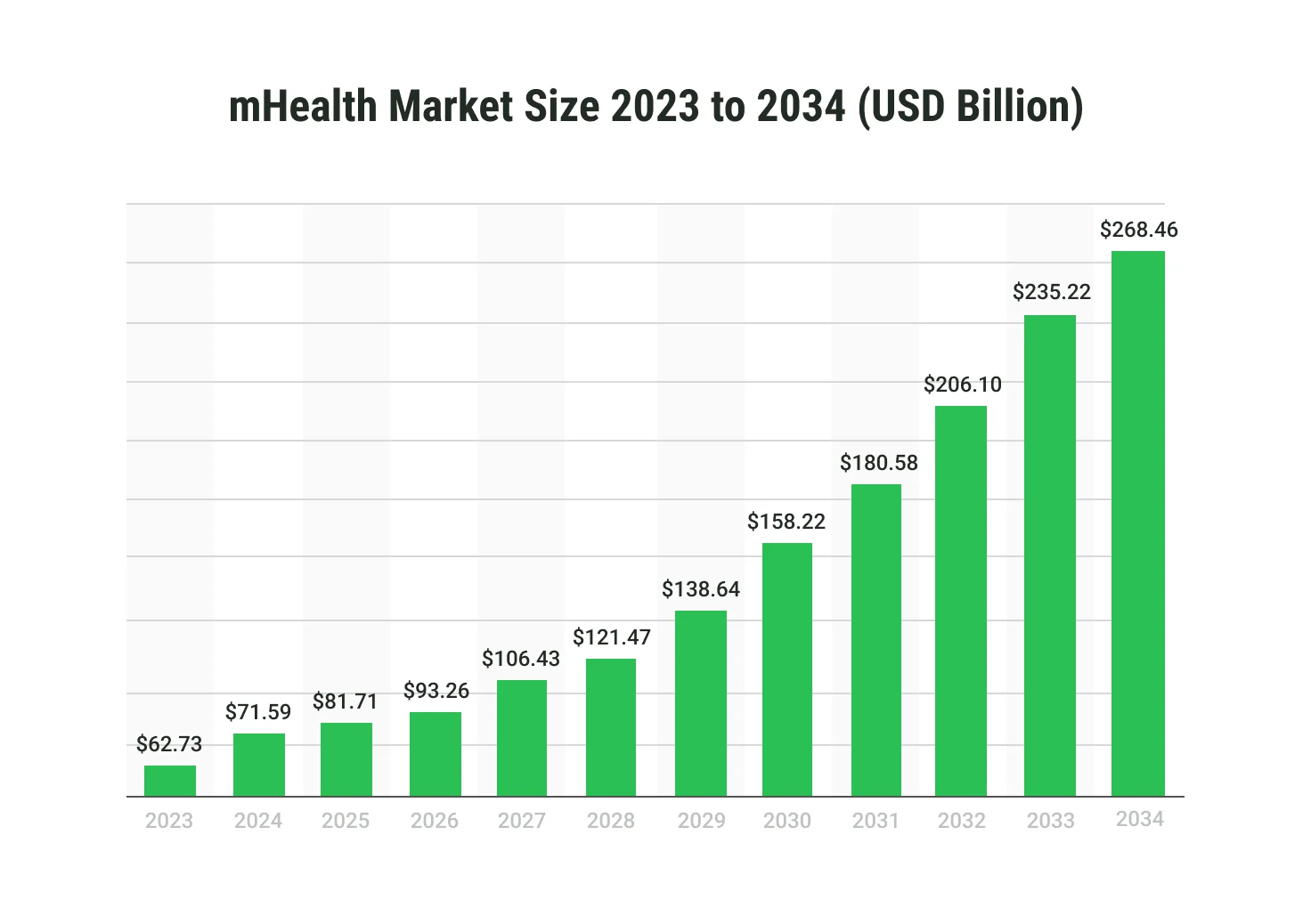
The mHealth market is charting an impressive growth trajectory, reflecting the surging demand for digital healthcare solutions. From $62.73 billion in 2023, the market is forecasted to reach $81.71 billion by 2025, marking nearly a 30% increase in just two years. By 2034, it is projected to hit a staggering $268.46 billion, showcasing the pivotal role of mobile health technologies in transforming global healthcare delivery.
The mHealth market expansion is fueled by the increasing prevalence of chronic diseases, a growing focus on patient-centric care, and technological advancements in wearable devices, remote monitoring, and telehealth. These trends set the stage for exploring the most promising innovations in mHealth, where AI, IoT, and interoperability continue to reshape how care is delivered and managed.
Healthcare Mobile Apps Trends in 2026
Today, healthcare apps incorporate advanced technologies to meet the evolving needs of patients, practitioners, and providers. These trends are improving the accessibility and quality of care and empowering individuals to take greater control of their health.
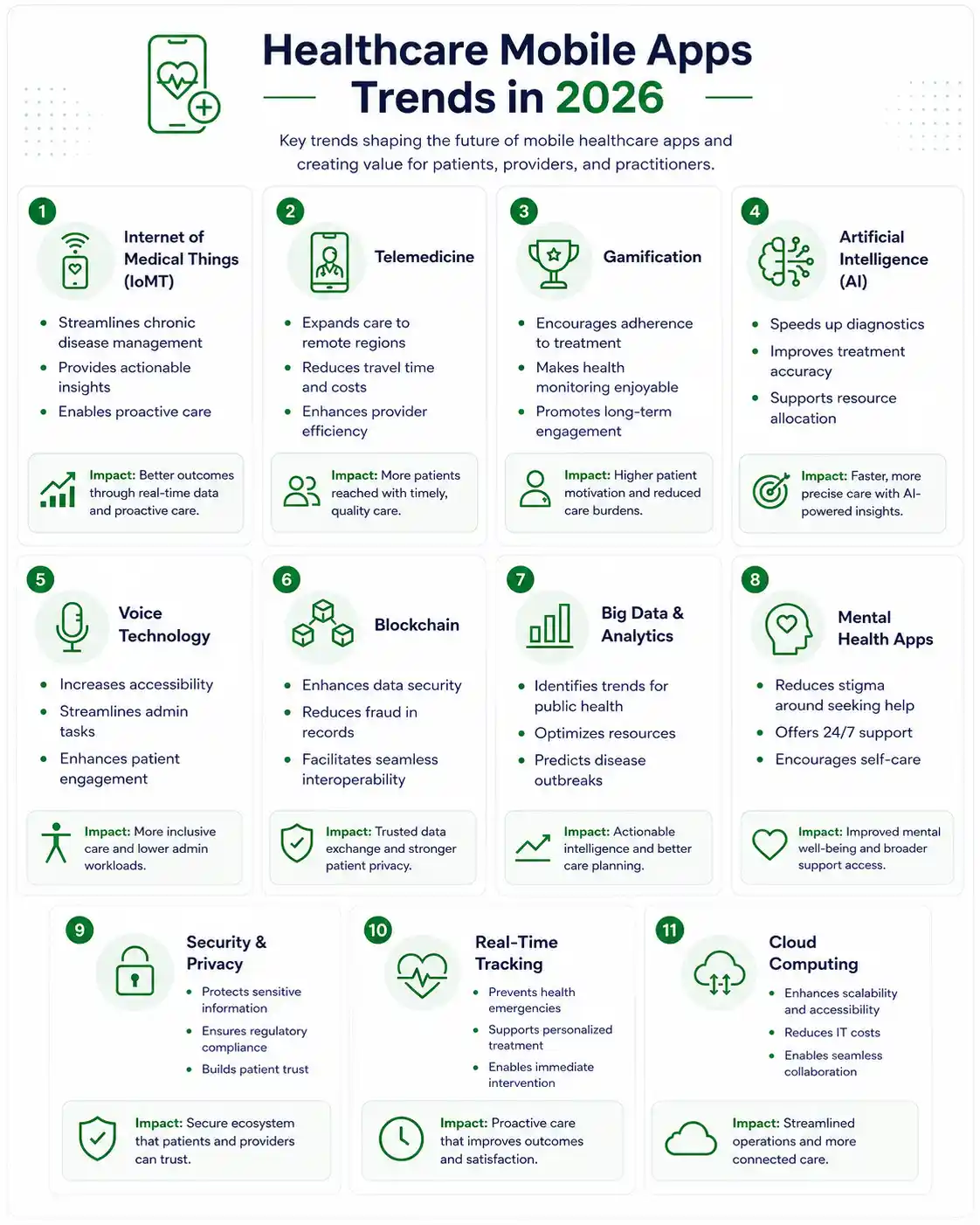
Below, we explore the key trends shaping the future of mobile healthcare apps:
Internet of Medical Things (IoMT)
IoMT refers to the network of connected medical devices and healthcare systems that collect and exchange data. IoMT enhances real-time monitoring and data sharing between patients and providers, from smart inhalers to connected insulin pens.
Benefits:
- Streamlines chronic disease management.
- Provides actionable insights through continuous data collection.
- Improves patient outcomes by enabling proactive care.
Impact: Doctors can make informed decisions quickly, patients experience more personalized care, and providers optimize resources by reducing hospital readmissions.
Telemedicine
Telemedicine allows remote consultations, diagnosis, and treatment through mobile apps. It is particularly crucial in underserved areas, bridging gaps in accessibility.
Benefits:
- Expands care to remote regions.
- Reduces travel time and costs for patients.
- Enhances efficiency for healthcare providers.
Impact: Doctors can reach more patients, and individuals gain access to timely, quality care.
Gamification
Incorporating game-like elements into healthcare apps motivates users to maintain healthy habits. Features like rewards, challenges, and progress tracking enhance engagement.
Benefits:
- Encourages adherence to treatment plans.
- It makes health monitoring enjoyable.
- Promotes long-term user engagement.
Impact: Patients remain motivated to follow care routines, reducing the burden on providers.
Artificial Intelligence (AI)
AI algorithms power predictive analytics, diagnostics, and personalized treatment plans. Machine learning models analyze vast datasets to uncover patterns and improve decision-making.
Benefits:
- Speeds up diagnostics.
- Enhances accuracy in treatment recommendations.
- Supports efficient resource allocation.
Impact: Doctors save time with AI-assisted insights, while patients benefit from faster, more precise care.
Voice Technology
Voice-enabled apps allow patients to interact with healthcare services hands-free, from booking appointments to managing medications.
Benefits:
- Increases accessibility for visually impaired users.
- Streamlines administrative tasks.
- Enhances patient engagement.
Impact: Healthcare becomes more inclusive, and providers reduce administrative workloads.
Blockchain
Blockchain ensures secure, tamper-proof storage and sharing of patient data. It fosters trust by enabling transparency and decentralization.
Benefits:
- Enhances data security.
- Reduces fraud in health records.
- Facilitates seamless interoperability.
Impact: Providers trust the integrity of shared data, and patients feel more secure about privacy.
Big Data & analytics
Big data empowers healthcare systems with insights from analyzing vast patient information, enabling evidence-based practices.
Benefits:
- Identifies trends for public health improvements.
- Optimizes resource allocation.
- Predicts disease outbreaks.
Impact: Providers gain actionable intelligence, and patients experience more effective care planning.
Mental health apps
Mental health-focused apps provide tools for stress management, therapy sessions, and emotional well-being tracking.
Benefits:
- Reduces stigma around seeking help.
- Offers 24/7 access to support.
- Encourages self-care.
Impact: Patients improve their mental health while healthcare providers reach a broader audience.
Security and privacy
With the growing volume of digital health data, robust security measures are essential. Apps integrate encryption, authentication, and compliance frameworks.
Benefits:
- Protects sensitive information.
- Ensures regulatory compliance.
- Builds patient trust.
Impact: Both providers and patients benefit from a secure, trustworthy healthcare ecosystem.
Real-time tracking
Apps with real-time tracking monitor patients’ health conditions continuously, enabling timely interventions.
Benefits:
- Prevents health emergencies.
- Supports personalized treatment plans.
- Enhances chronic condition management.
Impact: Providers can deliver proactive care, improving patient satisfaction and outcomes.
Cloud computing
Cloud technology facilitates the storage, access, and analysis of healthcare data across devices and locations.
Benefits:
- Enhances scalability and accessibility.
- Reduces IT infrastructure costs.
- Enables seamless collaboration.
Impact: Providers streamline operations while patients enjoy faster, more connected care.
Benefits of Mobile Technology in the Healthcare Industry
Mobile technology trends in healthcare are revolutionizing how care is delivered, enhancing efficiency and accessibility for all stakeholders. Here are the key advantages healthcare apps offer:
Advantages of healthcare mobile apps for doctors
- Streamlined patient management
- Improved diagnostics
- Efficiency boost
Healthcare apps empower doctors with advanced tools for diagnostics, patient management, and communication. Real-time access to patient data improves decision-making, while AI and analytics help identify patterns for accurate diagnoses. Apps streamline administrative tasks, allowing physicians to focus more on patient care.
Advantages of healthcare mobile apps for patients
- Convenient access
- Personalized care
- Empowerment
Patients benefit from personalized health management tools. Apps provide easy access to medical records, appointment scheduling, and health tracking. Features like telemedicine and mental health support ensure care is accessible anytime, anywhere, while gamification keeps users engaged in maintaining healthy habits.
Advantages of healthcare mobile apps for hospitals
- Optimized operations
- Enhanced security
- Cost savings
For healthcare providers, apps optimize operations and resource allocation. Cloud-based solutions enhance collaboration, while IoMT devices facilitate real-time patient monitoring. Blockchain-secured systems ensure data privacy, reducing risks of breaches and building patient trust.
Engineering Against Abandonment Risks
Building a mobile platform is only half the battle; the real challenge lies in preventing user churn after the initial download. Market research into user behavior demonstrates that 21% of users delete healthcare apps simply because they are filtering for a more suitable single option, while 19% abandon platforms due to a lack of desired features.
Crucially for engineering teams, 16% of users drop out due to loss of interest, 10% find the software non-engaging over time, and 9% abandon it because it is too difficult to navigate. This data proves that reducing user friction via advanced behavioral features and predictive workflows is directly tied to the long-term financial sustainability of a platform.
To manage massive transaction loads without latency spikes, enterprise healthcare mobile networks must utilize a decoupled, highly responsive architecture pattern.
| MOBILE HEALTHCARE STACK |
| Mobile Apps (iOS / Android / Flutter / React Native) |
| API Gateway + Identity Layer |
| Event-Driven Microservices |
| CQRS + Streaming Infrastructure |
| FHIR / HL7 Integration Layer |
| EHR Systems / Billing / Insurance / IoMT Devices |
Why Event-Driven Architecture Wins
Healthcare ecosystems process massive volumes of simultaneous transactions, including wearable telemetry, appointment scheduling, prescription updates, laboratory synchronization, and insurance responses. Event-driven architecture prevents system bottlenecks by decoupling services using high-throughput message streaming tools like Apache Kafka, RabbitMQ, Amazon Kinesis, or Redis Streams.
Command Query Responsibility Segregation (CQRS) for Scalability
Modern enterprise healthcare systems increasingly deploy Command Query Responsibility Segregation. This pattern separates write operations and transactional workflows from read-heavy user queries. Without this separation, high-volume patient dashboards, analytics panels, and search requests can overload critical transactional databases, causing system latency.
- Native Mobile Apps: Swift, Kotlin.
- Cross-Platform Engineering: Flutter, React Native.
- Backend Microservices: Node.js, NestJS, Java Spring Boot, Python Django.
- Data Storage Layers: PostgreSQL, MongoDB, Redis.
- Streaming Infrastructure: Apache Kafka, RabbitMQ.
- Cloud Infrastructure: Amazon Web Services, Microsoft Azure, Google Cloud Platform.
- Containerization Orchestration: Docker, Kubernetes.
- Real-Time Video Communication: WebRTC, Socket.IO, Twilio.
- Identity & Security Protocols: OAuth 2.0, OpenID Connect, WebAuthn.
- International Healthcare Standards: Fast Healthcare Interoperability Resources, Health Level Seven, Digital Imaging and Communications in Medicine.
Operating a decentralized mobile care network requires absolute inheritance of strict privacy regulations and technical framework layers.
| SECURITY & COMPLIANCE STACK | |
| Interoperability Layer | HL7, FHIR Web APIs |
| Access & Privacy Layer | RBAC, OAuth 2.0, Audits |
| Data Security Layer | AES-256, TLS 1.3 |
HIPAA and GDPR Readiness
Healthcare systems operating in the United States must comply with Health Insurance Portability and Accountability Act regulations, while systems serving European users require strict General Data Protection Regulation compliance. All Protected Health Information must be heavily encrypted using Advanced Encryption Standard 256 keys at rest and TLS 1.3 transport security protocols in transit. Storage layers must run continuous automated audit logs to trace every user action.
Zero-Footprint Mobile Security
Healthcare applications should never permanently store Protected Health Information on mobile devices. Modern systems use tokenized session rendering, ephemeral local storage, and remote revocation controls.
Lost smartphones should never become data breach events. Enterprise healthcare applications must use zero-footprint architecture patterns that eliminate persistent Protected Health Information storage entirely.
Your software development and product management teams can use this technical checklist to verify if your application infrastructure is ready for production launch.
|
Assessment Area |
Technical / Infrastructure Requirement |
Status (Yes/No) |
|
Event Streaming |
High-throughput Apache Kafka or asynchronous messaging is deployed. |
|
|
Interoperability |
Mobile backend exchanges data smoothly via fast-sync FHIR web services. |
|
|
Access Verification |
Security model utilizes multi-factor check-ins and biometric tokens. |
|
|
Telehealth Channels |
Virtual consultation tools run over encrypted, low-latency WebRTC streams. |
|
|
Mobile Security |
Zero-footprint session logic prevents local phone caching of PHI data. |
|
|
Audit Compliance |
System logs write continuously to an immutable, write-once ledger. |
|
|
Cloud Scalability |
Infrastructure utilizes Kubernetes autoscaling to handle traffic surges. |
|
|
Data Isolation |
Tenant groups are perfectly siloed using Role-Based Access Control parameters. |
A scalable medical platform combines secure software engineering, clear user psychology, and infrastructure cost containment.
Mobile applications perform significantly better when paired with validated user behavior models and smart interface design. Read our detailed strategic breakdown: Gamification in Healthcare: Driving Patient Engagement Through Behavioral Design.
Frequently Asked Questions
1. How long does enterprise healthcare mobile development take?
A basic Minimum Viable Product system with baseline scheduling and medical records typically requires 4 to 6 months of engineering. Enterprise-grade ecosystems with automated billing, live internet of medical things sensor ingestion, and integrated telehealth video generally require 9 to 15 months, depending heavily on integration complexity and compliance scope.
2. Are cross-platform frameworks secure enough for healthcare applications?
Yes, provided that biometric authentication, encrypted local storage, and native security application program interfaces are implemented correctly. Security is maintained by completely disabling persistent data caching on the physical phone.
3. What infrastructure handles wearable telemetry best?
An event-driven streaming architecture using Apache Kafka or RabbitMQ provides the strongest scalability and throughput for managing high-frequency telemetry ingestion without blocking main database threads.
4. How expensive is HIPAA compliance implementation?
Compliance costs vary based on audit scope, cloud infrastructure layers, logging requirements, and encryption architecture. However, rebuilding a non-compliant platform after a data leak or audit failure is dramatically more expensive than designing a secure system from day one.
5. Why do healthcare mobile applications fail?
The most common causes of software failure include poor data interoperability with existing hospital networks, weak database synchronization architecture, slow interface performance under heavy loads, and low provider usability.
Wrapping Up
Healthcare mobile apps are revolutionizing the industry, creating interconnected ecosystems that benefit patients, doctors, and providers alike. The trends shaping 2025, like IoMT, AI & ML, telemedicine, and enhanced security, are driving innovation, improving patient outcomes, and streamlining operations. These technologies ensure that healthcare becomes more efficient, personalized, and accessible than ever.
Choosing the right partner for healthcare app development is essential to harness these trends successfully. At Emerline, we deliver cutting-edge, scalable, and secure healthcare solutions to meet the needs of all stakeholders and skyrocket the healthcare industry's development.
The long-term value of healthcare mobile software depends entirely on architectural flexibility. Organizations that prioritize interoperability, event-driven infrastructure, and zero-trust security today will own the next generation of digital healthcare delivery.
Disclaimer & Limitation of Liability: The market projections, regulatory updates, and technical metrics presented in this guide are based on industry evaluations and analytical forecasts for informational purposes only. They do not constitute formal technical, legal, or medical advice. Emerline assumes no liability or responsibility for any business decisions, implementation strategies, or third-party compliance outcomes resulting from the use of the information provided in this guide.
Updated on May 29, 2026