How a Mobile App Reduces Healthcare Costs
Table of contents
Key takeaways for technical leaders
Core Application Modules that Drive Down Costs
Real time price transparency engines
Pharmaceutical cost optimization
Telehealth as the first line of clinical defense
Lowering clinic administrative overhead
How Emerline Solves These Challenges: Real-World Cases
Results: The Numbers Behind the Transformation
A Step-by-Step Architecture Blueprint for Cost-Reduction Apps
1. Map your data pipelines early
2. Implement the FHIR/HL7 data standard
3. Build a local-first security layer
4. Conduct a strict HIPAA/GDPR audit
Technical requirements for cost reduction software
Frequently Asked Questions
How does a mobile app actually reduce healthcare costs?
Why is integration with EMR/EHR systems necessary?
How do you protect financial and health data within the app?
Traditional healthcare systems often run on information asymmetry. Patients usually discover the actual cost of treatment only after receiving the final invoice, which leads to unpredictable expenses and financial stress. According to a consumer survey by the Kaiser Family Foundation (KFF), nearly half of US adults struggle to afford unexpected healthcare bills, and roughly 41% carry medical debt.
Building custom digital health software directly addresses this problem. A well-engineered mobile application turns a patient into an informed consumer, minimizes claim losses for insurance providers, and removes hidden facility fees. Below is a technical look at how software optimization drives down care costs, based on Emerline’s development experience.
Key takeaways for technical leaders
- Price transparency improves retention: Direct integration with insurance APIs allows users to see exact costs before booking a procedure.
- UX simplifies medical coding: Complex administrative billing codes (ICD-10, CPT) must be translated into clean, understandable interface elements.
- System integration accelerates ROI: Connecting the mobile front-end directly to internal hospital systems reduces administrative overhead by eliminating manual data entry.
Core Application Modules that Drive Down Costs
To build a product that successfully cuts medical expenses, software development must focus on specific operational bottlenecks. Reducing costs is not about lowering the quality of care; it is about eliminating administrative waste, price opacity, and unnecessary hospital visits.
Integrating the following four core modules into your digital health platform directly optimizes spending for both patients and healthcare providers.
Real time price transparency engines
The most effective module for driving down medical costs is a local procedure search engine connected directly to health insurance payer APIs.
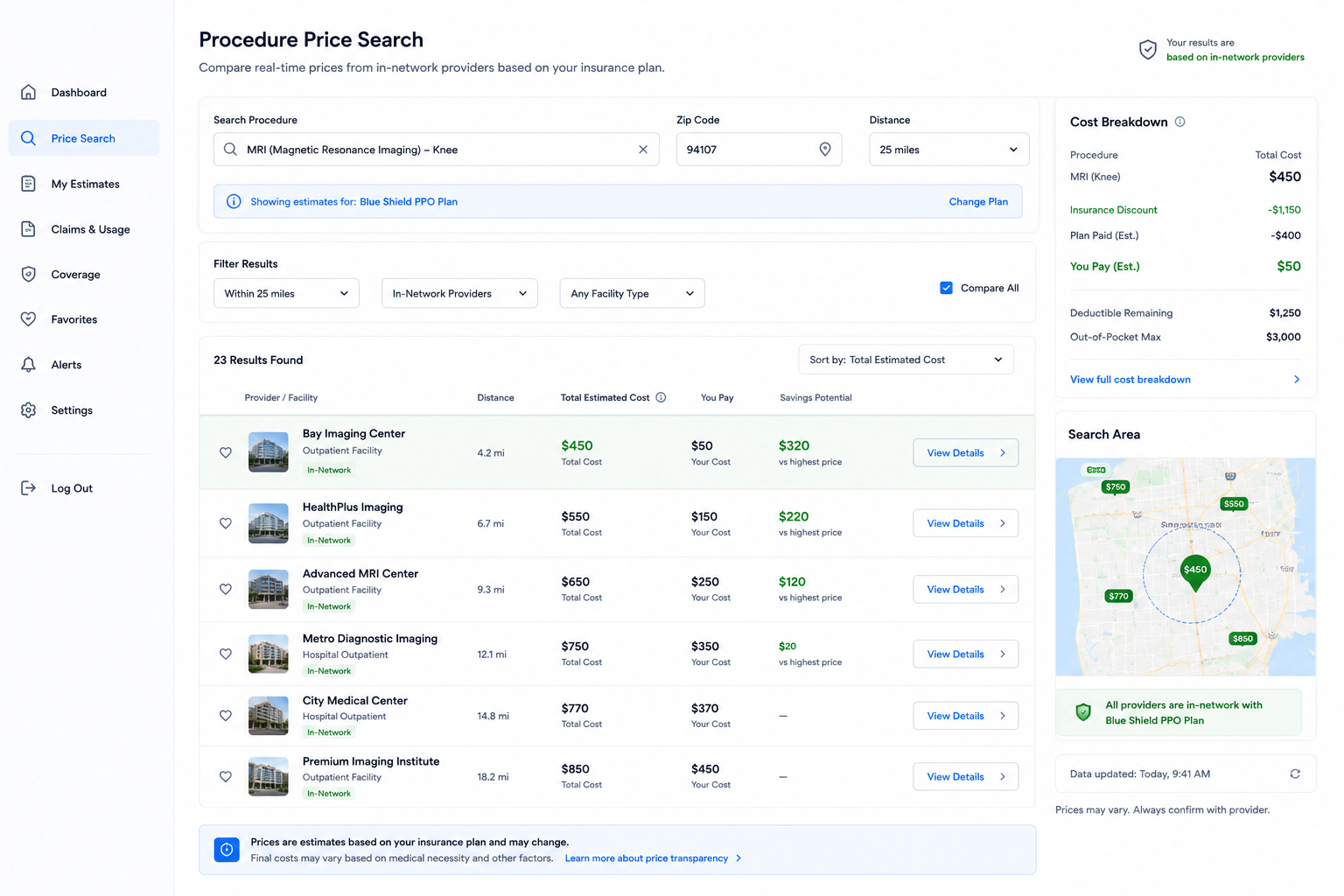
- The Core Feature: Users input a specific medical procedure, such as an MRI. The application queries the payer database and maps nearby clinics showing the exact price tailored to the user’s specific insurance plan, remaining deductible, and co-payment baseline.
- Why it works: Allowing a patient to choose a diagnostic center that is located slightly further away but costs $200 less creates open market competition. This lowers expenses for both the consumer and the insurance company.
When building price transparency engines, do not rely on static web scraping. Payer pricing sheets change constantly. Architect your app with dynamic API aggregators that fetch data in real time, and map this data directly onto a clean geofencing interface so users can instantly compare costs by location.
Pharmaceutical cost optimization
The price of brand-name prescription drugs is often inflated due to pharmaceutical marketing structures. Automated alternative-matching features help users source identical, cost-effective generic options.
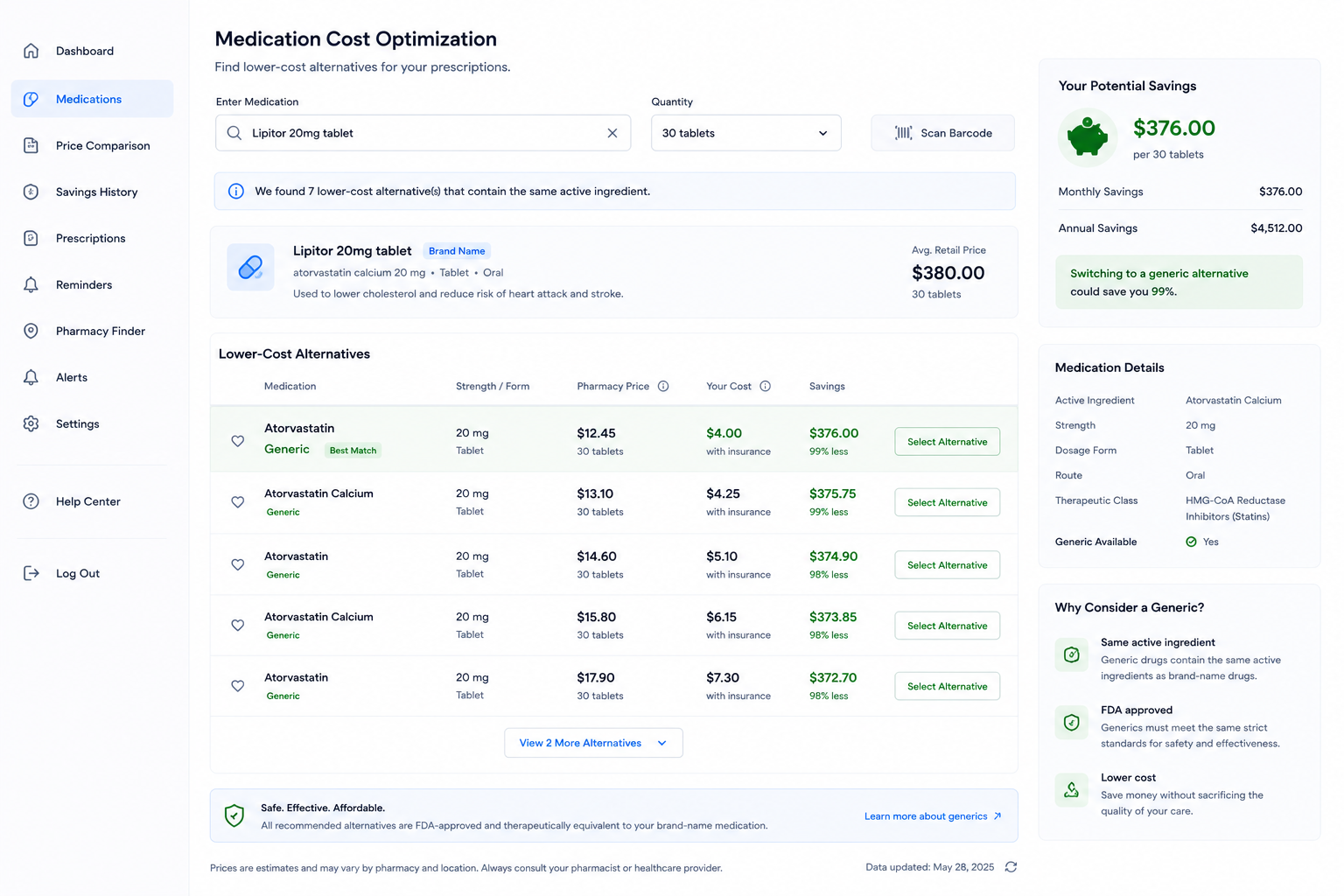
- The Core Feature: The application uses a regularly updated pharmaceutical database. When a medication is entered or scanned, the system analyzes the active ingredient, dosage, and delivery form to suggest approved generic alternatives, instantly calculating the user’s monthly and annual savings.
- Why it works: It removes the financial barrier to purchasing vital prescriptions. This increases long-term medication adherence and prevents expensive emergency hospital readmissions.
To maximize user trust, integrate a barcode scanning module using the smartphone’s native camera. Allowing users to scan their physical pill bottles at home to instantly find cheaper generic alternatives yields much higher feature engagement than manual text typing.
Telehealth as the first line of clinical defense
Non-critical visits to Emergency Rooms (ER) or urgent care centers represent financial waste for both individuals and corporate health plans.
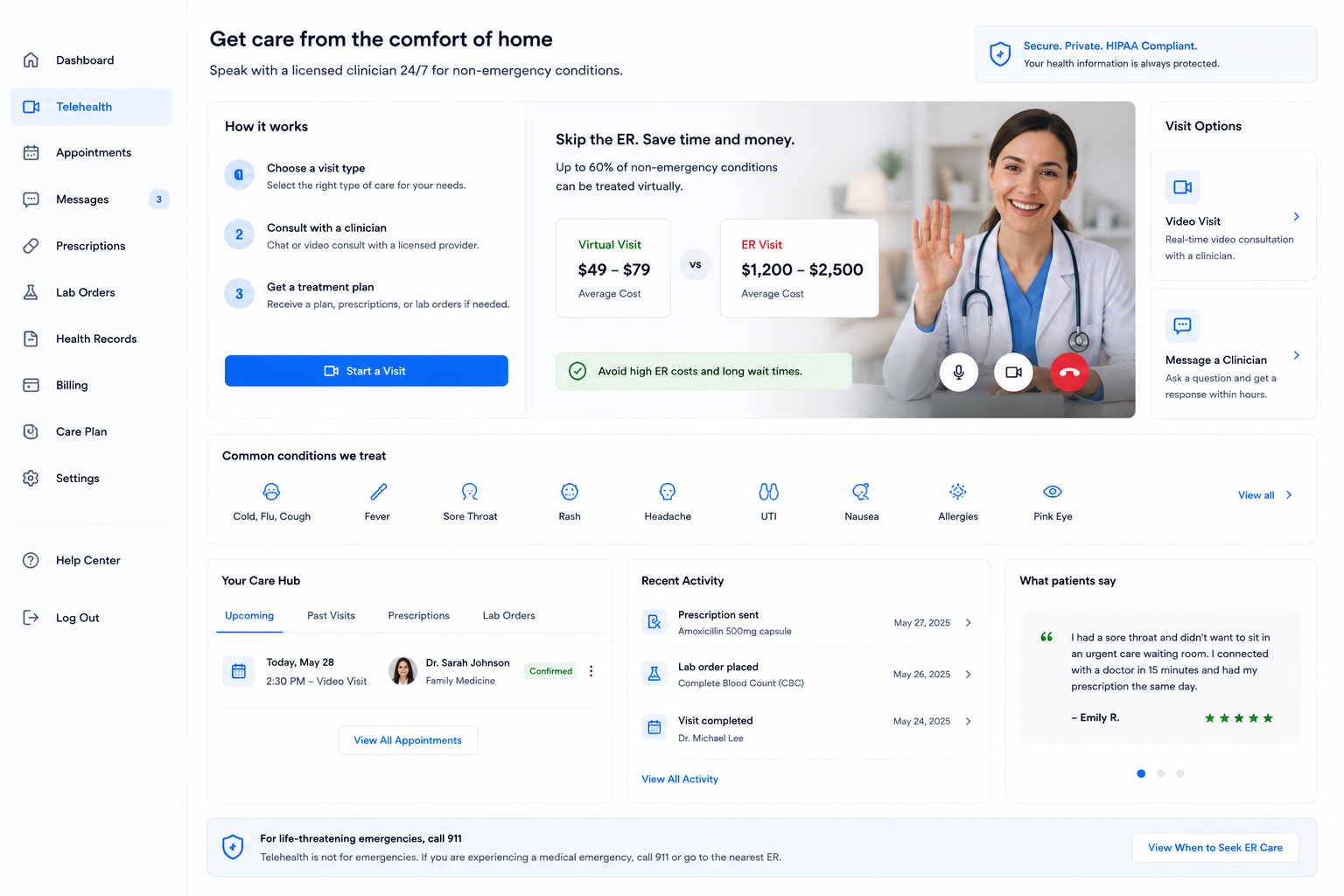
- The Core Feature: A secure, embedded module for asynchronous chat and real-time video consultations with certified clinicians. The system includes integrated e-prescription handling and lab order routing.
- Why it works: Industry research indicates that up to 60% of non-emergency clinical questions can be resolved safely via a virtual visit. This keeps patients out of high-cost emergency departments, saving hundreds of dollars per consultation.
Never build video streaming infrastructure from scratch unless you have a massive enterprise budget. Use certified, HIPAA-compliant WebRTC platform APIs (like Twilio or Agora) to deploy high-quality video consulting quickly, saving your budget for custom feature logic.
Lowering clinic administrative overhead
Financial optimization happens on both sides of the care equation. By automating routine administrative processes, mobile software helps medical providers lower their core delivery costs. According to operational studies by Gartner, automating back-office healthcare workflows can reduce a clinic's operational spend by 20% to 30%.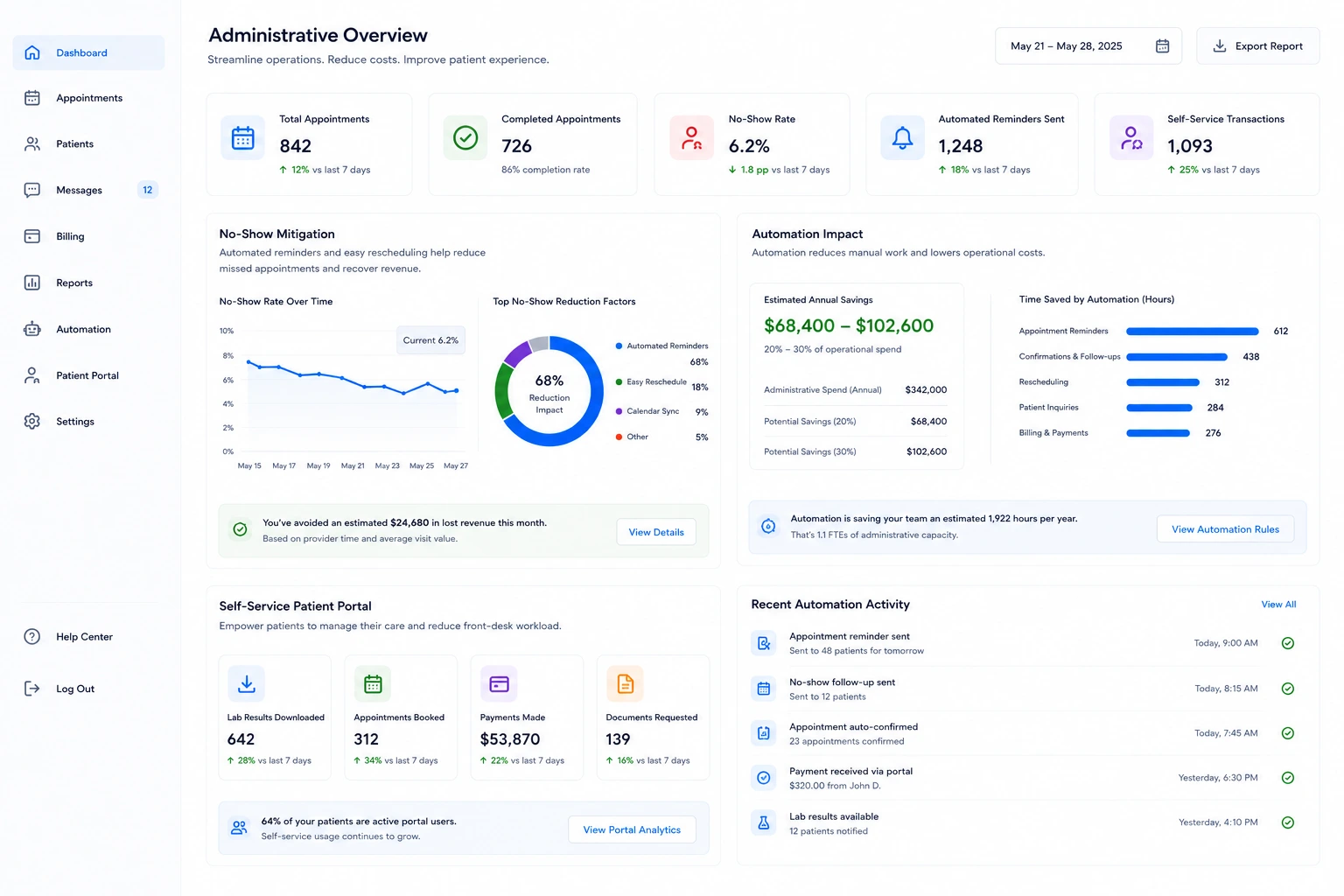
- Automated No-Show Mitigation: Missed appointments cost clinics billions in lost provider time annually. Native push notifications, calendar syncing, and automated reschedule options reduce empty appointment slots.
- Self-Service Patient Portals: Integrating the application with custom EMR/EHR systems lets patients securely download lab results, manage appointments, and pay balances without contacting front-desk staff, minimizing manual administrative hours.
To ensure hospital adoption, your app must fit into existing clinical workflows. Build synchronization protocols that automatically push app-scheduled appointments and digital check-ins directly into the hospital's primary calendar dashboard, preventing staff from having to manage two separate systems.
How Emerline Solves These Challenges: Real-World Cases
To show how these features work in production environments, here are four examples of digital health solutions engineered by the Emerline team to optimize costs and streamline care:
- Automated Bill Auditing (MedBill-IQ): Billing errors are common in healthcare invoicing. We engineered the native iOS and Android infrastructure for MedBill-IQ to expand our client's existing web platform. Users photograph their paper medical statements through the app, which extracts the text via mobile OCR. Billing experts and validation models then audit the CPT codes against standard fee schedules to flag double-billing and negotiate lower payouts with clinics.
- Direct Consultations and Cost Reduction (Telehealth Portal): To eliminate administrative delays and high out-of-pocket urgent care fees, we built a mobile platform that connects patients directly with certified medical experts for remote consultations. The app includes secure document sharing and real-time messaging, creating a scalable foundational architecture that cuts patient costs and reduces back-office hospital delays.
- Predictive Symptom Tracking (Migraine Prevention App): Chronic pain management often drives up healthcare costs due to emergency clinic visits. Emerline developed a cross-platform solution using an advanced diary framework to log headaches, sleep patterns, and environmental factors. By applying predictive data analytics, the app helps users forecast potential pain episodes and discover individual triggers before they escalate into an emergency.
- Hormonal and Stage Tracking (Midday): Built alongside healthcare experts, this iOS mobile development project targets menopause management. The software pulls data from Apple HealthKit and Fitbit, utilizing data models to analyze physical and emotional health changes. It provides users with personalized lifestyle recommendations, eliminating the need for frequent, non-critical clinical visits.
Results: The Numbers Behind the Transformation
Deploying a user-centric digital health solution delivers clear, measurable performance metrics for health plans, clinic networks, and startup founders. Based on product performance metrics across the healthcare software sector, optimization yields concrete shifts in operational efficiency:
- 18% Reduction in average diagnostic service costs per user through open price transparency and competitive location mapping.
- 30% Decrease in back-office administrative costs for claims processing via end-to-end workflow digitalization and automated EMR sync.
- 40% Increase in active patient engagement rates for preventative care programs, driven by automated notification layers.
- 25% Average Savings for users on necessary medication purchases through the integration of real-time generic alternative search modules.
A Step-by-Step Architecture Blueprint for Cost-Reduction Apps
If you are planning to build an application aimed at lowering healthcare costs, skipping architectural steps can lead to integration failures and security rejections. Here is the engineering checklist Emerline recommends to ensure market readiness:
1. Map your data pipelines early
Before writing any code, identify your exact data sources. If your app includes price transparency or pharmaceutical matching, secure access to clearinghouse APIs or regional insurance databases. Knowing how data will flow into your application dictates your backend engine setup.
2. Implement the FHIR/HL7 data standard
Medical databases do not communicate like standard web apps. To ensure your application can safely pull and push records to hospital infrastructure, build your backend on top of FHIR (Fast Healthcare Interoperability Resources) APIs. This standard makes your app interoperable with platforms like Epic or Cerner.
3. Build a local-first security layer
To safeguard protected health information (PHI), implement a zero-trust mobile architecture. Encrypt all local user caches using SQLCipher, enforce tokenized session timeouts, and use end-to-end encryption (TLS 1.3) for every data transfer between the mobile device and your cloud databases.
4. Conduct a strict HIPAA/GDPR audit
Before launching on app stores, put your product through an independent compliance audit. Verify that your cloud environment (e.g., AWS or Azure) has proper logging, isolated databases, and automated access reviews enabled to prevent regulatory penalties.
Technical requirements for cost reduction software
To gain enterprise traction and ensure user adoption in regulated markets like the US and the EU, your application architecture must meet specific technical benchmarks.
- Data Privacy: Strict compliance with HIPAA guidelines in the US and GDPR regulations in Europe. All protected health information (PHI) and financial transactions must be encrypted using enterprise standards (AES-256) both in transit and at rest.
- Interoperability Standards: Native support for modern health data protocols, specifically HL7 and FHIR (Fast Healthcare Interoperability Resources) APIs, to ensure stable data sync with external hospital databases and laboratory networks.
- Cloud Security Infrastructure: Deployment pipelines must align with AWS Security Best Practices to guarantee secure multi-factor authentication, segregated database access, and data leak prevention.
Frequently Asked Questions
How does a mobile app actually reduce healthcare costs?
An app eliminates the information vacuum in medicine. It provides transparent price comparison data before care is delivered, recommends affordable generic medications over expensive brands, and replaces high-cost, in-person urgent care visits with efficient, low-cost telehealth alternatives.
Why is integration with EMR/EHR systems necessary?
Without direct integration, an app functions as an isolated notebook. Syncing with EMR/EHR infrastructure allows the application to pull real-time clinical data, update medical records automatically, issue legal electronic prescriptions, and accurately calculate procedural costs based on a patient's exact insurance status.
How do you protect financial and health data within the app?
Data security is managed through multi-layer encryption, tokenized API sessions, biometric authentication layers (FaceID/TouchID), and strict adherence to HIPAA and GDPR protocols at the core architectural level.
Disclaimer: The app development frameworks and engineering insights provided in this article are intended strictly for informational and software development purposes. Emerline does not provide medical, clinical, or insurance advice. Any digital health solution must be engineered in strict compliance with regional healthcare laws and validated by certified compliance experts before commercial deployment.
Updated on May 28, 2026